

There’s a quiet revolution happening in backyard pools. Between the eye-stinging chlorine and the constant test-strip drama, more pool owners are exploring UV systems that cut chemical use, simplify upkeep, and make the water feel softer on the skin. Some units drop into a hose line, others float in the basin itself, and a few work alongside the chemicals you already use.
The catch is that UV pool gear comes in wildly different forms. Submersible sterilizers work for small backyard pools and plunge tubs, while solar conversion films suit larger setups that already run on minimal chlorine. Matching the system to your pool’s size and your maintenance style matters more than picking the biggest wattage. The picks below cover chemical-free clarifiers, complementary enzymes, submersible UV-C lights, and solar-assisted options to help you find a cleaner routine for 2026.
The Essentials At A Glance

Clorox Pool&Spa All-in-One Sanitizer & Shock 2LB
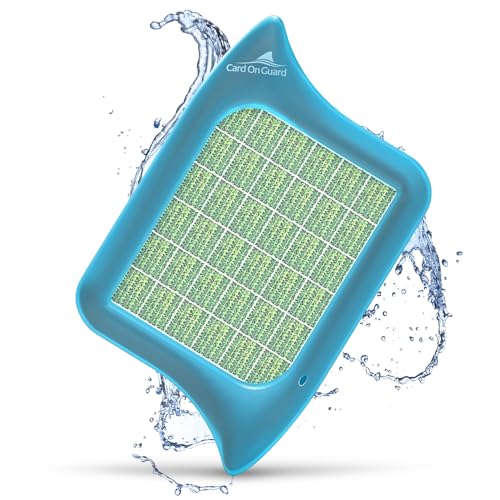
Card On Guard Solar Sanitizer FIN for Swimming Pools

Card On Guard Solar Sanitizer Tube 4-Pack (40,000 gal)

BioGuard Pool Complete Weekly, 1 Liter
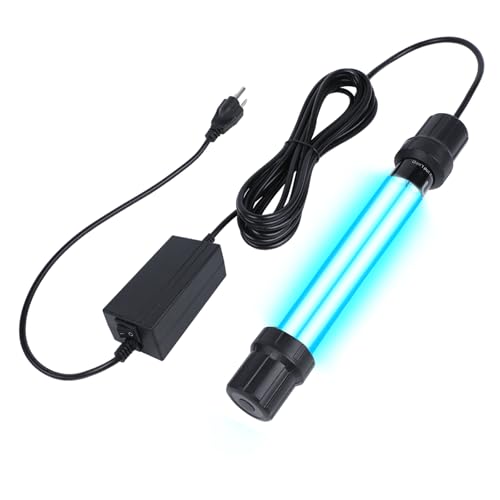
Ayamaxon 20W UV Submersible Light Water Clarifier

Ayamaxon 32W UV Submersible Light (100-2000 Gal)

Ayamaxon 55W UV Submersible Light (300-5000 Gal)

Card On Guard Solar Sanitizer Tube 3-Pack (30,000 gal)

Card On Guard Solar Sanitizer Tube 2-Pack (15,000 gal)

Card On Guard Solar Sanitizer Tube Single (10,000 gal)
More Details On Our Top Picks
Not every UV-focused routine replaces chlorine outright. The Clorox Pool&Spa All-in-One Sanitizer & Shock works as the chemical backbone that often supports a UV system, combining daily sanitizing and oxidizing (commonly called “shocking,” which means raising chemical levels briefly to burn off organic buildup) in a single stabilized granule. For a small spa or hot tub owner, that two-in-one design cuts the number of containers cluttering the side shelf.
The 2-pound jug is a manageable size for occasional top-offs rather than a season-long supply. It pairs naturally with the BioGuard enzyme pick below, which keeps the water polished between treatments. Together they form a complete routine that doesn’t over-rely on any single chemical.
Reasons It Performs
- Combines sanitizer and shock duty in a single product, reducing the number of containers you need to keep on hand.
- Works as the chemical foundation that supports lower-chlorine routines and complements UV hardware.
- 2-pound size is approachable for spa owners who test water weekly and want flexible dosing.
Things To Consider
- Still a chlorine-based product, so it doesn’t satisfy shoppers looking for a fully chlorine-free setup.
- Smaller tub volume means frequent reorders for households soaking several times a week.
- Requires accurate test strips for safe dosing; eyeballing the granules is a common ownership mistake.
Who It Suits Best
Spa and hot tub owners who want one product to handle both daily sanitizing and weekly shocks without juggling multiple chemicals.
Where Another Pick Suits Better
The Card On Guard Solar Sanitizer FIN suits shoppers who want to cut chemical use by half and don’t mind the sun-dependent nature of solar conversion.
The single FIN form factor is the simplest entry point into Card On Guard’s BioPhotonX system. UV light (a wavelength of sunlight that disrupts microorganisms) hits a conversion film on the FIN and passes directly into the water, rather than running through batteries or ionizer circuits like some competing solar products. For a moderately sized backyard pool in a sunny region, the energy path is impressively direct.
Sizing comes down to one FIN per 15,000 gallons, so a typical 20,000-gallon residential pool would need two units. Compared to the tube-based siblings later in the list, the FIN design feels more like a single floating patch than a multi-piece install. It’s a low-lift way to test solar UV before committing to a larger tube array.
Why It Works Well
- Uses UV light directly, so there’s no ionizer metal or mechanical conversion step in the middle.
- Promises a 50%+ reduction in chlorine use, easing the smell and dryness that high-chlorine pools tend to produce.
- Floating form factor installs in seconds with no plumbing or wiring required.
Worth Noting
- Effectiveness depends heavily on direct sunlight, so shaded pools or heavily canopied yards see weaker results.
- Single-unit coverage tops out around 15,000 gallons, which may require purchasing multiples.
- Needs replacing at the 12-month mark to maintain the claimed chlorine reduction.
Feature Snapshot
Made For
Mid-size chlorine pools in sun-rich climates where owners want to halve their chemical spend without installing any hardware.
Look Elsewhere When
The Ayamaxon 32W UV Submersible Light suits shaded yards or indoor plunge pools where solar conversion can’t do its job.
The 4-Pack is the largest BioPhotonX tube array in the lineup, scaled for residential pools up to 40,000 gallons. Where the single FIN feels like a starter experiment, four tubes turn the same UV conversion technology into serious coverage. The tubes are still passive and floating, so installation is essentially “drop and go.”
For larger suburban pools, the multi-tube spread helps the conversion film intercept sunlight from several surface points rather than relying on a single patch. Compare that to the Ayamaxon submersible units reviewed later, which use a different UV-C (short-wave ultraviolet light) approach and require a power outlet. This one trades electrical draw for solar dependency.
Useful Strengths
- Covers up to 40,000 gallons, the largest residential capacity in the BioPhotonX tube lineup.
- Multi-tube spread captures sunlight across more of the pool’s surface.
- Same direct UV conversion method avoids ionizer minerals or mechanical generation steps.
Points To Keep In Mind
- Four floating tubes need occasional repositioning as wind and swimmers push them around.
- Annual replacement means ongoing cost roughly every season.
- Heavy tree cover or partial shade significantly limits the energy these tubes can convert.
Best Suited To
Owners of large residential pools in sun-drenched regions who want full-coverage chlorine reduction without installing hardware.
Skip It When
The Card On Guard 2-Pack suits shoppers with smaller 15,000-gallon pools who’d otherwise over-buy by three tubes.
BioGuard Pool Complete Weekly isn’t a UV device at all, which makes it the odd one out in this list. The reason it belongs here is that UV pool care is rarely a solo act. This 1-liter clarifier (a treatment that helps tiny particles clump together so the filter can catch them) uses enzymes to keep water clear, reduce waterline buildup, and lift the load on whatever sanitizer or UV hardware you already run.
For someone pairing an Ayamaxon submersible UV light with a minimal chlorine routine, this fills the cosmetic role. The 1-liter bottle is built for weekly dosing, which matches the frequency the name suggests. It’s the kind of supporting product that quietly keeps a low-chemical system looking polished.
Where It Excels
- Three-in-one enzyme clarifier improves filtration while preventing waterline scum from forming.
- Weekly dosing schedule is easy to remember and integrates with most maintenance routines.
- Plays well alongside UV hardware without conflicting with chlorine or bromine programs.
Honest Caveats
- Not a sanitizer on its own, so it can’t replace UV hardware or chemical treatments.
- Works best in pools with functioning circulation, since enzymes depend on filter contact.
- Repeated weekly dosing adds an ongoing line item to a routine that some owners prefer to simplify.
Quick Facts
Who Will Love This
Owners running a low-chemical UV system who still want crystal-clear water and minimal waterline scrubbing.
Consider Something Else When
The Clorox Pool&Spa sanitizer suits anyone whose primary need is daily disinfection rather than weekly clarity support.
The 20W unit is the entry point into Ayamaxon’s submersible line, designed for aquariums, small ponds, and plunge tubs rather than full-size pools. A dual-tube UV-C array sits inside a weighted housing that keeps the unit upright underwater, and the 254nm wavelength is the standard for disrupting the DNA of algae and bacteria passing through the light zone.
The trade-off for the small form factor is reach. In a 500-gallon cold plunge, this unit feels potent. Drop it into a 10,000-gallon pool and the same wattage spreads much thinner, which is why Ayamaxon offers larger models for bigger bodies of water. This one earns its place for anyone who treats water on the smaller side.
Real Benefits
- Dual-tube UV-C design delivers more consistent output than a single-tube setup at the same wattage.
- Weighted block keeps the unit upright underwater without needing mounting hardware.
- Improved packaging reportedly reduces the chance of tube breakage during shipping.
Trade Offs
- 20W is undersized for full-size pools; best matched to ponds, tubs, and small plunge bodies.
- Requires access to a GFCI-protected outdoor outlet (a ground-fault circuit interrupter, a safety outlet required near water) for power.
- UV-C tubes need periodic replacement as output fades over the bulb’s lifespan.
Spec Overview
The Right Fit
Owners of cold plunges, small ponds, or compact spas who want a real UV-C unit without oversizing their wattage.
Swap It Out When
The Ayamaxon 55W UV Submersible Light suits anyone running a larger backyard pool in the multi-thousand-gallon range.
The 32W model sits in the comfortable middle of the Ayamaxon submersible range, working across ponds, small pools, hot tubs, and cold plunges in the 100-to-2,000-gallon range. That cross-category versatility is what makes it interesting. A pond keeper in spring and a hot tub owner in winter can theoretically run the same unit through both seasons.
Unlike the solar units from Card On Guard, this one needs power and water contact, so placement near an outdoor GFCI outlet matters. The 254nm UV-C wavelength stays consistent with the rest of the Ayamaxon line, meaning the same algae-clarifying behavior you’d get from a larger unit, just scaled to a smaller flow zone.
Good Reasons To Consider
- Wide gallon range (100-2,000) gives it real flexibility across pond and pool use.
- Dual-tube UV-C system provides stable, even output across the light zone.
- Weighted base keeps the unit stable without a permanent install.
A Few Limitations
- 32W tops out well before full-size residential pool capacities.
- Power cord length may require an outdoor-rated extension for distant tubs.
- Tubes dim over time, so plan on a replacement bulb every couple of seasons.
Perfect Match For
Multi-use households with a small pond and a hot tub, or anyone stepping up from a 20W unit to handle a slightly larger body.
Where A Sibling Pick Shines
The 20W Ayamaxon unit saves money and energy for plunge pools under 500 gallons where 32W is overkill.
The 55W unit is the heavyweight in the Ayamaxon submersible family, sized for backyard pools in the 300-to-5,000-gallon range. That covers many above-ground setups and smaller in-ground residential pools, which is where the higher wattage earns its keep. At this power level, the dual-tube 254nm output can process a meaningful share of the water as it circulates.
Compared to the 20W and 32W siblings, the jump in wattage isn’t just for show. It shortens the time the UV-C light needs to hit passing microorganisms, which is what determines whether algae and bacteria actually get neutralized. The trade-off is the same as any larger UV unit: more electricity, more heat at the tube, and a higher replacement cost down the line.
Where It Delivers
- 55W dual-tube output handles pool-sized bodies in the multi-thousand-gallon range.
- UV-C action targets algae cells, bacteria, and odor-causing organics at the source.
- Weighted housing keeps the unit upright without permanent mounting.
Practical Considerations
- Higher wattage means a larger draw on the outdoor circuit than smaller units.
- Bulb replacement cost scales with wattage, so factor in long-term maintenance.
- Effectiveness depends on circulation; still water zones won’t see the same UV-C contact.
Feature Rundown
Whose Shelf It Belongs On
Pool owners with multi-thousand-gallon bodies who want a real UV-C clarifier rather than a solar patch system.
Not Your Match When
The Card On Guard Solar Sanitizer Tube 4-Pack suits anyone wanting chlorine reduction without running any electrical gear in the water.
The 3-Pack hits the middle of Card On Guard’s tube array, rated for pools up to 30,000 gallons. That’s a sweet spot for many suburban backyards that are larger than a plunge but not enormous. Like the 2-Pack and 4-Pack siblings, each tube uses the same BioPhotonX conversion film to turn direct sunlight into sanitizing energy at the water’s surface.
The 3-Pack feels like the most universally applicable option in the lineup. It scales up cleanly from the 2-Pack if a small yard later gets an extended pool deck, but doesn’t carry the higher replacement cost of the 4-Pack for households that don’t actually need that much coverage.
Everyday Perks
- 30,000-gallon ceiling matches the most common suburban residential pool sizes.
- Three-tube spread balances coverage with manageable annual replacement cost.
- Direct UV conversion avoids the ionizer step found in older solar pool products.
Where It May Fall Short
- Overkill for pools under 15,000 gallons, where the 2-Pack is the better match.
- Solar dependency means reduced effect under heavy tree cover or cloudy weeks.
- Annual 12-month replacement cycle adds a recurring ownership cost.
Right Fit For
Suburban homeowners with a typical 20,000-to-30,000-gallon pool who want meaningful chlorine reduction without running new wiring.
Reach For A Different Pick When
The Ayamaxon 55W submersible light fits shoppers with smaller pools or shaded yards where solar conversion won’t do the job.
The 2-Pack is the right-sized sibling for smaller residential pools up to 15,000 gallons, which covers most above-ground setups and compact in-ground pools. Two tubes give the BioPhotonX film enough surface area to make a real dent in chlorine demand without the steeper replacement cost of the 3-Pack or 4-Pack.
Compared to the single FIN reviewed earlier, the 2-Pack is the tube-based equivalent. Both use the same conversion technology, but tubes can be positioned around the pool more deliberately. The trade-off is identical: no sunlight, no sanitizing effect.
What Pays Off
- Right-sized for 15,000-gallon pools without over-buying tubes.
- Same direct UV conversion method as the larger packs, just on a smaller scale.
- Lower annual replacement cost than the 3- and 4-Pack versions.
Less Ideal Details
- Cannot stretch to cover 20,000+ gallon pools that need more tubes.
- Effectiveness drops sharply in shaded or partially covered yards.
- Tube positioning still depends on floating behavior, so heavy use may push them around.
Built With In Mind
Smaller-yard owners with above-ground or compact in-ground pools who want the same chlorine reduction in a more affordable tube count.
A Better Fit Elsewhere
The Card On Guard single solar tube suits hot tub and swim spa owners with bodies under 10,000 gallons.
The single tube is purpose-built for hot tubs and swim spas up to 10,000 gallons, where the BioPhotonX film can actually do its job in the smaller water volume. Hot tubs are where the chlorine-and-bromine smell tends to be most noticeable, so cutting those chemicals by half makes a bigger sensory difference per square foot than in a wide-open pool.
It’s worth noting that this single tube is the most niche option in the lineup. A household with a 10,000-gallon pool could use it, but the 2-Pack or 3-Pack would spread the same conversion film across more surface area. Where the single tube shines is the small soak body where over-deployment would be wasted.
Advantages To Know
- Tailored 10,000-gallon rating matches hot tub and swim spa volumes precisely.
- Works on bromine as well as chlorine, important for many hot tub owners.
- Lowest-cost entry into the BioPhotonX tube family.
Factors To Consider
- Single tube has limited surface area, so it can be out-paced in heavily used tubs.
- Hot tub covers block the sunlight the conversion film needs to work.
- Annual replacement cycle still applies, even at the smallest pack size.
Feature Card
Who Should Grab It
Hot tub and swim spa owners who want meaningful chemical reduction in a body of water small enough for a single tube to cover.
Another Choice May Suit
The Ayamaxon 20W UV Submersible Light is a better fit for hot tub owners who don’t have reliable direct sunlight on their soak area.
Shopping Factors For Pool UV Sanitizers
Pool UV gear tends to confuse first-time shoppers because the category spans passive solar patches, electric submersible lights, enzyme clarifiers, and chemical backups. Matching the right product to your pool starts with knowing which questions actually matter.
Wattage And Pool Size
The wattage of a submersible UV-C light should match the water volume you need to treat. A 20W unit moves cleanly through 100-500 gallons, while a 55W model is the practical floor for multi-thousand-gallon pools. Buy too small and the UV-C zone never touches enough water to matter. Buy too large and you’re paying for capacity you can’t use. For solar options, the rule is one FIN or tube per roughly 15,000 gallons.
Passive Versus Powered Systems
Solar conversion films and submersible UV-C lights solve the same problem in completely different ways. Solar options need direct sunlight and produce no sanitizing effect under cover. Powered UV-C units run any time of day but require a GFCI outlet near the water and a clear path for the cord. For shaded pools, the powered approach is the only realistic option. For sunny backyards, solar can be the lower-effort pick.
Chemical Compatibility
UV hardware and solar films reduce chemical demand but rarely eliminate it. You still need a residual sanitizer (a low background level of chlorine or bromine that keeps working between treatments) to handle anything the UV light misses. Products labeled for both chlorine and bromine, like the Card On Guard tube family, give you more flexibility if you switch sanitizers over time.
Replacement Cycles And Long-Term Cost
UV-C bulbs dim over time, and solar conversion films lose effectiveness around the 12-month mark. Both require periodic replacement that adds to the total cost of ownership beyond the initial purchase. Enzyme clarifiers like the BioGuard option are dosed weekly, which is a different cost pattern. Build the ongoing cost into your decision rather than focusing only on the upfront price.
Smart Habits Before You Commit
Pitfalls Shoppers Hit
The most common mistake is treating UV gear as a chlorine replacement when it’s really a chlorine reducer. Even a fully outfitted UV system still needs a residual sanitizer to keep water safe between light passes. A second trap is sizing solar products to a fully shaded pool and wondering why chlorine demand never drops. Sunlight access matters at least as much as the product itself. Finally, skipping test strips turns any new system into a guessing game; UV reduces chemical demand, but you still need to know what’s actually in the water.
Where The Extra Money Goes
Higher-wattage submersible units and multi-pack solar arrays cost more because they process more water per hour. The 55W Ayamaxon, for example, makes sense for a multi-thousand-gallon pool where smaller units would fall behind. Multi-pack BioPhotonX tubes spread the conversion film across more surface area, which matters in larger pools where one tube’s reach is too narrow. The upgrade is worth it when your pool volume genuinely needs the extra coverage, and worth skipping when it doesn’t.


