

A small crack in a pool wall can feel bigger than it looks once water starts seeping into the surrounding deck. Pool owners dealing with hairline fractures, leaking skimmer throats, or aging light niches often want to skip the cost and downtime of a full drain-and-reseal job. The right underwater sealant can plug a leak while the pool stays full, saving a weekend of refilling and rebalancing chemicals.
The lineup below pulls together dedicated underwater epoxies alongside general-purpose waterproof silicones that hold up around pool equipment, tile, and light fixtures. Each pick addresses a different repair scenario, from emergency crack repair to potting a pool light junction.
A Fast Comparison Of The Options

AQUABOND Swimming Pool Epoxy Repair Kit DMK-5200 (Gray)

GE Silicone Caulk 100% Waterproof Clear (Pack of 2)

AQUABOND Swimming Pool Epoxy Repair Kit DMK-5000 (White)

GE Silicone Caulk for Tub & Tile (Clear, 10 fl oz)

Gorilla 100% Silicone Caulk 2.8oz Squeeze Tube (Clear)
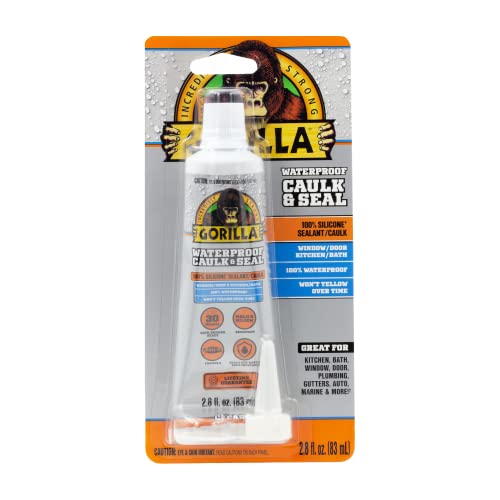
Gorilla Waterproof Caulk & Seal 2.8oz Squeeze Tube (Clear)

AQUABOND Underwater Pool and Spa Potting Kit DMK-1000
A Deeper Look At The Lineup
Hairline cracks in concrete and gunite shells tend to show up where stress concentrates, near skimmer throats, return fittings, and the corners of steps. The AQUABOND DMK-5200 putty is built for exactly that repair profile: a two-part epoxy kneaded by hand and pressed directly onto a wet surface, where it cures into a hard, sandable patch.
For most backyards with a stained or marbled concrete interior, the gray tone blends in far better than white would. Each 1.7 oz kit handles roughly a hand-sized repair, so a pool with several cracks will need multiple kits. The working time is short once the two parts are mixed, so staging the area before kneading pays off.
Benefits That Matter
- Bonds underwater without needing to drain the pool, a real time and water savings
- Compatible with concrete, fiberglass, and PVC, covering the three most common pool shell materials
- Gray color blends with stained concrete and pebble interiors better than bright white putty
- Cures into a rigid, sandable patch that can be painted over once fully hardened
- Hand-kneadable format needs no caulking gun, drop cloths, or specialty tools
Things To Consider
- At 1.7 oz per kit, larger structural cracks may require several kits in sequence
- Working time after mixing is short, so planning the repair layout ahead helps
Who It Suits Best
Concrete and gunite pool owners facing small structural cracks or stress fractures who want a reliable fix without draining thousands of gallons of water.
Where Another Pick Suits Better
For a cracked fiberglass step or a white PVC return fitting, the AQUABOND DMK-5000 in white offers a closer color match and the same underwater cure.
Most of the wet zone in a pool area actually lives above the waterline: expansion joints in the deck, coping seams, and the gap where a concrete patio meets the pool shell. GE’s all-purpose silicone caulk handles that perimeter better than an underwater putty, because it stays flexible through temperature swings and resists UV breakdown.
Two 10 oz cartridges give enough material to reseal a long stretch of coping or a full deck-to-pool edge. The same-day rain-ready formula means a sudden shower after application is not catastrophic, though owners commonly give it a full cure window before heavy water contact.
Positive Points
- Pack-of-two format covers larger projects without an extra trip to the hardware store
- Stays flexible through freeze-thaw cycles, an underrated feature in northern climates
- Clear finish disappears against most pool deck and coping materials
Trade Offs
- Standard 10 oz cartridges require a caulking gun, which adds a tool to the shopping list
- This formula is for dry-side joints, not for active underwater cracks
Made For
Pool owners resealing deck expansion joints, coping seams, or above-waterline gaps that need UV-stable flexibility through the seasons.
Look Elsewhere When
For sealing a tile band right at the waterline where flexibility and constant wet exposure meet, the GE Tub & Tile formula in the next slot is purpose-built for that surface.
Where the gray DMK-5200 disappears into stained concrete, the white DMK-5000 is the better match for fiberglass steps, white PVC return fittings, and any marcite or quartz interior finished in a light tone. The chemistry is the same underwater-cure epoxy putty, just in a different color.
For a vinyl-liner pool, a cracked skimmer faceplate, or a hairline fracture in a fiberglass shell, this kit follows the same hand-knead routine. Pushing the putty firmly into the crack and smoothing it underwater takes a bit of practice, but the bond that forms is genuinely structural, not just a surface patch.
The Upside
- White color blends with fiberglass, marcite, and most light-toned pool finishes
- Reinforces cracked fiberglass and PVC components rather than just covering them
- Same no-drain convenience as the gray kit, useful for liner pools where draining is not an option
Honest Caveats
- Color match is poor against dark pebble or stained concrete interiors
- Working time is short once mixed, so a second pair of hands speeds larger patches
- Kneading underwater requires some practice for a smooth, watertight bond
Right Fit For
Fiberglass pool owners and anyone repairing a white PVC fitting who needs an underwater-cure epoxy that disappears into a light-colored finish.
Where Another Pick Suits Better
When the repair is purely electrical, like resealing a leaking pool light niche, the AQUABOND DMK-1000 potting kit is engineered specifically for that task.
The waterline tile band is one of the most exposed surfaces on a pool: sun above, splash and chemistry below, and constant expansion between the tile and the shell behind it. GE’s Tub & Tile silicone is formulated for exactly that wet, temperature-cycling environment, even though it is sold as a bath product.
Single 10 fl oz cartridge is enough to redo a residential waterline tile band or seal around a skimmer mouth. The cured bead stays elastic rather than hardening rigid, which matters when tile and grout expand at different rates through the seasons.
The Practical Payoff
- 100% silicone formula holds up to constant wet and chemical exposure without crumbling
- Excellent flexibility absorbs the thermal movement that breaks acrylic caulks at the waterline
- Adheres to ceramic, porcelain, glass, and metal, covering the typical pool tile and fitting materials
Soft Spots
- Single cartridge only, so a large tile project may need a backup tube
- Not formulated for application directly underwater, the area must be drained or at least lowered
Best Suited To
Homeowners resealing a waterline tile band, regrouting around a skimmer, or sealing the joint between a pool light faceplate and the surrounding tile.
Skip It When
For a crack in the shell itself several feet below the waterline, the AQUABOND DMK-5200 or DMK-5000 epoxy will bond where this silicone cannot.
Not every pool repair calls for a full cartridge. Gorilla’s 2.8 oz squeeze tube is sized for the small jobs that pile up over a season: a hairline gap at a ladder anchor, a fitting that keeps weeping, or the spot where a handrail meets the deck.
The squeeze format is genuinely useful around a pool, since most repairs are not on a flat workbench but at awkward angles with wet hands. Water-ready exposure in as little as 30 minutes once cured makes it a practical option for fixes that cannot wait for a long cure window.
Practical Pluses
- Squeeze-tube format works without a caulking gun, ideal for one-handed or above-water repairs
- Small size fits in a pool-side tool kit rather than the main garage
- Mold- and mildew-resistant cure suits the constantly damp environment near a pool
Points To Keep In Mind
- 2.8 oz is enough for touch-ups, not a full perimeter reseal
- Like most silicones, it needs the area to be drained below the application line
Who Will Love This
Anyone who keeps a small repair kit by the pool for the inevitable seasonal touch-ups, ladder anchors, and small fitting leaks.
Reach For A Different Pick When
For a full deck-to-coping reseal, the two-pack GE Silicone Caulk earlier in the lineup offers far better cartridge economy.
Pool equipment pads, salt-chlorinator housings, and the small gaps around pump plumbing all live in a splash zone that is technically not underwater but always wet. Gorilla’s waterproof caulk and seal handles that middle ground, sealing metal, plastic, and painted surfaces against the constant spray.
Owners commonly keep a tube on hand for marine and boat-repair use as well, so the same squeeze tube covers a pool, a dock, and a center-console livewell. The cured bead resists yellowing and does not shrink back from the joint, which is a common failure point for cheaper acrylic caulks.
Real Benefits
- Adheres to a wide range of surfaces including metal, plastic, and painted finishes common around pool equipment
- Resists yellowing, shrinking, and cracking over multi-year outdoor exposure
- Doubles as a marine-grade repair sealant for boats and docks in the same household
Less Ideal Details
- Surface must be reasonably dry for application, so it does not work for active underwater cracks
Built With In Mind
Homeowners with a pool equipment pad, a nearby boat, or a pond who want one tube that handles all the splash-zone sealing in one go.
Where A Sibling Pick Shines
For an actual underwater shell crack, the AQUABOND DMK-5000 in white bonds through standing water where this silicone cannot.
A pool light niche is one of the few places where water meets electricity, and the potting compound behind the fixture exists to keep that junction safe. AQUABOND’s DMK-1000 is a purpose-built electrical resin designed to seal the back of a pool light, spa light, or fountain fixture without draining the surrounding water.
The kit covers the niche pot, the conduit entry, and the splices behind the lamp. For most homeowners this is a one-time, multi-year repair rather than a routine reseal, so the small 1.7 oz size is honestly enough for a single light fixture.
Why It Works Well
- Engineered specifically for electrical potting in submerged pool and spa light niches
- Compatible with the materials typically found in pool light junction housings
- Underwater-cure formula means the light can stay installed during repair in many cases
Potential Drawbacks
- Specialty item, not a general-purpose pool caulk, so it has narrow use cases
- Working around pool electrical always carries shock risk, so power should be verified off at the breaker before starting
Perfect Match For
Homeowners with a leaking pool light niche, a weeping spa fixture, or a fountain light that needs the back-potted reseal.
Swap It Out When
For a structural crack in the pool shell itself, the AQUABOND DMK-5000 in white or the gray DMK-5200 covers that repair with a stronger mechanical bond.
Choosing the Right Sealant for Your Pool Repair
Picking an underwater caulk for a swimming pool comes down to matching the repair surface, the exposure, and the material being sealed. The wrong product in the wrong place will fail in months rather than years, and pool water accelerates every weakness.
The first split is between underwater-cure epoxies and standard waterproof silicones. Epoxies like the AQUABOND DMK series cure through chemical reaction and bond to a wet surface. Silicones stay flexible and handle temperature movement, but most need a dry application area, so the waterline must be lowered or the joint must live above the water level.
Material compatibility matters just as much. Concrete and gunite accept almost any epoxy, while fiberglass and PVC benefit from the white AQUABOND putty for a closer color match. Ceramic tile and porcelain call for a 100% silicone rated for wet environments, and electrical junctions need a potting compound designed for submerged power connections.
Color and finish deserve a thought too. Gray putty disappears into stained concrete, while white putty suits fiberglass and marcite. Clear silicone is the default for tile bands and equipment pads where appearance matters.
Finally, scale the kit to the job. A 1.7 oz putty kit handles one or two small cracks, while deck perimeter resealing calls for 10 oz cartridges. A squeeze tube earns its place for the small seasonal touch-ups that would otherwise waste a full cartridge.
Key Considerations Across These Picks
Where Shoppers Go Wrong
Treating “waterproof” and “underwater” as the same thing is the most common mistake. Standard waterproof silicone resists water once cured, but it cannot bond to a wet surface during application. A crack two feet below the waterline needs an underwater-cure epoxy, while a coping joint above the waterline is silicone territory. Matching the product to the actual wet-versus-dry condition at the repair site is what separates a lasting fix from a callback.
Another trap is buying a clear silicone for a structural crack. Silicone stays flexible, which is exactly the wrong property for a load-bearing shell repair. Epoxy putty cures rigid and takes paint, while silicone stretches under load and pulls away from the joint.
What The Higher Tier Buys
Specialty underwater epoxies cost more than a tube of bathroom caulk for a reason. The resin system, the cure chemistry, and the bonding agents are formulated for the chlorine, salt, and UV environment of a pool, not a kitchen backsplash. For a hairline crack in a vinyl-liner pool where draining is not an option, that higher tier is the only tier that actually works.
The upgrade also buys a real color match and a sandable, paintable finish on epoxy putties. For visible repairs in a light-colored pool interior, a mismatched gray or yellow patch stands out for years.
Frequently Asked Questions
Can underwater caulk be applied without draining the pool? Yes, for dedicated underwater-cure epoxy putties like the AQUABOND DMK series. Standard waterproof silicones still need a dry application area, so the waterline must be lowered for that product class.
How long does underwater pool epoxy take to cure? Most underwater epoxies begin setting within minutes and reach handling strength within an hour or two, but full chemical cure typically takes 24 hours before the repaired area is subjected to normal pool use.
Will the patch hold up to pool chemicals? A properly mixed and applied underwater epoxy resists chlorine, salt, and standard pool chemistry. Curing fully before shocking or balancing the water is the most important factor for long-term chemical resistance.
Can silicone caulk be used underwater? No. Standard silicone caulk needs a dry surface during application and cannot bond to a wet substrate. For active underwater repairs, an epoxy putty rated for submerged application is the correct product class.
How do I know if a crack is structural or just cosmetic? Hairline cracks in the surface layer of plaster or marcite are usually cosmetic. Cracks that run continuously through the shell, show rust staining, or actively lose water need a structural epoxy repair and a closer look at the underlying cause.


