

A pebble-finish pool looks gorgeous the day it’s poured, then reality sets in. Sunlight chews through chlorine, fine sediment hides in the textured surface, and the wrong chemical balance can stain the very aggregate you paid a premium for. The right care routine protects that investment and keeps the water inviting. This guide covers the eight products that handle sanitation, water chemistry, surface repair, and routine cleaning, so the finish you chose stays as striking as the install crew left it.
A Quick View Of The Lineup

Doheny’s 3-Inch Stabilized Chlorine Tablets 50lb Bucket

Chlorine Stabilizer & Conditioner for Swimming Pools (4 lb)

Doheny’s Super Pool Shock 12 x 1 Lb Bags
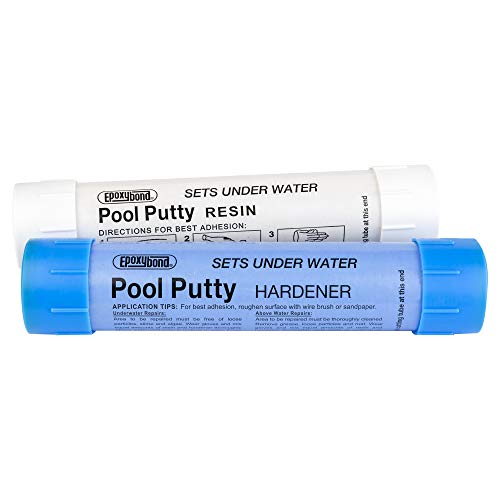
Epoxybond Pool Putty 2-Part Set

Hominter Blue Green Ceramic Pebble Mosaic Sample Tile

Blue Torrent 360-Degree Pool Brush, 24″

Bliss Pool 7-in-1 Test Strips with App (150 Strips)

Doheny’s Pro-Grade Plus Weekly Pool Enhancer, 1.5L
Taking A Closer Look At The Options
Slow-dissolving trichlor tablets are the backbone of most pebble-finish pool care, and this 50-pound bucket is sized for the long haul. The tablets are pre-stabilized against UV rays, which is the single biggest reason chlorine disappears in a sun-baked backyard. You drop one in a floater or inline feeder and it keeps feeding the pool for days, freeing you from daily dosing.
Each 3-inch puck is individually wrapped, so there’s no cloud of chlorinated dust when you handle them. For a family pool running through summer, a bucket like this typically covers most of the season with a few tabs to spare.
What It Does Well
- Pre-stabilized formula fights the UV burn-off that wastes unstabilized chlorine in direct sun.
- 90% available chlorine delivers strong sanitation without overfeeding your pool.
- 3-inch slow-dissolving tablets suit standard floaters, inline feeders, and skimmer baskets.
- Individually wrapped tabs cut down on odor and skin contact during handling.
- Locking childproof lid on the 50-pound bucket matters in a household with kids around.
Things To Consider
- A 50-pound bucket is heavy to lug down a side yard; plan a storage spot before delivery.
- Trichlor lowers pH over time, so you’ll still need alkalinity and pH adjustments.
Key Product Details
Who It Suits Best
Pool owners with a sun-exposed backyard who want a low-effort, set-it-and-forget-it daily sanitation routine.
Where Another Pick Suits Better
Saltwater pool owners should reach for the Bliss Pool Chlorine Stabilizer & Conditioner instead, since it pairs more naturally with a salt cell system.
Cyanuric acid (CYA) is the unsung hero of outdoor pool care. Without it, UV rays shred your free chlorine within hours, and you end up dosing more and more chlorine that simply evaporates into the sky. This 4-pound container of stabilizer and conditioner is sized to bring a mid-sized residential pool up to the recommended 30 to 50 ppm range in one treatment.
Unlike the chlorine tablets that came before it, this is a one-and-done adjustment. You add it once at the start of the season (and top off after heavy rain or backwashing), and it quietly extends the working life of every drop of sanitizer you add afterward.
The Upside
- Compatible with chlorine, bromine, salt systems, and biguanide sanitizers.
- Cuts chlorine consumption noticeably in pools that lose sanitizer to direct sun.
- Pairs with the Bliss Pool app for tracking CYA levels twice a week.
Trade Offs
- CYA only comes down by draining or diluting, so over-dosing locks you into higher stabilizer levels for the season.
- You’ll want dedicated test strips for cyanuric acid, since basic 3-way kits skip it.
Made For
Open-sun backyard pools where chlorine demand spikes every July and August.
Not Your Match When
Heavily shaded pools should reach for the Doheny’s 3-Inch Stabilized Chlorine Tablets as their primary sanitizer, since they already include CYA and adding more risks over-stabilization.
Shock is the reset button for any pool, and calcium hypochlorite (cal-hypo) shock is the strongest residential option on the shelf. This 12-pack of pre-measured 1-pound bags lets you dose the exact amount your pool needs without weighing powder on a kitchen scale. The 68% cal-hypo formula with 65% available chlorine means a small dose does serious work.
For a pebble-finish pool that has gone cloudy after a heavy bather load, a storm, or a missed week of testing, a shock treatment is often the fastest path back to clear water. Pre-bagged portions make it easier to dose correctly, even for first-time pool owners.
Everyday Perks
- Pre-measured 1 lb bags remove the guesswork from dosing.
- High-concentration cal-hypo raises chlorine fast, even in stubborn green water.
- Twelve-bag pack covers a full season of weekly shock treatments for most residential pools.
Worth Noting
- Cal-hypo adds calcium to the water, which over a long season can push hardness into the high range and cloud the water.
- Best applied in the evening with the pump running and the cover off, so it takes some schedule planning.
Quick Facts
Best Suited To
Homeowners dealing with cloudy water, post-storm contamination, or weekly oxidation maintenance.
Skip It When
Pools already running high on calcium hardness should grab the Doheny’s Pro-Grade Plus Weekly Pool Enhancer for ongoing clarity work instead.
Pebble finishes can crack or chip where the surface meets the coping, around skimmers, or along stress lines. Draining the pool to patch a small crack is overkill, and that’s exactly the situation this two-part epoxy putty was designed for. You mix equal parts in your hands, mold the putty, and press it into the crack either underwater or on a dry surface.
For pebble pools, this is less about a perfect color match and more about sealing the leak or stopping a chip from spreading. The putty hardens in place and holds up to chlorinated water, which means you can fix a problem on a Saturday and swim on Sunday.
Positive Points
- Applies underwater, so no draining or water replacement required.
- Works on concrete, fiberglass, and most pool surfaces, including pebble aggregate.
- Cures without shrinking or sagging, so the patch stays put.
Points To Keep In Mind
- Color won’t blend invisibly with most pebble finishes, so the patch may be visible up close.
- You only get a few minutes of working time once the two parts are mixed.
Right Fit For
Homeowners with a small crack, leak, or chip who want a same-day fix without calling a pool service.
Consider Something Else When
For surface-wide staining or large-scale refinishing, a professional pebble resurfacing service is a better long-term answer than repeated putty patches.
This ceramic tile is the rare pool product in this lineup that isn’t a maintenance supply. It’s a design element: a polished mosaic of rounded, river-stone-inspired shapes in blue, teal, black, and earthy brown, sized as a 3-by-12-inch sample. For pebble-finish pools, this kind of tile shows up on waterlines, spa spillways, or accent bands where you want a visual counterpoint to the textured plaster.
The ceramic surface takes the polish and color depth that natural river rock can’t, and the small sample format is useful for comparing grout colors and shade variation before committing to a full order. It’s also a useful way to extend the pebble aesthetic into bathrooms, outdoor kitchens, or shower walls that share visual language with the pool.
What Works In Its Favor
- Glossy ceramic finish reflects light and adds depth at the waterline.
- Color palette echoes natural river stone, which complements a true pebble interior.
- Sample size lets you confirm shade and finish before ordering a full case.
Some Limits To Know
- This is a sample tile, not a full case, so for a real waterline you’ll need a separate bulk order.
- Polished ceramic can be slippery on flat surfaces, so save it for vertical accents rather than pool floors.
Feature Snapshot
Who Should Grab It
Pool owners planning a waterline refresh or spa accent who want the pebble look in a polished, easy-to-clean tile.
Look Elsewhere When
If the goal is replacing a worn pebble surface entirely, you’re shopping for a resurfacing contractor, not a sample tile.
Flat brushes glide over smooth plaster, but pebble finishes have texture that traps fine sediment between the aggregate. A 360-degree bristle brush is the right tool for that job, and this 24-inch Blue Torrent model surrounds the brush head with bristles on all sides. You can push it along the wall and the underside keeps scrubbing as it turns a corner.
For pebble interiors especially, the built-in corner bristles reach into the 90-degree transitions where walls meet the floor and where steps meet risers. A standard flat brush leaves those seams untouched, which is where most of the grime quietly accumulates.
Positive Takeaways
- 360-degree bristle coverage cleans wall, floor, and underside in a single pass.
- Built-in corner bristles reach transitions that flat brushes always miss.
- 24-inch width covers ground quickly on larger residential pools.
Minor Gripes
- Telescopic pole is not included, so you’ll need to source one separately.
- Reinforced design adds a little weight, which can wear on longer scrubbing sessions.
Who Will Love This
Pool owners with textured pebble interiors who brush weekly and want a tool that handles walls, floors, and corners in one motion.
A Better Fit Elsewhere
For vinyl-liner pools, a softer, vinyl-safe brush is a kinder match than this stiff-bristled pebble brush.
You can’t fix what you don’t measure, and pool water shifts in small ways every week. These 7-in-1 test strips check total alkalinity, pH, free chlorine, total hardness, cyanuric acid, bromine, and total chlorine on a single strip. The longer pads and larger color chart make it easier to match shades than the postage-stamp strips in cheaper kits.
You dip, wait, scan the chart, and (if you want) log the numbers in the Bliss Pool app. The app adds a layer of trend tracking that paper logs can’t match, which helps you spot slow drift before it becomes a green-water problem.
Reasons It Performs
- Seven parameters on one strip, including the cyanuric acid reading most basic kits skip.
- 150-strip count supports twice-weekly testing for most of a full season.
- App integration creates a running record of your water chemistry over time.
Worth Bearing In Mind
- Color matching is still done by eye, so lighting conditions affect accuracy.
- Strips have a shelf life, and a 150-count bottle is more than a casual user needs.
At A Glance
Perfect Match For
Detail-oriented pool owners who test on a fixed schedule and want to keep a chemistry history.
Swap It Out When
Casual owners who just want a quick chlorine and pH check may find a 2-way or 3-way strip simpler than interpreting seven pads.
Between the chlorine tabs, the shock, the stabilizer, and the testing, pool care can feel like a small chemistry lab. Doheny’s Pro-Grade Plus Weekly Pool Enhancer is the product built to simplify that stack. It’s a 3-in-1 enzyme-based treatment that breaks down organic waste, clarifies the water, and helps your sanitizer work more efficiently. One weekly dose, and the routine shrinks.
For pebble-finish pools, the appeal is partly cosmetic. Enzymes keep body oils, lotions, and other organics from building up in the textured surface where they can slowly discolor the aggregate. The result is water that looks clearer and a finish that holds its color longer.
Where It Helps
- Combines three routine jobs (organic removal, clarification, sanitizer support) into one weekly pour.
- Enzyme formula targets the oils and lotions that dull pebble surfaces over time.
- 1.5L bottle is sized for several weekly doses on a typical residential pool.
Honest Caveats
- This is a supplement, not a replacement, for chlorine and regular testing.
- Enzyme products work best on a consistent schedule, so it rewards routine rather than occasional use.
Built With In Mind
Busy pool owners who want clean, clear water with the fewest moving parts in their weekly routine.
Another Choice May Suit
Anyone setting up a pool from scratch should first focus on the Doheny’s 3-Inch Stabilized Chlorine Tablets and a 7-in-1 test strip kit before layering in enhancers.
What To Weigh Before Choosing Pool Care Products
Pebble finishes are durable, but they respond to water chemistry differently than smooth plaster. The aggregate is more porous, the surface texture catches fine sediment, and the color can shift if metals, organics, or extreme pH levels go unchecked for long. Choosing products starts with the water, not the labels on the bucket.
Sanitizer and Stabilizer
For most residential pebble pools, stabilized trichlor tablets handle the daily work, and a separate cyanuric acid top-up early in the season protects the chlorine you already paid for. Saltwater systems work too, but they still need CYA management, and the Bliss Pool stabilizer in this list covers that job.
Shock, Enzymes, and Clarifiers
Shock is your rescue tool, not a daily product. Cal-hypo shock like Doheny’s Super Pool Shock handles heavy contamination, while weekly enzyme products like Doheny’s Pro-Grade Plus keep organics from settling into the pebble matrix in the first place. Use both, but on different schedules.
Testing and Brush Work
No chemical program survives without accurate testing. A 7-in-1 strip like the Bliss Pool kit covers the parameters that actually matter for pebble water balance, and a stiff 360-degree brush like the Blue Torrent keeps sediment from settling into the surface texture. Together, they prevent 90 percent of the problems people blame on their sanitizer.
Key Considerations Across These Picks
Where Shoppers Go Wrong
The most common mistake is treating chlorine as a single-job product. Trichlor tablets, cal-hypo shock, and enzyme enhancers all contain chlorine (or work alongside it), and stacking them without testing leads to over-chlorination, elevated CYA, or both. Test first, then add what the water actually needs. Another trap is ignoring brush work on textured pebble surfaces, where sediment builds up invisibly between the aggregate stones.
What Separates Premium From Basic
Higher-tier products in this category usually mean more concentrated formulas, larger pack sizes, and tighter quality control on each batch. A 99%-pure trichlor tablet leaves less residue than a generic puck with binders and fillers, and a lab-tested strip batch reads more consistently than the cheapest strip on the shelf. The upgrade pays off in fewer mid-season water crises and a pebble finish that still looks like the day it was poured.
Frequently Asked Questions
How often should I test the water in a pebble-finish pool? Twice a week is a reasonable rhythm during the swim season, with extra checks after storms, heavy bather loads, or any time you add a corrective chemical.
Do pebble finishes need different chemicals than plaster pools? The chemistry targets are nearly identical, but the textured surface holds onto oils and metals more stubbornly, so enzyme treatments and regular brushing matter more.
Can I use the same brush on pebble and tile? A stiff bristle brush like the Blue Torrent is safe for pebble aggregate and most tile, but skip it on vinyl liners, which need softer bristles to avoid damage.
How long does a 50-pound bucket of chlorine tablets typically last? For a typical residential pool running one or two tablets at a time, a season is realistic, though heavy summer use can burn through the bucket faster.
Is stabilizer really necessary if my tablets are already stabilized? Most pools benefit from a CYA check at the start of the season. Rain, backwashing, and splash-out gradually dilute stabilizer levels, and topping off keeps the chlorine protected through the hottest months.


