

Pool pumps, filters, and salt cells aren’t pretty. Sitting beside an otherwise tidy patio, they pull the eye every time you step outside. The right enclosure gives you a clean sightline without starving the equipment of airflow, and most decent options now skip the cement bag entirely. Here’s a roundup built around real backyard constraints: tight side yards, HOAs that care, kids who run barefoot near metal latches.
The Essentials At A Glance

VEVOR 3-Panel Outdoor Privacy Screen 50in x 50in

Diyfire 38in W x 39in H U-Shaped AC Fence, Black

DoCred 38in W x 60in H 2-Panel Pool Equipment Enclosure
Dyemair 3-Panel Metal AC Fence 42in H x 38in W

Enclo Premium White Vinyl Privacy Screen, No Dig Kit

Enclo Richmond Cedar Wood Privacy Screen 3.5ft H x 3ft W, 2 Panels
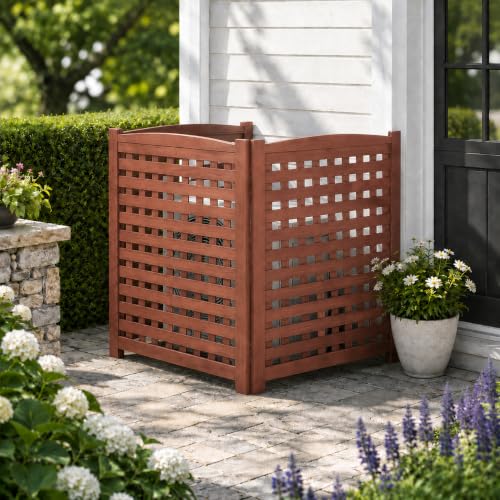
ELOMBR 32in W x 38in H 3-Panel Wood AC Fence, Brown

CJF 42in H x 38in W Metal AC Fence, No Dig, Black
A Closer Look At Each Pick
The VEVOR 3-Panel Outdoor Privacy Screen goes big where most enclosures play it safe, with each panel sized at roughly 50 inches square. That makes it a natural fit for a pad that holds a full pump, filter, and salt cell together, rather than a single compact unit.
Ground stakes are included, and the reinforced design leans toward stability over tool-free assembly. Compared to the slimmer Diyfire unit below, this one trades a smaller footprint for taller side coverage that hides taller filtration setups from the patio sightline.
What Stands Out
- Generous 50-inch panel height covers pump and filter stacks
- Three-panel layout adapts to long equipment pads
- Ground-stake install avoids permanent anchoring in many yards
- Vinyl construction shrugs off routine splashes from the pool deck
Worth Noting
- Panel mass makes a two-person carry easier on delivery day
- Wind load on three connected panels can be significant in open yards
- Color matching across batches may vary slightly, worth confirming before install
Who It Suits Best
Homeowners running a stacked pump and filter setup who want the most vertical coverage in this roundup and have a level pad to stake into.
Consider Something Else When
The Diyfire 38in W x 39in H U-Shaped AC Fence suits tighter patio corners where a 50-inch-deep panel simply will not fit.
The Diyfire U-shaped screen is built for the small, awkward spot behind an AC condenser or a single pool pump where most panels are too wide. Slatted construction keeps air moving while still cutting the line of sight from the patio.
For households that care more about hiding one appliance than screening a whole pad, this shape solves a problem a flat panel cannot. The black finish also blends into a fence line more quietly than a bright white vinyl screen.
Practical Pluses
- U-shape wraps around narrow equipment
- Slatted design supports steady airflow around hot components
- Compact 38 by 39-inch footprint fits side yards
Trade Offs
- Limited height, so taller filtration units may peek over the top
- Smaller coverage area means it is not the right tool for full pad enclosures
Made For
Side-yard equipment in tight setbacks where every inch of patio depth matters and a single appliance is the main offender.
Look Elsewhere When
The DoCred 38in W x 60in H 2-Panel Pool Equipment Enclosure is a better match when you need more height for stacked gear.
The DoCred 2-Panel enclosure leans tall, with a 60-inch height that hides a filter stack or a wall-mounted pump without forcing you to anchor a wide base. Wood slats with deliberate gaps let the equipment breathe while still cutting the visual line.
Where the Diyfire model hugs a corner, this one stands like a small fence. Pool owners with HOAs that care about sightlines tend to appreciate the wood-look finish over loud white vinyl.
Real-World Strengths
- 60-inch height covers taller equipment and stacked plumbing
- Wood-look finish suits HOA-sensitive neighborhoods
- Slatted gaps balance airflow and privacy
Small Caveats
- Two-panel design leaves a wider gap to cover on long pads
- Wood-style finishes may need seasonal wipe-downs in dusty yards
Feature Snapshot
Right Fit For
Homeowners with a single tall filtration column or stacked pump who want HOA-friendly height without a massive footprint.
Swap It Out When
The ELOMBR 32in W x 38in H 3-Panel Wood AC Fence is a smarter pick when you need to bend the screen around a corner.
The Dyemair 3-Panel metal screen is the option to look at when wood and vinyl feel too soft for your climate. Three 42-inch panels in metal construction shrug off splash zones and salty air, and the broader coverage suits a long equipment pad.
Where the VEVOR set goes tall, this one spreads wide. For a pad running parallel to a fence, the layout often lines up more naturally than stacking 50-inch-deep vinyl squares.
Standout Benefits
- Metal build resists warping in humid poolside conditions
- Three panels cover a full pad without extra kits
- 42-inch height hides most residential AC condensers
Points To Keep In Mind
- Metal edges deserve a quick check for sharp corners around kids and pets
- Heavier panels can be awkward to position solo during install
Best Suited To
Long equipment pads in coastal or humid climates where wood enclosures tend to weather quickly.
Another Choice May Suit
The CJF 42in H x 38in W Metal AC Fence fits when you prefer a modular panel count you can grow over time.
The Enclo Premium vinyl screen is the easy entry point for a first enclosure. The kit is built around a no-dig setup, which means a mallet, the included ground stakes, and roughly an hour of light work. The bright white finish reads crisp against darker fences.
Compared to the cedar Enclo Richmond below, this one trades natural grain for low-maintenance cleaning. A garden hose and a soft brush are usually all that the surface needs across a season.
The Good Stuff
- No-dig install keeps rental yards and HOA plots happy
- White vinyl wipes clean in minutes
- Lightweight panels are easy to position alone
Honest Caveats
- White finish shows lawn debris and irrigation spots more than darker screens
Key Specs
Perfect Match For
First-time installers who want a clean white look and a setup they can finish in an afternoon without renting tools.
Not Your Match When
The Enclo Richmond Cedar Wood Privacy Screen suits you better if the look of natural wood matters more than wipe-clean maintenance.
The Enclo Richmond swaps vinyl for real cedar, and the difference shows up the moment the screen lands in a visible corner of the yard. The kit is still no-dig, so the install feels familiar if you have used other Enclo products.
Two panels at 3.5 feet tall keep the footprint modest, which works well in front of a single AC unit or a small pool pump. The honest trade-off is wood care: cedar weathers gracefully but benefits from an occasional seal to hold its color in full sun.
Strengths Worth Knowing
- Real cedar grain gives each panel a unique finish
- No-dig install keeps the project simple
- Cedar naturally resists moisture in poolside conditions
Some Limits To Know
- Lower 3.5-foot height can leave taller units visible
- Wood tones vary panel to panel, so layout matters for the cleanest look
Who Will Love This
Design-minded homeowners who want natural wood in a visible patio corner and are willing to do a light seasonal seal.
Reach For A Different Pick When
The Enclo Premium White Vinyl Privacy Screen is a cleaner call for anyone who would rather rinse than seal.
The ELOMBR 3-Panel kit is the shape-shifter of the roundup. Each 32 by 38-inch panel can be arranged in a straight line, an L, or a U, which makes it the most forgiving option for a pad that sits at an angle to the fence line.
The wood construction handles poolside conditions, and the no-dig setup keeps weekend projects realistic. Compared to the DoCred 2-Panel above, you give up some panel height for a lot more layout freedom.
Where It Helps
- Three-panel layout bends around patio corners
- Cedar construction handles poolside moisture
- No-dig install avoids permanent anchors
Less Ideal Details
- Smaller panel height may need an extra row for tall filtration units
Quick Facts
Whose Shelf It Belongs On
Homeowners with a recessed or angled pad where straight-line panels simply will not line up with the fence.
A Better Fit Elsewhere
The VEVOR 3-Panel Outdoor Privacy Screen is the stronger call when you want maximum panel height and a long straight run.
The CJF metal screen rounds out the roundup with a modular design that grows as your pad grows. Galvanized steel with a powder-coated finish is the right answer for splash zones and salty air, and the no-dig install keeps the project light.
Available in 1, 2, or 3-panel configurations, this one suits homeowners who want to start small and add a panel later. The honest trade-off is the metal edge, which deserves a quick feel check around kids.
Noteworthy Benefits
- Galvanized steel handles humid, splash-prone yards
- Modular 1, 2, or 3-panel options let you size as needed
- No-dig setup avoids permanent anchoring
Practical Considerations
- Metal edges can be sharp, worth padding near play areas
- Heavier than vinyl, so plan for a helper during install
Feature Card
Built With In Mind
Pool owners with growing equipment pads who want a metal screen they can expand one panel at a time.
Where A Sibling Pick Shines
The Dyemair 3-Panel Metal AC Fence is a tighter fit for a fixed long run that does not need future expansion.
What To Weigh Before You Buy
The most useful size number is not panel width, it is the total coverage area after you account for the pad layout. A 38-inch panel laid in a U-shape covers very different ground than three 38-inch panels in a straight run, and most pads look smaller on paper than they do with a tape measure in the yard.
Material choice drives long-term upkeep more than appearance does. Vinyl wipes clean with a hose and resists rot, but it shows irrigation spots and lawn debris faster than darker finishes. Cedar looks natural and handles moisture well, yet it benefits from a seasonal seal in full sun. Metal shrugs off both, though the edges deserve a feel check if kids play nearby.
Airflow matters as much as coverage. Pool pumps and salt cells run hot, and a fully solid wall around them shortens equipment life. Slatted wood and louvered vinyl designs let heat escape while still hiding the gear, which is why the roundup leans toward slatted options over solid panels.
Finally, check the install method against your ground. No-dig stake systems work on level soil and most rental yards, but rocky or heavily compacted ground may call for a small pilot hole or a mallet with some weight behind it.
Smart Choices Around These Picks
Where Shoppers Go Wrong
The most common mistake is choosing a panel size that matches the equipment width without checking height. A 38-inch-tall panel often leaves the top of a residential AC condenser visible, and the visual effect of a half-hidden appliance is usually worse than no screen at all. Measure the tallest point of your gear before you commit.
Another trap is skipping airflow in the name of a cleaner look. Solid walls around pool pumps trap heat and shorten the life of the motor, so slatted and louvered designs earn their keep even when the appearance is slightly less uniform.
When Paying More Pays Off
Higher-tier models in this category tend to spend the extra money on three things: thicker metal or denser vinyl, finishes that resist UV fade over multiple seasons, and modular layouts that let you expand without replacing the whole kit. For a coastal yard, a powder-coated galvanized steel screen is often the upgrade that earns its keep. For a small pad with one appliance, the simpler vinyl kits usually do the job without the extra cost.
Frequently Asked Questions
How tall should a pool equipment enclosure be?
A good target is the height of the tallest piece of equipment plus a few inches of clearance. Most residential pumps and filters sit between 30 and 50 inches, so a 42 to 60-inch panel covers the common cases.
Do pool equipment enclosures need airflow?
Yes, slatted or louvered designs are the safer call because pool pumps and salt cells generate real heat. Solid walls can shorten equipment life and may even violate local code in some jurisdictions.
Can you install a no-dig enclosure on any ground?
No-dig stake systems work well on level, soft soil. Rocky, heavily compacted, or sandy ground may need a pilot hole, a longer stake, or a different anchoring method to keep the screen stable.
Will a wood enclosure rot near a pool?
Cedar handles poolside moisture well and resists rot naturally, but a light seasonal seal extends its color and finish. Untreated softwoods tend to weather fast and are worth avoiding for poolside use.
How many panels do you need for a typical pad?
Most residential pads run between 6 and 10 feet along the fence line, which usually means two or three 38-inch panels. Measure the total width and pick a configuration that covers it without forcing a stretched fit.
Closing Thoughts
The right enclosure comes down to three honest checks: how tall your gear actually is, how much airflow it needs, and what the ground will accept for anchoring. Run those numbers before you fall in love with a finish, and the rest of the choice gets much easier.


