

A failing pool check valve rarely announces itself with a dramatic gush. More often, you notice the pump struggling to prime, the heater gurgling, or a faint water-hammer thud when the equipment shuts off. For anyone running a pool, spa, or water-feature setup, a reliable one-way valve quietly protects the pump, the heater, and the plumbing from backflow and pressure spikes. The ten options below cover replacement flappers, full swing valves, and bundle kits that pair check valves with diverter or shutoff valves, so you can match the right hardware to your specific plumbing.
Your Options, Compared

Waterway Plastics 600-7300B TruSeal Swing Check Valve and Lid
Zoeller 30-0243 2 in. PVC Swing Union Check Valve (White)
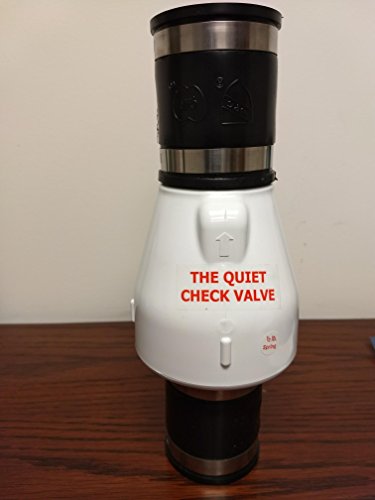
Campbell Check Valve Quiet CLR1.5 by Brady (White)

FibroPool 1.5″ Diverter and Inline Valve Bundle (CPVC)

FibroPool 3-Way Diverter Valve, Locking Handle, 1.5″ PVC

Dreyoo 2-Set Pool Check Valve Rebuild Kit (2″ to 2-1/2″)
FibroPool 3-Way Diverter Valve, Rotating Handle, 1.5″ ABS

FibroPool 3-Way Posi-Close Diverter Valve, 1.5″ PVC

FibroPool 1.5″ Diverter and Check Valve Bundle (CPVC)

FibroPool 1.5″ Diverter and 2″ Inline Valve Bundle (CPVC)
A Closer Look At Each Pick
Anyone who has pulled apart a Waterway check valve lid knows the flapper and seal are usually the first parts to wear out. The 600-7300B TruSeal swing check valve ships as a complete lid-and-flapper assembly, so swapping in a fresh unit takes far less time than rebuilding the old one piecemeal. For a backyard tech replacing a tired factory lid, this is the closest thing to a direct shape match without hunting through old part catalogs.
Because it mirrors the original 600-7300 footprint, you typically don’t have to re-plumb or re-align the surrounding union. Owners commonly report the included lid sits flat against the existing body and seals on the first try. If your pump is dripping at the lid or losing prime overnight, this is the kind of part that gets the system back to quiet, leak-free operation in a single afternoon.
Where It Helps
- Drop-in lid replacement matches the original 600-7300 layout.
- Integrated flapper and seal arrive as one piece, simplifying installation.
- Clear lid lets you see debris or wear without disassembly.
- Restores reliable one-way flow on aging Waterway spring check setups.
Trade Offs
- Specifically sized to Waterway bodies, so it’s a poor match for non-Waterway plumbing.
- Plastic flapper parts may need replacement sooner than metal-seated alternatives in heavily chlorinated water.
Right Fit For
Pool owners with a worn Waterway check valve lid who want a true-shape replacement rather than an off-brand adapter.
Skip It When
The Zoeller 30-0243 2″ PVC Swing Union Check Valve is a stronger pick for anyone running a mixed-brand equipment pad that needs spring-loaded backflow protection.
Pool equipment pads are loud enough without a plumbing line that hammers every time the pump shuts off. The Zoeller 30-0243 swings a flapper back into place using a small internal spring, and the manufacturer rates that spring specifically to absorb the pressure spike that causes water hammer. For most backyard setups, that translates into a noticeably quieter equipment area, especially on longer pipe runs that amplify the thud.
Unlike the Waterway valve above, the Zoeller is built as a true union check with compression end fittings, so it can drop into either horizontal or vertical plumbing without special adapters. The PVC body keeps weight down and resists corrosion from typical pool chemistry, while the full-flow internal passage helps avoid pressure loss. If your pump has been groaning each time it cycles, this valve is worth a serious look.
Points In Its Favor
- Spring-loaded flapper is tuned to dampen water hammer.
- Full-flow internal design reduces pressure loss across the valve.
- Compression union ends work in horizontal or vertical pipe runs.
- PVC body holds up well in standard pool water chemistry.
Points To Note
- 2″ sizing is best matched to equipment that already runs 2″ plumbing.
- Internal spring is a wear item; periodic inspection during seasonal service is wise.
Best Suited To
Homeowners chasing a quieter pump pad and meaningful backflow protection on 2″ lines.
Where Another Pick Suits Better
The Campbell Check Valve Quiet CLR1.5 is a smarter match when your plumbing stays at 1.5″ and space on the pad is very tight.
Some equipment pads have just enough room for the pump, filter, and heater, with barely a hand’s width between fittings. The Campbell Quiet CLR1.5 is built for exactly that kind of cramped layout. Its compact body keeps the swing action short, so you can tuck the valve into a tight run without forcing the pipe to jog around it.
Brady’s “Quiet” line uses a soft-closing swing mechanism that closes gradually as flow reverses. In our view, that gentle action makes a real difference on 1.5″ residential plumbing where water hammer travels quickly. Pair it with the Waterway 600-7300B replacement lid upstream and you have a tidy, low-noise check-valve section without much extra mass on the pad.
What It Does Well
- Compact swing design fits where larger union valves won’t.
- Soft-closing action eases the pressure spike when flow reverses.
- 1.5″ sizing matches the most common residential pool plumbing.
Honest Caveats
- Smaller body means less room for internal cleaning access.
- Not built for higher-flow commercial plumbing.
Made For
DIYers with tight 1.5″ residential plumbing who want a quiet, no-fuss check valve.
Not Your Match When
The Zoeller 30-0243 is a stronger alternative for 2″ lines or situations where you want a true union service point.
Routing water through a heater, a salt cell, and a waterfall usually calls for two separate valves. The FibroPool bundle gives you a 3-way Posi-Close diverter plus a 2-way inline shutoff in a single box, both sized to 1.5″ CPVC. The combination covers most residential plumbing without forcing you to mix fittings from different brands.
Unlike the Zoeller check valve above, this kit isn’t about silencing hammer. It’s about control: closing a port, balancing flow between two paths, and isolating equipment for service. The Posi-Close handle holds its position, so a bump to the equipment pad won’t send flow wandering mid-season.
The Good Stuff
- Two valves sized to common 1.5″ CPVC plumbing.
- 3-way diverter offers full, partial, or closed routing on any port.
- 2-way inline valve gives a clean isolation point for service work.
- Posi-Close handle resists drifting under vibration.
Worth Noting
- Neither piece is a true one-way check, so backflow protection still needs a separate valve.
- Slip fittings require CPVC cement for installation, which adds a step.
Who Should Grab It
Shoppers planning a heater bypass or salt-cell upgrade who want a matched valve pair from one box.
Look Elsewhere When
The FibroPool 1.5″ Diverter and Check Valve Bundle is the better fit if you specifically need built-in one-way backflow protection alongside the diverter.
A diverter that quietly rotates itself when you’re not looking is more common than people expect. The FibroPool 1.5″ 3-way valve uses a slip-fit locking handle, which clicks into discrete positions instead of relying on friction alone. For a yard with kids, pets, or a curious landscaper brushing past the pad, that mechanical lock keeps the flow path where you set it.
The three ports accept standard 1.5″ PVC pipe, so the valve glues into a residential plumbing run with the same cement you’d use elsewhere. Owners commonly use this style to split return flow between a heater loop and a dedicated water-feature line. Pair it with a separate check valve such as the Waterway 600-7300B if backflow protection is part of the plan.
What Earns Its Place
- Locking handle resists accidental rotation from vibration or bumps.
Factors To Consider
- PVC body, not CPVC, so confirm compatibility if your plumbing runs hot.
- Not a one-way check valve by itself.
Perfect Match For
Pool owners splitting flow between a heater and a water feature who want a handle that won’t drift.
Another Choice May Suit
The FibroPool 3-Way Posi-Close Diverter Valve is a smart alternative for T-style routing with a positive seal on closed ports.
Sometimes the valve body is fine and only the flapper has gone soft. The Dreyoo rebuild kit ships two replacement flapper assemblies plus matching covers, designed to slot into common 2″ to 2-1/2″ Jandy-style check valve bodies. You get a spare on hand so a future failure doesn’t leave you waiting for a part in the middle of swim season.
The included 180-degree PVC flapper is shaped to handle the flow range that most residential pools and spas push through this size of plumbing. If you maintain a larger pool or a spa with a dedicated blower line, you may find this kit covers more of the equipment pad in one purchase. The trade-off is that it’s a rebuild, not a full valve, so it only helps if your existing bodies are still in good shape.
Advantages To Know
- Two flapper assemblies in one box keeps a spare ready for next season.
Things To Weigh Up
- Only fits specific Jandy-style bodies, so measure before ordering.
- Doesn’t replace the valve body if that has cracked or warped.
Whose Shelf It Belongs On
Pool techs and homeowners with a Jandy-style 2″ or 2-1/2″ valve who want fresh flappers staged for the next service call.
Reach For A Different Pick When
The Waterway Plastics 600-7300B is the better match if you need a complete lid-and-flapper assembly rather than just the flapper.
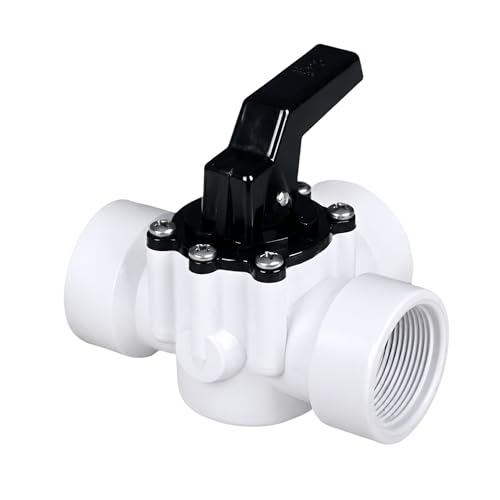
For pool owners who like to fine-tune flow by feel rather than by clicking through detents, the rotating handle on this FibroPool diverter is a joy. The 360-degree sweep lets you balance flow continuously between two return paths, which is useful when you’re dialing in how much water goes to a spa spillover versus the main pool returns.
The body uses ABS rather than PVC, so confirm the rest of your plumbing before gluing it in. ABS handles colder climates well and resists impact, but it doesn’t bond to standard PVC cement. Once that’s sorted, the diverter fits neatly into the same 1.5″ line layout used by most of the other FibroPool picks on this list.
Positive Points
- Continuous rotation allows fine-grained flow balancing.
Some Limits To Know
- ABS body, so the rest of the run should also be ABS or use a transition coupling.
- Not a true one-way check valve on its own.
Who Will Love This
Tinkerers who want to dial in flow between two return lines by hand without detents fighting them.
Where A Sibling Pick Shines
The FibroPool 3-Way Diverter Valve with Locking Handle is the better pick if you prefer a handle that holds a fixed position instead of one that moves freely.
The “Posi-Close” in this diverter’s name refers to how the handle seats against a positive stop, giving you a defined closed position rather than a vague “almost off” detent. On a T-style 3-way valve, that closed stop is what makes a heater bypass actually bypass instead of dribbling warm water into the loop all the time.
Standard 1.5″ PVC pipe glues straight into the slip ports, which keeps the installation compatible with most residential pool plumbing. The valve is also a friendly companion to the Dreyoo rebuild kit if you maintain a 2″ Jandy check valve further down the line. Together, they cover a heater bypass and a backflow point in a single, matched setup.
Everyday Perks
- Positive close position seals a port fully instead of leaking past.
Smaller Caveats
- Requires PVC cement for installation, which adds a dry-time step.
- Diverter action, not a one-way check valve on its own.
The Right Fit
Pool owners building a heater bypass or manifold who want a true closed position on the unused port.
Swap It Out When
The FibroPool 1.5″ Diverter and Check Valve Bundle is a stronger pick if you want one-way backflow protection bundled with the diverter.
Putting a chemical feeder or a salt cell on a bypass loop means you need both a diverter to direct flow and a check valve to keep aggressive water from migrating back into the heater. This bundle pairs a Posi-Close 3-way diverter with a spring-loaded 1.5″ check valve, both in CPVC, so you handle both jobs with matched fittings from one box.
Unlike the Waterway 600-7300B above, which only replaces a lid, this kit adds a full new check valve to the line. The CPVC body tolerates the higher temperatures that heater loops can reach, which is a real benefit when the bypass is sitting right next to a gas heater outlet. For most saltwater pools, this combination is a clean, single-purchase upgrade.
Real-World Strengths
- Spring-loaded check valve blocks backflow into sensitive equipment.
Room For Improvement
- Both valves are 1.5″, so 2″ plumbing will need a reducer.
Who It Suits Best
Homeowners running a salt system or chemical feeder on a heater bypass who want flow control plus backflow protection in one kit.
A Better Fit Elsewhere
The FibroPool 1.5″ Diverter and 2″ Inline Valve Bundle is the smarter pick when the main line is 2″ and the bypass is 1.5″.
Many older pools run a 2″ main suction line with 1.5″ branches feeding the heater and cleaner. This bundle answers that mixed-size reality by pairing a 1.5″ 3-way Posi-Close diverter with a 2″ 2-way inline shutoff, both in CPVC. The diverter handles the small branch, and the 2″ valve handles the main shutoff for service work.
The Posi-Close action on the diverter is the same proven design used elsewhere in the FibroPool line, which makes it a familiar feel for anyone who has worked with the brand before. The CPVC body handles the elevated temperatures near a heater outlet, and the included 2″ inline valve gives a clean place to isolate the pump for winterizing. If you need a 1.5″ check valve rather than just an inline shutoff, the sibling bundle reviewed above is a closer match.
The Helpful Details
- Mixed 1.5″ and 2″ sizing suits older residential plumbing layouts.
Practical Considerations
- 2″ inline valve is a shutoff, not a one-way check, so backflow protection still needs a separate component.
Built With In Mind
Pool owners retrofitting a heater loop on a system that mixes 1.5″ branches with a 2″ main.
Consider Something Else When
The FibroPool 1.5″ Diverter and Check Valve Bundle makes more sense if your main line is 1.5″ and you specifically need spring-loaded backflow protection.
Matching The Right Valve To Your Plumbing
Before picking a valve, confirm the pipe size, the body material, and how the valve seats. Pool plumbing usually runs 1.5″ or 2″, and the wrong size will force you into reducer couplings that steal flow and add leak points.
CPVC handles higher heat, which matters near gas heater outlets, while PVC and ABS suit cooler return lines. Think of the difference like choosing between a work shirt and a heavier jacket: both cover you, but one handles a hotter situation better.
A true one-way check valve uses a flapper or spring to block backflow, while a diverter or multiport valve simply routes or shuts off flow. Pools with a heater, salt cell, or raised spa almost always need at least one of each.
Where Shoppers Go Wrong
The most common mistake is treating a diverter valve as a substitute for a check valve. A diverter routes flow between open ports, but it usually lets water move backward through any port that’s still open. Without a dedicated one-way check, hot water or chlorinated water can creep into equipment that wasn’t designed for it.
Another slip-up is matching the wrong body material to the location. PVC cement won’t bond ABS, and standard PVC can soften near a heater outlet. Reading the body label before gluing saves a leak and a tear-out later. Assuming a generic “pool check valve” fits every brand is a third trap: Jandy-style, Waterway-style, and proprietary bodies are similar but not interchangeable, so always measure the existing body or lid before ordering.
What The Higher Tier Buys
Spending more on a check valve usually buys you a stronger internal spring, a union-style body that opens for service without cutting pipe, and a body material rated for higher heat. The Zoeller 30-0243 sits in that tier with its water-hammer-dampening spring and PVC union ends, and it makes sense on equipment pads that cycle a heavy pump or sit close to the house where noise carries.
For most backyard pools, a mid-tier CPVC diverter-plus-check bundle covers everything the system needs without paying for commercial-grade castings. The upgrade is worth it when the equipment pad is shared with living space, when the pump runs long hours, or when the existing plumbing already shows signs of pressure spikes. For a small, lightly used pool, the difference between tiers rarely justifies the extra cost.
Frequently Asked Questions
What does a swimming pool check valve actually do? It allows water to flow in one direction only, which keeps the pump primed and stops heated or chlorinated water from migrating backward into equipment that shouldn’t see it.
How do I know whether I need a check valve or a diverter valve? You need a check valve when backflow is the problem, and a diverter when you want to route flow between ports or shut off one line for service.
Can a diverter valve replace a check valve? No, a diverter routes flow but typically allows reverse flow through its open ports, so a true one-way check valve is still required for backflow protection.
How often should pool check valves be replaced? Flappers and seals commonly need refreshing every few seasons, while the valve body usually lasts much longer unless it cracks or warps.
What size check valve do most residential pools use? Most residential pools run 1.5″ plumbing on the suction and return branches, with 2″ used on the main run between pump and filter.
Closing Remarks
The right swimming pool check valves for your setup depend almost entirely on what your existing plumbing looks like and what problem you’re solving. Replacement flappers refresh tired lids, spring-loaded check valves quiet noisy systems, and diverter bundles handle routing on heater loops and salt cells. Match the size, match the body material, and you’ll spend a single afternoon on the pad instead of a full weekend chasing leaks.


