

Pool tile cleaning sits in a strange middle ground. You can’t really reach it with a bare hand, yet a regular pool brush just glides over calcium buildup like it isn’t there. A decent machine turns that slow, frustrating chore into something you actually finish on a Saturday afternoon. The seven picks below cover everything from hand-held scrubbers you can use today to full robotic units that handle the waterline while you sit on the patio.
The Choices Worth Comparing

Cleangor Crevice Cleaning Brushes for Hard to Reach Spaces (3-Pack, Red)
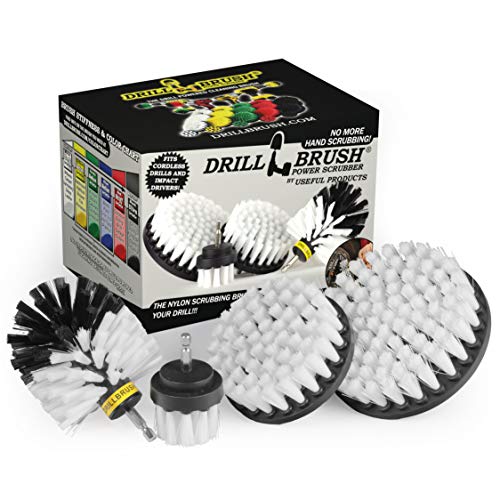
White Soft Interior Car Detailing Drill Brush Set (Nylon)

5-Piece Spin Brush Pool Cleaning Kit (Drillbrush)

Polaris Freedom Cordless Robotic Pool Cleaner (Cable-Free)

Polaris Lynx Automatic Suction Pool Cleaner with Scrubbing Brushes

Polaris PCX 868 iQ Smart Robotic Pool Cleaner

Polaris Vac-Sweep 280 Pressure-Side In-ground Pool Cleaner
A Closer Look At Each Pick
The Cleangor brushes earn their spot because every robotic or drill-powered cleaner in this list will hit the same dead zone: the grout line right at the waterline where a 2-inch gap runs between the coping and the water. These slim, hand-held brushes slip into that strip. Owners get a three-pack of red-handled scrubbers built with a plastic and alloy core, so they stay stiff through repeat contact with mineral film.
For most backyard pools, you’ll grab one of these before reaching for any powered tool. They’re cheap, light, and travel anywhere. If you spend more time with your arm in the water than the cleaner, this is the one you’ll actually use.
The Value In It
- The narrow head gets behind tile lips and into corners a power brush can’t reach.
- Plastic and alloy construction holds up to repeated wet use without flopping.
- A three-pack means you can rotate through a clean brush as one wears out.
- No batteries, no cords, no setup, just dip and scrub.
Soft Spots To Keep In Mind
- Manual scrubbing does tire out your wrist across a full pool perimeter.
- You may find the stiff bristles a touch aggressive on glazed surfaces if you press hard.
Whose Shelf It Belongs On
Pool owners who want a low-cost hand tool for the waterline band and the steps, especially in tight shapes where a bigger brush can’t pivot.
Skip It When
You’d rather let a machine do the work. The Polaris PCX 868 iQ in this list handles the waterline without you bending over the coping at all.
The white nylon set isn’t sold as a pool tool, and that’s actually a quiet advantage. The soft nylon bristles are designed for car interiors, which means they’re gentle on finishes, including the smoother, more delicate pool tile you may have around steps or waterline accents. Chuck the brush into a standard drill and the rotation handles the elbow work for you.
For most pool owners, this is the one to reach for when a hand brush feels too slow but a heavy-duty drill brush feels too aggressive. The nylon won’t haze polished stone, and the smaller diameters reach corners a 5-inch flat head can’t. You can run the same brush across vinyl, fiberglass, and tile without swapping pads.
Features That Help
- Soft nylon bristles stay gentle on polished tile and vinyl liners alike.
- Drill-driven rotation cuts down on scrubbing time across a full waterline.
- The set covers multiple diameters, so you can match the brush to the surface.
Honest Caveats
- Soft bristles don’t always cut through heavy calcium scale on the first pass.
- You need to own a compatible drill, which is a small added cost if you don’t.
Right Fit For
Pool owners with mixed surfaces, including polished stone or vinyl, who want one kit to cover both pool and car detailing.
Look Elsewhere When
You’re dealing with a thick calcium band that’s built up over seasons. The 5-Piece Spin Brush Pool Cleaning Kit from Drillbrush is stiffer and built for that fight.
This is the kit that started the whole drill-brush pool category, and the reason it shows up in a tile-cleaning roundup is the medium-stiff blue aquatic brush head. It chews through the white calcium haze that a soft nylon set like the Drillbrush white set just polishes around. You also get a 4-inch companion brush and a few smaller attachments for corners and step edges.
For inground gunite, pebble, or tile pools with a visible scale ring, this is the workhorse. Attach to any standard drill, run along the waterline with mild cleaner, and the rotating bristles lift the haze off the tile band without a pumice stone. The five-piece spread also covers patio and deck grime, so one tool handles the waterline and the surround.
Practical Advantages
- Medium-stiff aquatic bristles cut through scale that soft nylon can’t touch.
- Five sizes cover the waterline, steps, corners, and surrounding deck.
- Drill-powered scrubbing means less hand fatigue on a full pool sweep.
Trade-Offs To Consider
- Stiffer bristles can leave marks on softer tile, so test in a small area first.
- It does require a separate drill, and runtime depends on your drill’s battery life.
- Wet bristles tend to fling water, so expect some splash onto surrounding decking.
Quick Facts
Best Suited To
Owners of inground gunite or tile pools who are staring down a real calcium ring and want a tool that hits it without a multi-hour soak.
Consider Something Else When
You want the cleaning to happen while you relax on a lounger. The Polaris Freedom in this list scrubs the waterline without you holding anything at all.
The Freedom is the first Polaris designed to remove the floating-cable problem entirely. It’s a cordless robotic pool cleaner, which means no tangled cord, no booster pump, and no separate hose line running back to the filter. Drop it in, set the cycle through the iAquaLink app, and it climbs from the floor to the waterline and back, brushing tile as it goes.
For most smaller residential pools, the Freedom covers a cleaning run in around 2.5 hours, then surfaces at the waterline for easy grab-and-go retrieval. The lithium-ion battery charges in well under five hours. If you have been avoiding robotic cleaners because the cable always seemed to fight you, this is the design that finally solves it.
Benefits That Matter
- Cable-free operation eliminates the most common robotic-cleaner headache.
- iAquaLink app control lets you start, stop, and check cycles from a phone.
- The cleaner surfaces at the waterline, so retrieval is light rather than a fishing trip.
Points To Note
- Battery life limits how large a pool it can finish in a single cycle.
- As a robotic unit, it doesn’t replace the fine manual tile scrubbing of a drill brush for stubborn scale.
Made For
Homeowners with smaller residential pools who want a hands-off cleaning routine and prefer app control to fiddling with hoses.
Reach For A Different Pick When
Your pool pushes past 40 feet or has heavy, recurring tile scale. The Polaris PCX 868 iQ in this list handles bigger footprints and offers stronger agitation.
The Lynx runs on suction from your existing pool pump rather than an onboard motor or battery. Polaris calls the debris path HALO technology, which is essentially a streamlined internal channel that pushes silt, sand, and longer debris straight to your pool’s filtration system. The spinning brushes add a 15-inch wide scrubbing path that lifts fine particles from the floor and tile.
For inground pool owners with a properly sized pump, the Lynx is the kind of cleaner you connect once and largely forget. The dynamic turbines feed off the pump’s flow, and since the cleaner doesn’t carry an on-board debris bag, you don’t have to empty a canister every cycle. Your filter does the work.
What It Does Well
- Suction-driven power scales nicely with your existing pump’s flow rate.
- A 15-inch cleaning path covers a standard residential pool quickly.
- No debris bag means less routine emptying on your part.
- Spinning brushes handle the floor and walls in a single pass.
Less Ideal Details
- It depends on your pump running long enough to give the turbines enough flow.
- Suction cleaners tend to miss finer tile scale that a drill brush would lift.
Feature Snapshot
Who Should Grab It
Pool owners with an inground setup, a working filtration pump, and a need for routine floor and tile maintenance without adding an electric motor to the mix.
A Better Fit Elsewhere
You want app control and a cable-free experience. The Polaris Freedom in this roundup is the cordless alternative.
The PCX 868 iQ is the smart-pool version of the Polaris robotic line. It connects to home Wi-Fi and runs through the iAquaLink app, which means you can start a cycle, switch cleaning modes, or trigger the lift system from the couch. Underneath the app, the front and rear brushes use a staggered double helix rubber design that pulls debris toward a large intake, rather than pushing it around.
For inground pools up to around 50 feet, the PCX 868 iQ is the cleaner to look at when you want the full feature set without jumping to a commercial-grade unit. The easy-lift removal system brings the unit to the waterline at the end of a cycle, which is a small quality-of-life feature that matters more than it sounds once you’ve hauled a heavy cleaner out of a deep end.
A Favorable Mix
- iAquaLink app support covers start, stop, mode, timer, and lift from a phone.
- Double helix rubber brushes agitate stuck-on dirt and channel it inward.
- Designed for inground pools up to roughly 50 feet.
- Large filter canister cuts down on mid-cycle emptying.
Small Limitations
- Wi-Fi setup adds a small step that purely plug-and-play units skip.
- As a robotic cleaner, it won’t lift heavy calcium scale the way a manual drill brush can.
Core Details
Perfect Match For
Tech-forward pool owners with larger inground pools who want full app control and don’t mind spending a bit more for it.
Swap It Out When
You don’t need an app and your pool is on the smaller side. The Polaris Freedom handles compact footprints with a simpler cordless setup.
The Vac-Sweep 280 is the original pressure-side workhorse. It runs off a separate Polaris booster pump, which feeds the dual venturi jets to generate the vacuum power that scrubs the floor, walls, and tile line. A full cleaning run on a residential inground pool typically wraps in around three hours, and the cleaner moves fluidly through the standard pool shapes.
For inground pools with vinyl, fiberglass, gunite, pebble, or tile surfaces, the 280 has been around long enough that a lot of plumbing layouts are already set up for it. If you already have a booster pump on the pad or are planning one, the 280 keeps a heavy workload off your main filter because the debris bag catches leaves and grit before they reach the pump basket.
Reasons It Performs
- Booster-pump power delivers consistent cleaning pressure without depending on a battery cycle.
- Dual venturi jets create strong vacuum action across a wide debris range.
- Compatible with vinyl, fiberglass, gunite, pebble, and tile surfaces.
- Debris bag keeps large material out of your main filtration system.
Where It Is Less Suited
- Requires a separate Polaris booster pump, which adds plumbing and energy draw.
- Pressure-side units can leave some finer silt for the main filter to catch.
Technical Reference
Built With In Mind
Owners of established inground pool systems with the plumbing and electrical space to support a booster pump on the equipment pad.
Not Your Match When
You’d rather skip the booster pump altogether. The Polaris Lynx in this roundup runs on your existing pump’s suction, and the Polaris Freedom skips pumps entirely with a battery.
Choosing The Right Pool Tile Cleaning Setup
A pool tile cleaner machine is only as good as the match between your surface, your debris type, and your tolerance for setup. The right pick depends on a few attributes worth thinking through before you buy.
Surface Type And Brush Stiffness
Tile, plaster, pebble, and vinyl all react differently to a stiff bristle. Smooth glazed tile and polished stone can haze under a hard brush, so softer nylon, like the Drillbrush white set, sits more gently on those finishes. Gunite, rough tile, and pebble welcome medium-stiff aquatic bristles, which is why the 5-Piece Spin Brush Pool Cleaning Kit works so well on those. Test a small corner before committing to a full scrub.
Power Source And Setup Tolerance
Robotic cleaners like the Polaris Freedom or Polaris PCX 868 iQ run on internal power, so there’s no hose to plumb. Suction-side units like the Polaris Lynx tap into your existing pump. Pressure-side units like the Vac-Sweep 280 need a booster pump on the equipment pad. Each step up in power comes with a step up in setup work.
Pool Size And Cycle Time
Smaller residential pools finish comfortably inside a single battery cycle on a cordless unit. Larger pools, around 40 to 50 feet, are where a corded robotic like the PCX 868 iQ or a pump-driven cleaner starts to make more sense, because the runtime is no longer a constraint. Match the cleaner’s intended pool size to your actual pool.
How Much Of The Job You Want To Do Yourself
A drill brush and a hand crevice tool put you in the water, which is fine for spot work. Robotic and pump-driven cleaners handle the waterline band and floor without you holding a thing. The honest read is that the best long-term setup usually pairs both, a robotic cleaner for routine cycles and a brush like the Cleangor crevice set for the spots the machine misses.
Key Considerations Across These Picks
Wrong Turns To Avoid
The most common slip is matching a stiff drill brush to soft glazed tile and wondering why the finish hazed. Another is buying a cordless robotic for a pool larger than its cycle can finish, only to find the cleaner dying halfway up the wall. Check surface compatibility, pool size, and runtime before anything else.
When Paying More Pays Off
The jump from a manual brush to a robotic or pressure-side cleaner isn’t just about labor, it’s about coverage. A $30 brush cleans the strip you point it at. A $1,000 robotic pool cleaner covers the floor, walls, and waterline on its own schedule. You pay for the freedom to ignore the chore entirely, and that has real value for busy pool owners.


