

A quality cue can make the difference between watching the cue ball drift and watching it snap exactly where you aimed. Pool sticks on a tighter budget often get a bad reputation, but the right one delivers solid hits, balanced weight, and genuine longevity without emptying your wallet. This list focuses on cues that work hard for home tables, casual league play, and entry-level competition, all without the boutique markup.
A Fast Comparison Of The Options

McDermott Lucky L65 Leprechaun Cue

Kmise Carbon Fiber Pool Cue Stick

AB Earth 58″ Ergonomic Canadian Maple Cue

AB Earth Short Pool Cue Stick
Players 2-Piece D-LH Live & Hustle Cue

AKLOT Canadian Maple Pool Cue Set

Viking Valhalla 100 Series Pool Cue
McDermott Sledgehammer SH1 Break Cue
Meet The Standout Selections
The McDermott Lucky L65 turns a standard home game into something with personality. Built around a hard rock maple shaft (a dense, straight-grained hardwood favored for cue making because it resists warping and transmits energy cleanly), it carries the kind of weight that helps beginners develop a consistent stroke. The Leprechaun graphic wrap is genuinely bold, so on a dimly lit rec room table, the cue reads as a deliberate style choice rather than a compromise.
For a buyer who wants their first “real” cue to feel like a personal possession, the L65 makes a strong case. It’s a single-piece design, so there’s no joint wobble to chase later. Owners commonly report that the finish holds up well to regular chalk dust and the occasional bump against a table rail, which matters more than glossy marketing for a cue that actually gets used.
A Few Highlights
- Hard rock maple construction gives the cue a firm, predictable feel on center-ball hits.
- Single-piece build eliminates joint play that often frustrates newer players.
- Distinctive graphic sleeve makes the cue easy to identify at a busy pool hall.
- McDermott’s reputation in the cue world means replacement parts and tips stay accessible.
Things To Consider
- The fixed weight limits players who want to experiment with heavier or lighter setups.
- The bright graphic may not appeal to a buyer who wants a quieter, classic look.
Key Specs
Who It Suits Best
Players buying their first upgrade from a house cue who want a recognizable brand and a confident hit without a steep learning curve.
Consider Something Else When
The Viking Valhalla 100 Series suits shoppers who prefer a more understated look and a smoother pro-taper shaft.
The Kmise Carbon Fiber Pool Cue is the most technology-forward pick on this list, and the difference shows up the moment you push through the cue ball. “Deflection” describes how much the cue ball veers sideways when you apply English (side spin); “low deflection” means the cue ball travels more in the direction you’re actually aiming. A carbon fiber shaft (a shaft built from woven carbon threads rather than wood) keeps the cue stiffer than maple, so off-center hits drift less.
It ships in a 58-inch length with a 12.5mm tip, a 3/8×8 joint pin (the threaded metal connector between the shaft and the butt, measured by diameter and thread count), and adjustable weight options from 19.5 to 23 ounces. That adjustability is the quiet superpower: a player working on shot-making can swap weights as their stroke develops. Compared to the McDermott Lucky L65, this cue trades graphic flair for measurably straighter aim on side-spin shots.
The Practical Payoff
- Carbon fiber shaft reduces deflection, helping developing players land position play more accurately.
- Adjustable weight range lets the cue grow alongside your stroke as you improve.
- Multi-layer tip holds chalk well and resists mushrooming (the tip flaring out at the edges after repeated impact) over time.
- Two-piece design makes transport and storage easier for players without a permanent table.
Points To Note
- Carbon fiber feels firmer than wood, which can take a few sessions to adjust to if you’re used to a maple cue.
- The bare-tech aesthetic won’t appeal to a buyer who wants traditional cue styling.
- Replacement ferrules (the small white collar just below the tip that absorbs impact) for carbon shafts are less common than wood-shaft parts.
Right Fit For
Intermediate players practicing position play and English who want a stiffer, more consistent feel than a starter cue offers.
Look Elsewhere When
The McDermott Lucky L65 Leprechaun Cue suits a buyer who values traditional feel and a personality-driven design over low-deflection tech.
The AB Earth ergonomic cue solves a problem most starter cues ignore: hand fatigue. The butt section is hand-polished into a wavy shape, giving your grip a tactile anchor instead of the smooth cylinder that tends to slide during long sessions. Canadian hard maple forms the body, and the 13mm tip lands right in the middle of the standard range, which suits players who haven’t yet committed to a tip diameter preference.
The 18-21 ounce weight window offers some flexibility, though the available range depends on the specific configuration. For someone logging two-hour practice sessions or playing in a casual league, the grip is the main reason to consider this over a generic hardwood cue. It’s a thoughtful twist on a traditional format, and it costs less than a custom wrap from a cue maker.
Strong Points
- Wavy ergonomic butt reduces grip slippage during long sessions.
- Canadian maple body provides a familiar, predictable feel for transitioning players.
- Hand-painted finish gives each cue a slightly unique appearance.
Small Caveats
- Wavy grip takes a session or two to feel natural if you’ve only used round cues before.
- Hand-painted finish can show wear at high-contact grip zones over time.
Feature Snapshot
Made For
Players with sweaty hands or longer practice sessions who want a grip that stays planted without wrapping the cue in tape.
Swap It Out When
The Kmise Carbon Fiber Pool Cue Stick fits a player chasing low deflection and adjustable weight over ergonomic grip.
Shorter cues get overlooked in the pool world, but they’re the right answer for younger players, tight rec rooms, and anyone teaching a child the basics. The AB Earth short cue comes in 36, 42, and 48 inch options, so a parent can size the cue to the child instead of buying a 58-inch adult stick and watching the kid wrestle with it. The build mirrors the brand’s adult cues: hard rock maple shaft, conical taper (a shaft that gradually narrows toward the tip for smoother stroke feedback), and a 12.5mm leather medium tip.
The proportions matter for developing players. A cue that’s too long forces awkward bridge positions that can ingrain bad habits. This one’s decals mimic the look of cocobolo points and simulated ivory and abalone shells, which gives a young player a “real cue” feel rather than a toy. It’s the rare kid-sized cue that doesn’t embarrass its owner once guests come over.
A Strong Showing
- Three length options let the cue grow with the player rather than being outgrown in a year.
- Hard rock maple construction matches the feel of adult cues, easing the transition later.
- Decorative sleeve gives the cue a grown-up look kids often want.
- 12.5mm leather tip holds chalk reliably during beginner play.
Where It May Fall Short
- Not suitable for adult players once kids outgrow the shorter lengths.
- Limited weight options compared to standard adult cues.
- Smaller market means fewer replacement parts readily available.
Best Suited To
Families with young players, or anyone furnishing a tight game room where a full-size cue would dominate the space.
A Better Fit Elsewhere
The Viking Valhalla 100 Series Pool Cue suits an adult player ready for a full-size, pro-taper cue after outgrowing the short version.
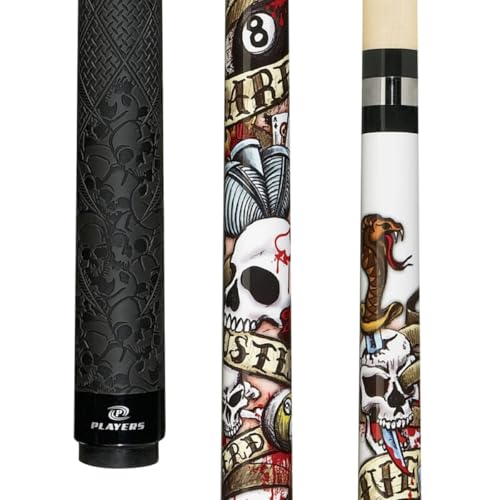
The Players D-LH has a louder personality than its price suggests. The “Live Hard Hustle Hard” tattoo-style graphics run along the forearm, and the rubberized grip with a skull traction pattern adds both function and visual identity. It’s a two-piece design, so the cue breaks down for transport, and the stainless steel joint and butt cap resist corrosion, which matters for storage in a damp garage or basement game room.
For a first-time buyer who wants something that doesn’t look like every other house cue at the bar, this one delivers style without obvious compromise on materials. The grip pattern is the practical win: the multi-zone traction gives your back hand something to anchor against during longer shots, similar in feel to the AB Earth ergonomic butt but with a very different aesthetic.
Where It Delivers
- Rubberized multi-zone grip offers solid control without requiring chalk on the hands.
- Two-piece construction makes storage and travel practical for apartment dwellers.
- Stainless steel joint and butt cap resist rust in less climate-controlled spaces.
- Bold graphic styling stands out from generic house cues.
Honest Caveats
- Graphics may polarize buyers who want a traditional cue aesthetic.
- Two-piece joints can develop slight play over years of frequent breakdown and reassembly.
Who Should Grab It
Casual players who want personality in their cue and a grip that works even when their hands are a little sweaty from a long match.
Another Choice May Suit
The AB Earth 58″ Ergonomic Canadian Maple Cue fits a buyer who prefers a quieter, wood-forward look with hand-polished grip texture.
The AKLOT set solves a different problem than the rest of this list. Instead of one cue, you get four, each at a different weight: 18, 19, 20, and 21 ounces. For a game room that hosts friends of varying sizes and strengths, or a buyer who wants to test which weight actually feels best before committing, that’s a practical head start. Each cue is 58 inches with a 13mm tip, built from Canadian maple wood.
The honest read is that these are honest workhorse cues rather than showcase pieces. They lack the joint hardware, branded decals, and finish polish of the McDermott or Viking options, but the bundle math is the point. For a rec room, a small league, or a buyer outfitting a basement table on a budget, the value of having four usable cues at once is hard to match.
The Value In It
- Four weights in one purchase lets a group find their preferred feel without buying separately.
- Canadian maple construction across the set keeps play characteristics consistent.
- 58-inch length suits most adult players in standard home setups.
Trade Offs
- No two-piece joint option, so transport and storage take more space than the Kmise or Players cues.
- Finish and ferrule quality won’t match the polish of a McDermott or Viking single-purchase cue.
- Limited weight range excludes players who prefer 22+ ounce setups.
Feature Rundown
Whose Shelf It Belongs On
Hosts of casual home games, small leagues, and shared game rooms where multiple players need their own cue at the ready.
Skip It When
The McDermott Sledgehammer SH1 Break Cue fits a serious player who wants a dedicated break cue with specialized ferrule tech instead of a four-cue starter set.
The Viking Valhalla 100 Series is the most “step up” cue on this list without crossing into custom cue territory. The hard rock maple shaft features a smooth pro taper, the kind of gradual narrowing that helps your stroke settle into a consistent rhythm. Viking has a long reputation in the cue world, and the Valhalla line is their entry-level expression of that design language.
For a player who has outgrown a basic house cue but isn’t ready to spend serious money on a custom build, the Valhalla is a sensible middle step. The play feel is noticeably cleaner than the AB Earth or AKLOT cues, though less specialized than the low-deflection Kmise. It’s a quiet, traditional-looking stick that does the job without calling attention to itself.
Everyday Perks
- Pro taper shaft encourages a smoother, more repeatable stroke.
- Viking brand heritage means consistent quality control across the line.
- Hard rock maple construction offers proven durability for frequent play.
Soft Spots
- Pro taper may feel too slim for players used to a thicker grip profile.
- No specialized tech like the McDermott Sledgehammer’s break-focused ferrule.
The Right Fit
Players moving up from a starter cue who want a refined feel and a recognized brand without entering custom cue territory.
Reach For A Different Pick When
The Kmise Carbon Fiber Pool Cue Stick fits a buyer chasing measurable performance gains from low-deflection shaft technology.
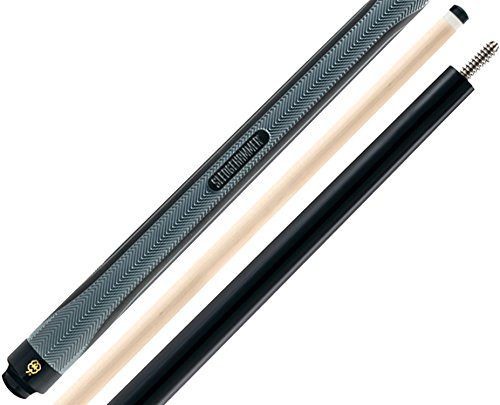
The Sledgehammer SH1 does one thing very well: it breaks. A “break cue” is a specialized cue used only for the opening shot (the break), where you want maximum energy transfer into the rack rather than finesse. McDermott’s patented ferrule technology is designed to optimize that energy transfer, and the cue has a reputation for splitting racks cleanly without the vibration sting that cheaper break cues send up through your wrist.
It’s not an every-shot cue. Most serious players keep a break cue separate from their playing cue because the heavier, stiffer construction that helps on the break would feel harsh on a cut shot. As an add-on for a player who already has a playing cue and wants a dedicated break tool, it makes sense. As a first-time purchase, it leaves too much on the table for everyday use.
What It Does Well
- Patented ferrule tech maximizes energy transfer on the break shot.
- McDermott build quality delivers consistent performance over years of use.
- Dedicated design means your playing cue stays in better condition longer.
Practical Considerations
- Not suited as an everyday playing cue, so it functions as a second-cue purchase.
- Heavier, stiffer feel can wear on your stroke if you use it for routine shots.
Technical Highlights
Who Will Love This
Players who already own a playing cue and want a purpose-built tool for maximum break performance.
Not Your Match When
The Viking Valhalla 100 Series Pool Cue fits a buyer who needs one versatile cue for every shot rather than a specialized break stick.
Choosing The Right Cue Without Overpaying
Weight And Balance Drive Your Stroke
The first thing to dial in is weight. Most adult players land somewhere between 18 and 21 ounces, and the right number depends on how you stroke the cue ball. A heavier cue (20-21 oz) tends to reward a smoother, more deliberate stroke, while a lighter cue (18-19 oz) lets you accelerate more freely on the break and on long shots. You can often feel the difference within a few shots, so a set like the AKLOT bundle, which covers four weights, is a useful way to find your match without committing early.
Shaft Material Shapes The Hit
Shaft material affects how the cue ball responds to off-center hits. Hard rock maple is the traditional choice: it’s dense, stable, and forgiving for developing players. Carbon fiber, like the Kmise cue, is stiffer and reduces deflection, so the cue ball travels more predictably when you apply side spin. The trade-off is feel: carbon fiber transmits less feedback through the grip, so a player who has been using wood may need a few sessions to trust the quieter response.
Grip Style Affects Long Sessions
Grip design matters more than most buyers expect. A smooth, unwrapped cue can slide during a sweaty match. Linen wraps add texture but wear down over years. The AB Earth ergonomic cue’s wavy polished butt and the Players D-LH’s rubberized multi-zone grip both solve the same problem in different ways. If you’ve ever lost position on a shot because your back hand slipped, the grip is the feature to prioritize.
Sizing For Younger And Shorter Players
Standard cues are 58 inches, which suits most adults but overwhelms younger players. A cue that’s too long forces an awkward bridge hand position and can ingrain bad habits early. The AB Earth short cue comes in 36, 42, and 48 inch options, so a parent can size the cue to the child now and move up as they grow. The transition to a full-size cue later is easier when the player started on something that matched their proportions from day one.
Smart Choices In A Crowded Field
Pitfalls Shoppers Hit
The most common mistake is buying a cue that looks good but feels wrong in the hand. A flashy graphic on a poorly balanced cue will frustrate you within a week. Another trap is assuming a heavier cue automatically means more power; for many players, especially beginners, a mid-weight 19-20 ounce cue actually produces more consistent results than a 22+ ounce model. Finally, ignoring joint construction on two-piece cues can lead to wobble developing over time, which is hard to fix once it starts.
Where The Extra Money Goes
Higher-tier cues like the Viking Valhalla or McDermott Sledgehammer cost more for measurable reasons. Tighter quality control on the shaft means straighter grain and more consistent flex. Patented ferrule and joint hardware, like the Sledgehammer’s break-focused design, deliver performance that budget cues can’t replicate. For a casual player, a budget cue is honestly enough. For someone logging serious practice hours or entering local tournaments, the upgrade pays back in shot consistency and durability over years of use.
Frequently Asked Questions
What weight cue should I start with?
Most adult players do well with a 19 or 20 ounce cue, which is the middle of the standard range. Heavier cues reward smoother strokes, lighter cues give you more snap on the break, and the 19-20 zone is forgiving enough to support either style as you develop.
Is a one-piece or two-piece cue better?
One-piece cues feel more solid because there’s no joint, but they’re harder to transport and store. Two-piece cues break down for travel and storage, and modern joint hardware is reliable enough that most players won’t notice the difference at the table.
Do I need a separate break cue?
A dedicated break cue like the McDermott Sledgehammer SH1 is worth considering once you’re playing seriously. The break shot puts unique stress on a cue, and keeping a separate tool for it means your playing cue stays in better shape over the years. For casual play, a single versatile cue handles the break just fine.
What tip size works for most players?
A 12.5 to 13mm tip covers the majority of recreational and league play. Smaller tips (12mm and under) favor spin and English, which advanced players prefer, while larger tips (13mm+) give a bigger miscue margin (the room for error before the tip slides off the cue ball instead of gripping it), which helps beginners. Most cues in this list land in that friendly middle range.
How long should a budget cue last?
With reasonable care, a well-made budget cue can deliver several years of regular play before the tip needs serious attention. Avoiding dropping the cue, storing it in a case or on a wall rack, and keeping the tip roughed up with chalk all extend its life.


