

Standing water on a winter pool cover is a slow-motion headache. It strains the cover, invites mosquitoes, and turns spring opening into a slog. The right cover pump clears that water fast, runs on its own, and stows away small when the season ends. These seven picks cover the most common scenarios, from a manual budget option to a smart pump that flips on the moment rain collects.
An Overview Of The Picks
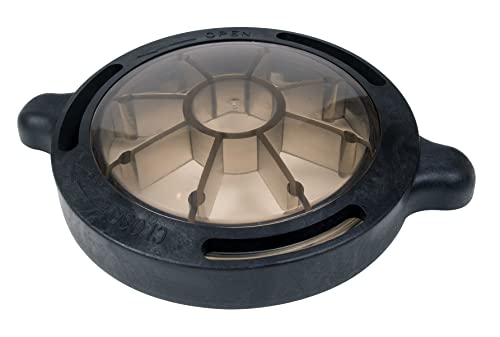
Splapool Replacement Pool Pump Basket Cover with O-Ring

Little Giant PE-1-PCP Manual Pool Cover Pump 170 GPH

Little Giant APCP-1700 Automatic Submersible Pool Cover Pump 1745 GPH
Little Giant Select Series LG-APCP1700 Pool Cover Utility Pump

Cleartide Smart Automatic Pool Cover Pump 1/4 HP 2160 GPH
Cleartide Smart Automatic Pool Cover Pump 1/3 HP 2790 GPH

DynaGlas Pump Lid O-Ring U9-375 V26-365
Taking A Closer Look At The Options
Before the submersible pump discussion begins, a quick note about a different “cover”: the pump’s own basket lid. Cracked or warped covers let air into the system, which can starve the pump and shorten its life. This replacement is built for Splapool models 72728, 72729, 72730, plus several in-ground and deluxe in-ground variants, and it also fits select Pooline, Extreme Force, Harris, XtremepowerUS, Blue Wave NE6171B, and Doheny’s pumps that share the same dimensions.
For someone whose pump is still strong but whose lid has gone brittle, this is the kind of part that turns a noisy, fizzing pump back into a quiet one. The O-ring gasket is included, so the seal is solved in one order. You will want to confirm the model number printed on your existing housing before buying, since a close-looking cover from another brand can sit a hair too loose.
Advantages To Know
- Matches a long list of Splapool above-ground, in-ground, and deluxe models
- Also fits a handful of other brands that share the same dimensions
- Includes an O-ring, so no separate gasket order is needed
- Costs far less than swapping the whole pump housing
Some Limits To Know
- Not a submersible cover pump, despite sharing the word “cover”
- Only useful if the existing pump body is still in good shape
Whose Shelf It Belongs On
Anyone with a tired Splapool pump housing who wants a clean seal without replacing the whole unit.
Skip It When
You need a pump that clears standing water, where the Little Giant APCP-1700 or one of the Cleartide models is the better fit.
The Little Giant PE-1-PCP is the no-frills end of the list. At 170 gallons per hour with a 25-foot cord, it moves water slowly but steadily, and the corrosion-resistant polyester housing shrugs off a season outside. Since it is manual, you plug it in, drop it on the cover, and unplug it when the water is gone.
For a small cover or a yard where you only deal with light rainfall, that hands-on approach is honestly fine. The snap-off inlet screen is a thoughtful touch: debris lifts away without tools, so the impeller stays protected. Compared to the automatic units below, this pump trades speed and convenience for a lower price and a smaller learning curve.
Everyday Perks
- Snap-off inlet screen cleans in seconds without tools
- Compact polyester housing resists corrosion in winter storage
- 25-foot cord reaches most backyard outlets
- Simpler controls than any automatic unit on this list
Points To Keep In Mind
- 170 GPH is slow on large covers, especially after heavy rain
- Requires you to monitor the pump and unplug it when the cover is dry
Best Suited To
Small above-ground covers and homeowners who prefer a manual approach.
A Better Fit Elsewhere
Anyone with a large cover who wants true set-and-forget behavior will find the Little Giant APCP-1700 automatic model more useful.
The Little Giant APCP-1700 is the workhorse most people picture when they think of a pool cover pump. It runs on 115 volts, pulls 1745 gallons per hour, and turns on automatically at about 2 inches of water before shutting off near 1 inch. Drop it on the cover, walk away, and the float switch does the rest.
Maintenance is refreshingly low-effort: the float and air lock are accessible without screws or tools, so a clogged impeller is a 30-second fix rather than a teardown. A built-in handle makes it easy to lift off a wet cover without pinching fingers. For most homes with a standard winter cover, this is the dependable middle-ground pick, and it has been around long enough that replacement parts and troubleshooting advice are easy to find.
Everyday Wins
- Automatic float switch starts at 2 inches and stops near 1 inch
- 1745 GPH clears a typical cover in well under an hour
- Tool-free access to the float and air lock for quick cleaning
- Integrated handle for safer placement and removal
Trade Offs
- 25-foot cord may fall short on very large yards or distant outlets
- No dedicated dry-run or freeze safeguards beyond the float
Right Fit For
Most homeowners with a standard winter cover who want a hands-off pump at a sensible price.
Look Elsewhere When
You live where hard freezes are common, where the Cleartide Smart Automatic Pool Cover Pump offers more aggressive protection.
The Select Series takes the APCP-1700 formula and trims the rough edges. It is still 1/3 HP, still automatic with the same 2-inch on and 1-inch off behavior, and still tool-free to service, but the body is more compact and the weighted base sits more confidently on a sagging cover. For yards with heavy leaf drop, the screen design tends to stay unclogged longer between cleanings.
It is also a useful utility pump for flat rooftops and boat covers when winter rolls around, so the value stretches beyond the pool. Compared to the standard APCP-1700, you get a more polished feel and a footprint that packs into a smaller storage bin. The trade-off is mostly cosmetic, but a few owners note the carry handle sits a bit closer to the discharge, which takes a small adjustment.
Bright Spots
- Compact body stores easily in a winter gear bin
- Weighted base keeps the pump stable on soft covers
- Doubles as a utility pump for rooftops and boat covers
- Tool-free float access for quick cleanups
Where It Is Less Suited
- Handle placement can feel tight when reaching past the discharge
- Flow rate is similar to the older APCP-1700, not a step up
Who Will Love This
Homeowners who want the same proven pump internals in a tidier, more travel-friendly package.
Another Choice May Suit
People who need real horsepower for a large cover will get more from the Cleartide 1/3 HP 2790 GPH model.
The Cleartide Smart 1/4 HP pump is the first of two Cleartide entries on this list, and it is aimed at homeowners who want the pump to think a little. It moves 2160 gallons per hour, lifts water about 28 feet, and includes a quick-detach base that lets it switch from a cover pump to a submersible utility pump without extra fittings. A 25-foot cord gives flexible placement.
Where it stands apart is the safety logic: it auto-shuts off in roughly 5 seconds if it runs dry, stops immediately if tipped on its side, and clears its own air locks. In real terms, that means fewer burned-out motors if a hose kinks or the pump shifts on a sloped cover. For most home setups, this is a smart, slightly faster upgrade over the classic Little Giant, and the freeze-protection behavior is a meaningful plus in northern climates.
Standout Benefits
- Auto shut-off in seconds if the pump runs dry
- Tip-over instant stop protects the motor on uneven covers
- Self-clearing air locks reduce manual troubleshooting
- Quick-detach base converts it into a utility pump in moments
Things To Consider
- Smaller 1/4 HP motor than the larger Cleartide model
- Smart electronics add a layer that some prefer to keep simple
Key Attributes
Made For
Cold-winter homeowners who value auto shut-off and freeze-aware behavior over raw power.
Where A Sibling Pick Shines
Anyone with a very large cover or heavy rainfall should consider the Cleartide 1/3 HP 2790 GPH model for faster clearing.
The larger Cleartide 1/3 HP pump is the strongest flow rate on this list at 2790 gallons per hour, with a 30-foot lift. It keeps every smart feature of its smaller sibling: 5-second dry shut-off, tip-over stop, and self-clearing air locks, but adds the muscle for big inground covers and storms that drop a half inch of water overnight.
In practical terms, the extra flow means a 20 by 40 foot cover empties in a fraction of the time the manual Little Giant would need. It is also a genuine utility pump, so a flooded window well or a saturated flat-roof section is a reasonable job for it. The honest trade-off is that it costs more than the smaller Cleartide, and on a small cover the extra flow rarely matters.
Useful Highlights
- 2790 GPH clears large covers and heavy rain fast
- 30-foot lift handles long hose runs to a drain
- Auto shut-off and tip-over protection guard the motor
- Functions as a utility pump beyond pool season
Potential Drawbacks
- Higher cost than smaller Cleartide and Little Giant models
- Extra power is wasted on small above-ground covers
Who Should Grab It
Homeowners with large inground covers, frequent storms, or dual-purpose utility needs.
Reach For A Different Pick When
Your cover is modest and your budget is tighter, where the Little Giant APCP-1700 covers the basics well.
Last up is the smallest, most specific pick on the list: a replacement lid O-ring for Sta-Rite DynaGlas and related series pumps. When a pump trap starts weeping water or pulling air, the O-ring is the usual suspect, and a fresh gasket is a far cheaper fix than chasing a phantom leak inside the housing.
It fits Pentair U9-375 trap covers on Max-E-Glas II, Dura-Glas II, Dyna-Glas, Dyna-Max, and Dyna-Wave series pumps, which covers a wide swath of older Sta-Rite and Pentair installations. Owners commonly report that replacing this small ring stops the drip in minutes. The honest read is that this is a niche part: it only helps if your pump matches one of those model series, and you will want to cross-check the existing ring before ordering.
Where It Delivers
- Stops lid-side leaks on a wide range of Sta-Rite and Pentair pumps
- Cheaper than replacing the whole trap cover
- Simple swap with basic hand tools
Worth Bearing In Mind
- Only fits specific DynaGlas, Max-E-Glas, and related series pumps
- Does not address leaks caused by a cracked lid or worn threads
Perfect Match For
Sta-Rite and Pentair owners with a weeping pump lid and a working pump body.
Not Your Match When
You actually need a submersible cover pump, where the Little Giant APCP-1700 or Cleartide 2160 GPH covers that job.
What Matters When Shopping For A Cover Pump
Flow Rate And Match To Cover Size
Flow rate, measured in gallons per hour, tells you how fast a pump can drain a saturated cover. A small 12-foot round cover empties quickly even at 170 GPH, while a 20 by 40 foot inground cover benefits from anything over 1500 GPH. Match the pump to the cover rather than buying the biggest motor you can find.
Automatic Versus Manual Operation
A float switch (a small floating arm that rises and falls with the water level to trigger the pump) makes the pump start when water reaches a set depth and stop when it drops. Manual pumps require you to plug and unplug. Automatic operation is genuinely worth the small premium for most homeowners, since rain can arrive at any hour and you may not be home to babysit the pump.
Cord Length And Power Source
Most cover pumps run on standard 115-volt household outlets, but a 25-foot cord only reaches so far. Measure the distance from your nearest outdoor GFCI outlet (a ground-fault outlet that cuts power quickly to prevent shock near water) to the center of the cover before choosing. A short cord forces awkward extension-cord setups that are not ideal near water.
Smart Safety Features
Higher-tier pumps add dry-run shut-off, tip-over stop, and self-clearing air locks. These features extend motor life when a hose kinks, the pump shifts on a slope, or the cover empties faster than expected. They are not essential, but they are the kind of thing you appreciate the first time a problem occurs.
Key Considerations Across These Picks
Common Shopping Slip Ups
The most frequent mistake is buying a manual pump and expecting it to behave like an automatic one. Manual units need supervision, and that turns into a chore during stormy weeks. The next is underestimating cord length, which leads to risky extension-cord runs near wet covers. Match the pump to your outlet, your cover size, and your tolerance for checking on it.
What The Higher Tier Buys
The jump from a basic Little Giant to a Cleartide Smart model is mostly about protection features and flow. You are paying for faster drainage, auto shut-off when the pump runs dry, and tip-over safety. For a small cover in a mild climate, that is rarely worth the premium. For a large inground cover, frequent storms, or a hard-freeze region, the upgrade pays for itself the first time a hose kinks and the pump survives it.
Frequently Asked Questions
How Often Should A Pool Cover Pump Run During Winter?
Most automatic pumps cycle on and off a few times per week during rainy stretches and stay quiet during dry spells. Manual pumps only run when you plug them in, so they sit dormant otherwise.
Can A Cover Pump Run Continuously Without Harm?
Continuous running without water will burn out most pumps quickly. Automatic units with dry-run protection shut themselves off, while manual pumps should be unplugged as soon as the cover is clear.
Is A Higher GPH Always Better?
Not necessarily. Very high flow on a small cover can whip the cover surface and shorten its life. Match the GPH to the cover size and the typical rainfall in your area.
Where Should The Pump Sit On The Cover?
Place it at the lowest point where water naturally collects, on a flat section of the cover if possible. A weighted base helps on sloped or sagging covers.
How Do You Store A Cover Pump In The Off Season?
Rinse it off, dry the cord, and store it in a bin indoors. A quick visual check of the inlet screen and float before packing extends the life of the pump significantly.
Closing Thoughts
A reliable cover pump quietly does its job all winter and disappears into a bin in spring. Match the flow to your cover, decide whether you want hands-off automation, and pay extra for safety features only if your climate or cover size demands them.


