

Shopping for an L-shaped pool cover used to mean settling for a rectangle that left gaps over the bend, or paying a custom-fab shop. The seven options below split into two practical groups: full safety-rated covers for inground L-shapes, and lighter rectangular covers for inflatable and above-ground pools that approximate the fit. Use the comparison table to scan the lineup, then read the reviews for the specifics that actually matter at install time.
A Quick View Of The Lineup

Lynkron Pool Safety Cover for Inground Pools (Green)
Lynkron Pool Safety Cover for Inground Pools (Blue)

Zhouyiqiaoyu Inground Pool Safety Cover 23x43ft (Blue)

ULTCOVER Waterproof Square Hot Tub Cover 80″ (Black)

Mosenpol 90″x60″ Inflatable Pool Cover (Rectangle)
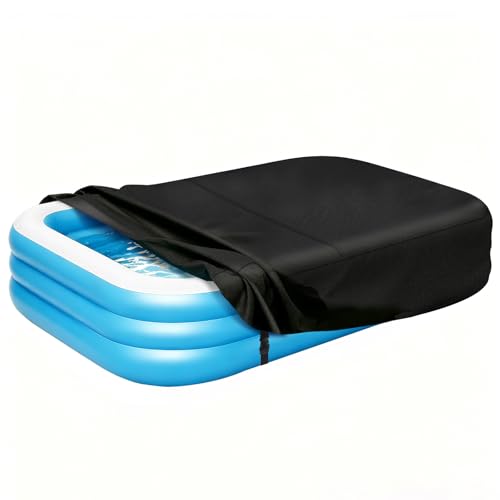
KJX Rectangle Inflatable Pool Cover 120″x72″

Sobana 90″x60″ Rectangular Pool Cover (Blue)
What Each Pick Brings To The Table
The green Lynkron is the kind of winter cover that earns its keep through the long off-season when debris, snow load, and UV exposure all gang up on a pool. Built around a mesh weave with a triple-stitched perimeter, it’s a safety-style cover aimed at rectangular inground pools. For an L-shape, you’ll need a custom section or to combine it with a partner panel, but for the straight runs that frame an L, the construction feels reassuringly heavy.
Compared to the bare-bones inflatable covers later in this list, this is a different category of product entirely. Owners of full-size inground pools in regions with real winters are the obvious audience. If your “lazy l” refers to a residential inground pool with an L-shaped footprint, this cover handles the longer leg well.
What It Does Well
- Mesh construction lets standing water drain through instead of pooling on top, reducing the risk of sags and collapse during heavy rain or snowmelt.
- Triple-stitched seams around the perimeter add real tear resistance where straps pull hardest.
- Green colorway blends into most backyard landscaping better than stark blue or black covers.
- Light-blocking weave helps slow algae growth underneath by reducing the sunlight that feeds it.
Things To Consider
- Rectangular-only shape means true L-shapes need a custom panel or a paired-cover setup to fully cover the bend.
- Mesh will let fine silt pass through over time, so a small amount of spring cleanup is expected.
- Installation requires proper anchor points set into the deck; DIYers without anchors already in place face extra masonry work.
Built With In Mind
Homeowners with rectangular inground pools in four-season climates who want a safety-rated cover and don’t mind ordering hardware separately.
Swap It Out When
Your pool is a smaller inflatable or above-ground setup, where the Zhouyiqiaoyu pool cover or the Mosenpol 90″x60″ fits the scale and budget far better.
Functionally, this blue Lynkron is a sibling of the green version above: same mesh weave, same triple-stitched perimeter, same load-bearing intent. The only real difference is aesthetic. For some backyards, blue ties in better with pool tile, decking stain, or nearby shade structures. It matters more than it sounds when a cover sits visible for five months of the year.
The honest read is that you should pick the color you’ll tolerate staring at all winter, because the engineering is identical. If your “lazy l pool cover” needs are color-driven rather than size-driven, this is the same dependable build in a different finish.
Well-Handled Touches
- Blue finish hides waterline staining and mildew marks better than lighter colors over multiple seasons.
- Same mesh drain-through behavior as the green model, so rain and snowmelt don’t collect on top.
- Light-blocking weave helps with off-season algae control in inground pools.
Trade-Offs
- No size or material advantage over the green version, so you’re choosing on color alone.
- Rectangular form factor still requires a custom L-shaped section if your pool bends.
- Anchor hardware typically sold separately, so total cost climbs once you add springs and brackets.
Whose Shelf It Belongs On
Inground pool owners who prefer a blue aesthetic and want the same Lynkron build, but don’t need a fundamentally different cover from the green model.
Reach For A Different Pick When
You’re shopping for a smaller inflatable pool, where the KJX Rectangle Inflatable Pool Cover offers a much better size-to-cost match.
The Zhouyiqiaoyu is sized for a real residential pool: the listing targets a 23x43ft pool with the actual cover measuring 25x45ft to eliminate stretch during tensioning. That 2ft oversize is the kind of detail that matters when you’re pulling a cover taut across 40+ feet of water, and you can see why they build in the slack. The high-strength PP mesh with double-layer straps and triple stitching reads like a cover designed by people who’ve seen a few winters.
For an L-shape with a long rectangular leg of 23 feet, the size works. You won’t get a single panel over the bend, but you’ll cover the largest section properly. Installation tools are included, which is a real plus compared to brands that ship just the cover and leave you sourcing wrenches and springs separately.
What Helps Most
- 25x45ft cover on a 23x43ft pool means you can pull tension without worrying about overstretching the mesh.
- Double-layer straps distribute load across a wider area, which reduces the chance of one anchor point tearing free under snow weight.
- Included installation tools save a trip to the hardware store and a few hours of digging around for the right wrench size.
Where It May Fall Short
- Specifically sized for 23x43ft pools; smaller or differently proportioned pools will have excess material to manage.
- Mesh still permits fine sediment through, so spring opening will involve some vacuuming.
Right Fit For
Owners of larger rectangular inground pools near 23x43ft who want a sized-right mesh safety cover with hardware in the box.
Consider Something Else When
Your “lazy l” is a small inflatable or kiddie pool, in which case the Sobana 90″x60″ Rectangular Pool Cover or Mosenpol 90″x60″ makes far more sense at the right scale.
Stepping away from swimming pools for a moment, the ULTCOVER is a different product category entirely. It’s a 600D polyester canvas cover (600D refers to the denier, a measure of fiber thickness and weight, with higher numbers meaning tougher fabric) with a waterproof backing, built to drape over a square 80-inch hot tub as a secondary protective layer. The structured air vents on two sides prevent the wind from catching under it and ballooning away, which is a small but thoughtful detail.
For an L-shaped pool, this cover is irrelevant. For a square 80-inch spa, it’s a strong accessory that lives on top of a hard insulated cover to keep rain, leaves, and bird droppings off the expensive foam underneath. The honest framing: this is a hot tub accessory, not a pool cover, and the listing makes that clear.
Useful Highlights
- 600D polyester canvas with waterproof backing handles rain, hail, snow, and dust without leaking through to the spa underneath.
- Side air vents prevent the cover from acting like a sail in moderate wind.
- Black colorway hides grime and tree debris between cleanings.
Worth Noting
- Not a standalone cover; it must be used over an existing insulated hard cover to actually insulate a hot tub.
- Square 6’4″ x 6’4″ footprint only fits square spas up to 80 inches, so rectangular or larger hot tubs need a different size.
Who It Suits Best
Square 80-inch hot tub owners who want a weatherproof outer shell to extend the life of their insulated cover.
Not Your Match When
You actually need a swimming pool cover, in which case the Lynkron Pool Safety Cover or the Zhouyiqiaoyu 25x45ft cover is the right starting point.
Now we’re in inflatable territory. The Mosenpol measures 90″ x 60″ x 20″ with that last dimension being overhang, so it drapes over a 90″x60″ inflatable or frame pool and ties down at all four corners. The fastening system pairs two drawstrings with eight integrated cords, which is more than most budget covers offer. The 20-inch overhang matters: it gives you fabric to cinch without the cover riding up off the waterline.
For small backyard inflatable pools, this is a sensible mid-range option. It’s the kind of cover that keeps leaves, dog hair, and overnight dew out of the water so the chlorine or bromine isn’t fighting a losing battle. Just confirm your pool’s actual dimensions before clicking buy, because the difference between 90″ and 96″ is the difference between snug and useless.
Where It Helps
- Two drawstrings plus eight integrated cords keep the cover anchored better than single-cord competitors, especially during gusty conditions.
- 20-inch overhang provides real fabric to pull taut without exposing the waterline.
- Fits standard 90″x60″ inflatable and frame pools that are common in family backyards.
Honest Caveats
- Material thickness isn’t specified in the listing, so you may find it lighter than a 600D cover like the ULTCOVER or Sobana.
- Not designed for inground pools or any pool larger than 90″x60″.
Quick Facts
Made For
Backyard owners of 90″x60″ inflatable or frame pools who want a secure cover that won’t blow off at the first breeze.
A Better Fit Elsewhere
Anyone with a rectangular 120″x72″ pool should look at the KJX Rectangle Inflatable Pool Cover, which is sized for that larger footprint.
The KJX is a step up in both size and material from the Mosenpol above. It targets the 120″x72″ rectangular inflatable, which is a popular family-pool size for backyards with a bit more room. The fabric is Oxford cloth (a woven textile known for durability and water resistance) with a waterproof coating and reinforced seams, which is a meaningful upgrade over the typical thin PE sheet that comes bundled with cheaper pools.
In real-world use, the Oxford fabric holds up to repeated folding better than cheaper covers that crack at the creases after a season or two. Reinforced seams are the kind of feature you don’t notice until you check after a windy spring, when lesser covers have started splitting along the stitch line.
Practical Advantages
- Oxford fabric with waterproof coating stands up to repeated folding and unfolding without cracking at the creases.
- Reinforced seams improve wind resistance and extend the cover’s working life.
- 120″x72″ sizing fits the larger family-style inflatable pools that smaller covers can’t handle.
Smaller Compromises
- Color isn’t clearly specified in the listing, so you may receive a different shade than pictured.
- Larger footprint means more material to fold and store when the pool is in use.
Best Suited To
Families with a 120″x72″ inflatable pool who want a more durable cover than the typical bundled option and don’t mind the larger storage footprint.
Look Elsewhere When
Your pool is closer to 90″x60″, in which case the Mosenpol or Sobana will fit without bunching excess material around the edges.
The Sobana rounds out the list at the same 90″x60″ target as the Mosenpol, but with a different material story: 600D fabric with a PVC (polyvinyl chloride) waterproof coating, plus an elastic band at the bottom paired with four buckles for stability. The included storage bag is a small touch that signals the maker thought about off-season storage, which is a real pain point with bulkier covers.
600D is a meaningful upgrade in fabric weight from the typical PE tarp cover, and the PVC coating gives it that satisfyingly stiff hand-feel that holds its shape on the pool. The elastic-and-buckle combo is the kind of closure system that keeps the cover in place when a curious dog paws at the corner.
Useful Touches
- 600D fabric with PVC coating handles rain, dust, and sun exposure across multiple seasons without leaking through.
- Elastic band plus four buckles keep the cover seated firmly even when the dog investigates.
- Included storage bag makes off-season stashing less of a wrinkled mess in the garage corner.
Points To Note
- Only fits pools up to 90″x60″, so larger rectangular inflatables are out of reach.
- Cover only; no installation tools or anchors included, which is expected at this price point.
Feature Snapshot
Who Should Grab It
Owners of 90″x60″ rectangular inflatable pools who want a tougher 600D cover and value a tidy storage solution when the pool comes down for the season.
Where A Sibling Pick Shines
Anyone with a 120″x72″ inflatable should step up to the KJX Rectangle Inflatable Pool Cover, which fits the larger footprint with the same Oxford-fabric build.
Picking The Right Cover For An L-Shaped Pool
The phrase “lazy l pool cover” usually points to one of two real-world situations. Either you own a full-size inground pool with an L-shaped footprint, or you have a smaller rectangular inflatable that loosely approximates one leg of an L. Knowing which camp you’re in shapes everything downstream, from budget to installation effort.
For inground L-shapes, the practical approach is almost always a custom-fabricated cover rather than a stock rectangle. The picks above cover the straight-run sections well, but a true L-bend needs a panel cut and stitched to your pool’s exact dimensions. Measure both legs and the corner radius before ordering, and account for at least a 2ft oversize on each side for proper tensioning.
For inflatable and above-ground setups, dimension matching is the whole game. Measure your pool’s outer footprint, not the waterline, and compare to the cover’s stated fit dimensions, not the cover’s own measurements. The 20-inch overhang on covers like the Mosenpol and Sobana exists specifically to give you fabric to cinch, so don’t be alarmed by extra material.
Material And Build Quality
Mesh vs. solid is the first real fork in the road. Mesh, like the Lynkron and Zhouyiqiaoyu safety covers, drains water through and resists collapse under snow load. Solid covers, like the ULTCOVER hot tub cover, keep everything out but can collect standing water. For winter covers with real precipitation, mesh is generally the more forgiving choice.
Fabric weight, expressed in denier (D), is the next spec to watch. 600D polyester or Oxford cloth outperforms standard PE tarp material on tear resistance, UV tolerance, and fold-memory. The Sobana and ULTCOVER both lean on 600D, which is a sensible baseline for covers that need to survive multiple seasons.
Securing And Hardware
A cover is only as good as its fastening. Drawstrings and integrated cords (Mosenpol) work for light-duty inflatable pools. Elastic bands with buckles (Sobana) add a layer of redundancy. For inground safety covers, proper anchor points drilled into the deck are non-negotiable, and springs with racheting tools are what actually pull the cover taut.
The honest read is that most DIYers underestimate installation time on inground covers. Budget a full day for the first install, and remember that the cover should be tight enough to bounce a quarter but not so tight that the seams are visibly straining.
Mistakes And Upgrade Tradeoffs
Where Shoppers Go Wrong
The most common slip-up is trusting the waterline dimension instead of measuring the pool’s outer edge. Covers sized to the water will end up too small once you account for coping and the overhang needed to cinch down. A second pitfall is buying a cover without checking what hardware is included. Some listings ship the cover only, leaving you to source springs, anchors, and ratchet tools separately, which can double the apparent value gap between two products.
For inflatable pools, overlooking storage is a frequent miss. A wet cover folded into a pile in the garage breeds mildew and can stain whatever it touches. The Sobana’s included storage bag is a small thing that pays off in a few months.
When Paying More Pays Off
The step from a basic PE tarp cover to a 600D Oxford or polyester cover is where most of the real-world durability is gained. You pay for fabric that doesn’t crack at the creases after a season, and you get a cover that handles UV exposure without becoming brittle. For an inground pool, the step from a budget mesh cover to a triple-stitched, double-strap option like the Zhouyiqiaoyu is what stands between you and a torn cover after a heavy wet-snow event.
Higher-tier covers also tend to include installation hardware. That convenience isn’t trivial: the right springs and ratchets are often what determine whether a cover installs cleanly or turns into an afternoon of frustration.
Frequently Asked Questions
What size cover do I need for an L-shaped pool? Measure both legs of the L at their longest points, plus the corner radius if your pool has a rounded bend. Most stock rectangular covers will only handle the longer leg, so plan on a custom panel for full coverage or accept partial coverage on the shorter leg.
Are mesh covers better than solid covers? Mesh covers drain standing water through the fabric, which prevents collapse under snow and rain weight. Solid covers block all light and debris but can pool water on top. For winter use in regions with real precipitation, mesh is generally the more forgiving choice.
Can I use a rectangular cover on an inflatable pool? Yes, as long as the cover’s stated fit dimensions match your pool’s outer footprint. The 90″x60″ covers like the Mosenpol and Sobana are designed for that specific inflatable size. Measure before you order.
How do I keep the cover from blowing off? Look for covers with multiple fastening points. Drawstrings plus integrated cords (Mosenpol) or elastic bands plus buckles (Sobana) hold better than single-cord designs. For inground safety covers, properly installed anchors with springs are essential.
How long do these covers typically last? A 600D cover used seasonally can last several years with proper storage. Mesh safety covers on inground pools routinely last a decade when properly tensioned and maintained. Thin PE covers often need replacement after a season or two.
The Takeaway
For an inground L-shape, start by measuring carefully and decide whether a stock rectangle plus a custom panel beats a single custom cover. For inflatable and above-ground pools, the Mosenpol, KJX, and Sobana cover the 90″x60″ and 120″x72″ footprints that come up most often. Match the cover to your pool’s actual dimensions, not the waterline, and don’t skip the storage plan for the off-season.


