

A cold plunge in October is great, until it isn’t. A reliable pool heater turns your backyard from a three-month splasher into a year-round hangout, and choosing the wrong one means wasted money, lukewarm dips, or a unit that fights your climate. This shortlist looks at heat pumps, gas-fired workhorses, and a pump that quietly powers them all, so you can match the right hardware to your pool size, your local weather, and your tolerance for utility bills.
How The Shortlist Stacks Up

NATURAQUELL Inverter Pool Heat Pump 16000 Gallon

Hayward TriStar VS Variable Speed Pool Pump 1.85 HP
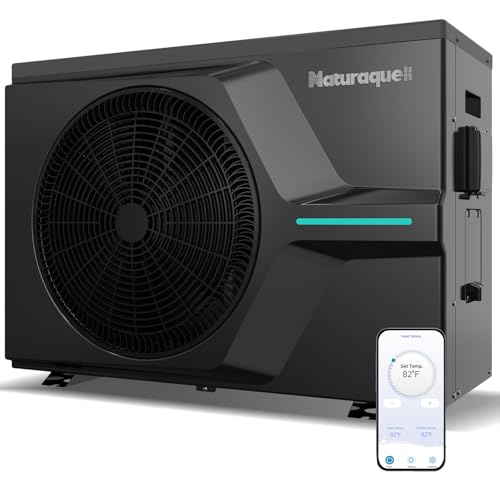
NATURAQUELL Inverter Pool Heat Pump 16000 Gallon

AQUASTRONG Pool Heat Pump 7500 Gallon

Hayward H-Series Natural Gas Heater 250,000 BTU
Hayward H-Series Propane Heater 250,000 BTU
A Closer Look At Each Pick
The NATURAQUELL full-inverter heat pump pulls double duty, warming your pool in spring and fall and cooling it during scorching July afternoons. The “full inverter” label means the compressor modulates its output rather than slamming on and off, which tends to keep electrical costs in check on pools that hold steady at 80°F overnight.
Rated for pools up to 16,000 gallons, this unit suits most mid-size in-ground setups in suburban backyards, and you skip the gas line work that comes with a propane or natural gas unit. For most homeowners who want one piece of equipment to handle shoulder seasons, this is the most flexible option on the list.
The Practical Payoff
- Heats and cools in one unit, so you stop babysitting water temperature in spring and late fall.
- Modulating inverter drive typically reduces power draw compared to fixed-speed heat pumps.
- No gas line installation, which simplifies placement near the equipment pad.
- Generous 16,000-gallon capacity covers the average residential in-ground pool with room to spare.
Honest Caveats
- Heat pump performance drops as outdoor air gets colder, so shoulder-season output depends on your climate.
- The unit needs clear airflow around it, which means planning equipment-pad space before delivery.
Feature Snapshot
Made For
Homeowners with mid-size in-ground pools in mixed climates who want year-round temperature control without a gas hookup.
Consider Something Else When
Runners with very large pools in freezing regions should look at the Hayward H-Series Natural Gas Heater 250,000 BTU, which pushes higher output on demand.
The TriStar VS is technically a circulation pump, not a heater, yet it quietly shapes how every heater on this list actually performs. A variable-speed pump moves water efficiently through the heat exchanger, and lower RPMs mean less noise from the equipment pad during those early-morning filter cycles.
You can dial the flow up for spa jets and back down for daily filtration, which keeps energy use modest. For most pools that already have a working heater, this is the upgrade that pays you back in monthly bills and extends the life of the rest of your equipment.
Useful Strengths
- Variable-speed operation typically trims electricity costs compared to single-speed pumps.
- Totally enclosed permanent-magnet motor runs cooler and quieter than older induction designs.
- Replaces most 1.5 full-rate or 2.0 max-rate pumps, so retrofitting is often a direct swap.
Worth Noting
- Variable-speed pumps often need a compatible control panel or automation hub to unlock all modes.
- Premium cost up front compared to basic single-speed replacements.
- Professional plumbing and electrical work may be needed on older equipment pads.
Best Suited To
Pool owners planning a system-wide efficiency upgrade who want quieter operation and lower monthly power draw.
A Better Fit Elsewhere
If you need a complete heating solution in one box, the NATURAQUELL Inverter Pool Heat Pump handles warmth and cooling without a separate pump retrofit.
Sibling to the first NATURAQUELL on this list, this variant covers a similar 16,000-gallon envelope with the same full-inverter core. Where it stands out is the explicit mention of a wide operating window for heating and cooling, so it tolerates everything from cool spring mornings to genuinely hot summer afternoons.
For pool owners in regions with bigger temperature swings, the inverter modulation helps the unit keep up without constant cycling. If you have an existing pad and just want to swap in a single heating and cooling box, this lands in a practical middle ground.
What Pays Off
- Wide operating range supports both early-spring heating and peak-summer cooling.
- Full-inverter drive ramps output up and down based on demand, easing compressor wear.
- Suits both above-ground and in-ground installations, which helps if you switch pool types down the road.
Points To Note
- Real-world heating speed depends on humidity, wind exposure, and whether you use a pool cover overnight.
- Actual output drops as outdoor temperatures fall toward freezing.
Right Fit For
Backyard pool owners in regions with wide seasonal swings who want a single unit to cover heating and cooling needs.
Skip It When
Households with small above-ground pools will find the AQUASTRONG Pool Heat Pump 7500 Gallon a more proportional match.
The AQUASTRONG targets the smaller end of the residential market, sized for pools up to 7,500 gallons. Think compact above-ground setups, plunge pools, or modest in-ground installations where a 16,000-gallon unit would be overkill and wasteful.
It supports both heating and cooling across a broad temperature range, so smaller-pool owners get the same flexibility as their larger-pool neighbors. For most households shopping on a tighter budget, the trade-off is a smaller comfort zone rather than a stripped feature set.
The Upside
- Right-sized for small pools, which keeps power draw modest during shoulder-season use.
- Heating and cooling modes stretch the swim season in both directions.
- Lower entry cost than full-size 16,000-gallon inverter units.
Some Limits To Know
- 7,500-gallon ceiling leaves no headroom for pools that grow over time or hold extra features like waterfalls.
- Heat pumps still lose effectiveness below about 50°F outdoor air.
Who It Suits Best
Owners of compact above-ground or small in-ground pools who want shoulder-season extension without a premium price.
Another Choice May Suit
Households with mid-size in-ground pools should consider the NATURAQUELL Inverter Pool Heat Pump, which scales up to 16,000 gallons.
The H-Series is the workhorse of this roundup, a 250,000 BTU natural gas unit built for large in-ground pools and attached spas. Gas-fired heat pumps do not care how cold the air gets, so this is the unit you reach for when shoulder-season temps dip into the 40s and a heat pump would stall.
The cupro-nickel heat exchanger handles the rough water chemistry common in older pools, which is a real durability concern with cheaper heat exchangers. You do need a natural gas line run to the equipment pad, but for most large-pool owners the heating speed justifies the install work.
Strong Points
- 250,000 BTU output drives rapid temperature recovery after a swim-heavy weekend.
- Performs regardless of outdoor air temperature, unlike heat pumps.
- Cupro-nickel heat exchanger tolerates aggressive water chemistry better than standard copper.
- Suitable for pools and spas up to about 750 square feet of surface area.
Trade Offs
- Requires a natural gas line, so installation is more involved than a plug-in heat pump.
- Operating cost depends heavily on local natural gas rates, which vary by region.
- Unit is non-returnable and subject to hazardous-materials shipping rules.
Perfect Match For
Owners of large in-ground pools in cooler climates who need fast, dependable heat regardless of air temperature.
Look Elsewhere When
Households without natural gas service should consider the Hayward H-Series Propane Heater 250,000 BTU for the same output on a different fuel.
The propane twin of the H-Series matches its natural gas sibling at 250,000 BTU, but it runs on a tank rather than a utility line. For pool owners in rural areas or properties without natural gas service, propane opens the door to the same fast recovery and cold-weather performance.
The intuitive front control panel and digital display make daily operation simple, and self-diagnostic features help you spot issues before they become service calls. The honest trade-off shows up in fuel logistics, since propane tanks need refills and storage space that natural gas users never think about.
Where It Helps
- 250,000 BTU output handles large pools and attached spas without long warmup waits.
- Operates independently of outdoor air temperature, perfect for cold-climate shoulder seasons.
- Digital control panel with self-diagnostics simplifies everyday use and troubleshooting.
- Works for properties where running a natural gas line is impractical or too expensive.
Practical Considerations
- Propane fuel costs can run higher than natural gas, depending on regional pricing.
- Tank refills and storage add an ongoing chore that gas-line owners avoid.
Who Should Grab It
Large-pool owners in rural or off-gas-grid locations who need fast, weather-independent heating on propane.
Reach For A Different Pick When
Households with natural gas already at the equipment pad save hassle and ongoing cost with the Hayward H-Series Natural Gas Heater 250,000 BTU.
What Matters Most Before Choosing heaters for pool inground
Pool size and capacity are the first filter. A 7,500-gallon heater on a 20,000-gallon pool wastes electricity running constantly, while an oversized unit cycles on and off without ever settling. Match the unit’s gallon rating to your pool with a small buffer for plumbing losses, not a massive headroom that drives up cost.
Fuel type shapes everything else. Heat pumps (electric) cost less per hour but slow down as outdoor air drops below 50°F. Gas heaters push hard in any weather but add line installation, fuel storage, or both. For most mild-climate households, a heat pump covers the calendar; for cold-region pool owners, gas is the realistic answer.
Circulation matters more than people think. A variable-speed pump like the Hayward TriStar VS pairs with any heater on this list to keep flow rates in the right zone, and the smoother flow typically extends the life of heat exchangers and seals. Owners commonly report that running a pump at lower speeds for longer periods filters water more thoroughly than short high-speed bursts.
Climate dictates the season length. A pool in Phoenix gets a different answer than a pool in Minneapolis, even with identical equipment. Heat pumps thrive in moderate climates; gas heaters earn their keep in cold ones, where shoulder-season heating is the whole point of the upgrade.
Key Considerations Across These Picks
Where Shoppers Go Wrong
The most common mistake is sizing by BTU alone without checking the gallon rating. A 250,000 BTU gas heater still needs a pump that can move water through it, and an undersized pump leaves the heater running longer than it should. Pair the heater with a pump that matches the flow requirements, not the cheapest one on the shelf.
Another pitfall is ignoring water chemistry. Gas heat exchangers, especially the cupro-nickel designs on the H-Series, last longest when pH, calcium hardness, and sanitizer levels stay balanced. Skip the chemistry and the heat exchanger corrodes faster than the warranty covers.
Where The Extra Money Goes
Premium heat pumps like the two NATURAQUELL units on this list cost more because of the inverter drive. A full-inverter compressor modulates output, which typically uses less electricity than the on-off cycling of a standard heat pump. Over several seasons, that efficiency often offsets the higher sticker price, depending on local power rates.
Cuprous-nickel heat exchangers on the Hayward H-Series carry a premium because they tolerate aggressive water chemistry better than standard copper. For pool owners who do not want to babysit their chemical readings, the upgrade is a quieter form of insurance against early heat-exchanger failure.
Frequently Asked Questions
How many gallons does my pool actually hold?
Most rectangular pools hold about 18,000 gallons per 1,000 square feet of surface at average depth. Round pools run closer to 5,500 gallons per 1,000 square feet. Measure length, width, and average depth, then plug those numbers into a standard pool-volume calculator for a more accurate number.
How long does it take a heat pump to warm a pool?
Most residential heat pumps raise pool temperature by about 1°F per day under ideal conditions, depending on starting temperature, ambient air, and whether the pool is covered overnight. Plan on roughly a week of continuous run time to take a cold pool to a comfortable 80°F.
Can I run a gas heater and a heat pump together?
Yes, but it is rarely necessary. Some pool owners use a heat pump for everyday maintenance and a gas heater for fast recovery after heavy use or cold snaps. Make sure your pump can supply enough flow for both units, and check that the gas line is sized for the additional draw.
Do pool heaters work in freezing weather?
Heat pumps lose significant output below 50°F outdoor air and stop being effective near freezing. Gas heaters operate independently of air temperature, which is why the Hayward H-Series models are common in northern climates. For year-round heating in cold regions, gas is the practical choice.
What maintenance does a pool heater need?
Annual professional inspection covers gas lines, heat exchanger scaling, and electrical connections. Between service visits, keep the equipment pad clear of leaves and debris, and check that water chemistry stays in the manufacturer’s recommended range. Heat exchangers last noticeably longer when pH and calcium levels stay balanced.
Final Verdict
A reliable pool heater pays you back every time you swim in April or September instead of staring at a cover. Match the fuel type to your climate, size the unit to your pool, and pair it with a pump that keeps water moving efficiently. The right shortlist is the one that fits your backyard, your utility setup, and how often you actually want to swim.


