

Two very different machines share the “electric pump” label in pool country. One keeps thousands of gallons circulating cleanly through a filter; the other pushes air into a flamingo float in under a minute. Both matter, so this list covers both, from variable-speed circulation pumps that tame your energy bill to portable inflators you can toss in a beach bag.
The Leading Options At A Glance

Cleartide 1.5 HP Smart Variable Speed Pool Pump

Cleartide 2 HP Smart Variable Speed Pool Pump

Cleartide 2 HP Smart Pump 9774 GPH
CircuPool SmartFlo 1.3 HP Variable-Speed

MAXEVER 2-in-1 Electric Air Pump
CircuPool SmartFlo 2.2 HP Variable-Speed
KELIRAO Portable Mini Air Pump
A Breakdown Of The Leading Choices
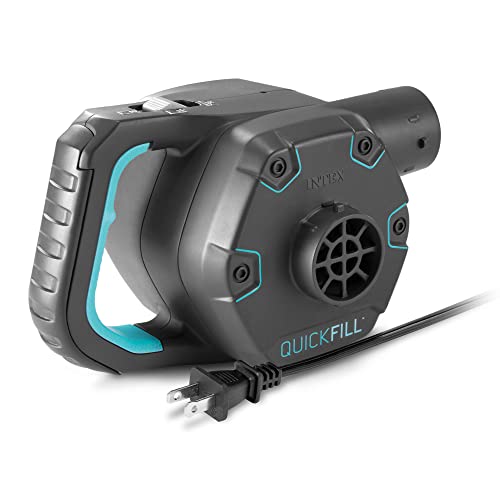
Road-trip families have been inflating pool floats in parking lots for decades, and the Intex QuickFill finally makes that chore feel easy. It runs on either a 12V cigarette lighter plug or the included AC adapter, so you can top off a flamingo at the lake house and the same pump handles the spare air mattress at home.
Three nozzle sizes come in the box, covering most standard valves, and the listed peak airflow of 650 liters per minute fills large floats in roughly a minute, depending on size. For someone who moves between cars, campsites, and guest rooms, that flexibility is the whole reason to pick it.
A Favorable Mix
- Dual 12V and AC power covers car, campsite, and home
- Three nozzle sizes fit virtually every standard pool float valve
- Compact shell stores easily in a trunk or utility drawer
- Airflow rated high enough to inflate large floats in around a minute
Things To Consider
- Not designed for high-pressure inflatables like stand-up paddleboards
- The corded 12V design means you’re tethered to a power source
Who It Suits Best
Travelers and families who inflate pool floats, mattresses, and toys in multiple locations each month.
Consider Something Else When
The MAXEVER 2-in-1 Electric Air Pump is a stronger fit for home-only use where you want the highest AC airflow for frequent backyard float sessions.
The Cleartide 1.5 HP is the smallest of the variable-speed circulation pumps in this roundup, but the listed 7,925 GPH flow rate is plenty for most medium residential pools. Variable frequency drive technology (a motor controller that lets you ramp the RPM up or down) sits at the heart of it, paired with a permanent magnet brushless motor that runs cool and quiet compared to older induction units.
Integration with the Smart Life app means schedules, speed changes, and runtime tracking live on your phone rather than buried in a mechanical timer. For pool owners tired of single-speed pumps hammering the same power draw all day, that control is genuinely useful.
Well-Handled Touches
- Variable speed (1,000 to 2,900 RPM) trims energy use at lower settings
- Smart Life app handles scheduling, speed, and monitoring remotely
- 110-120V wiring fits standard residential pool-equipment circuits
- Brushless permanent magnet motor tends to run quieter than older induction designs
Worth Noting
- Plumbing connections and priming can be tricky for first-time installers
- Smart features depend on stable Wi-Fi at the equipment pad
Key Specs
Made For
Mid-size residential pools where the owner wants app control and a quieter equipment pad without stepping up to commercial flow rates.
Look Elsewhere When
The CircuPool SmartFlo 1.3 HP suits you better if you want GPM-based target flow rather than RPM-based programming.
Step up in horsepower and the 2 HP version of the Cleartide Smart pump pushes a listed 8,718 GPH, which matters once you start running waterfalls, solar heaters, or long plumbing runs that lose head pressure. The 220-240V requirement puts it on a different electrical tier than its 1.5 HP sibling, so this is a real installation step rather than a casual swap.
Otherwise the platform is the same: app-driven schedules, stepless RPM, and a permanent magnet motor. For homes already wired for 240V pool equipment, the upgrade is the obvious next move.
What Makes Sense
- Higher 2 HP output handles larger pools and features like water features
- Same Smart Life app as the 1.5 HP, simplifying the user experience
- Variable speed keeps daily filtration inexpensive to run
- Brushless motor design is generally lower-maintenance over time
Points To Note
- Requires a 220-240V dedicated circuit, which may need professional installation
- Overkill for small above-ground pools with simple plumbing
Right Fit For
Owners of mid-to-large in-ground pools already equipped with 240V wiring who want strong flow plus modern app control.
Not Your Match When
The Cleartide 1.5 HP Smart Variable Speed Pool Pump is a smarter match for smaller pools or homes without 240V pool circuits.
Where the previous Cleartide pushes 8,718 GPH, this 2 HP variant claims a peak of 9,774 GPH, the highest listed flow in the roundup. That’s the kind of margin that lets you feed a large in-ground pool, a solar heating array, and a pressure-side cleaner all from one unit without bottlenecks.
The trade is the same 220-240V circuit requirement and a larger physical footprint on the equipment pad. Owners with bigger pools and more aggressive water features tend to view that as a fair exchange.
The Practical Payoff
- Top-of-line 9,774 GPH flow supports large pools and multi-feature systems
- Variable-speed drive reduces daily energy costs compared to single-speed pumps
- Smart Life app control removes guesswork from daily scheduling
Trade Offs
- Requires 220-240V wiring and a properly sized breaker
- Heavier and larger than the 1.5 HP Cleartide, which complicates tight equipment pads
- More capacity than smaller pools actually need, raising the entry cost
Feature Snapshot
Best Suited To
Large in-ground pools with water features, heaters, or pressure-side cleaners that demand high GPH from a single pump.
Reach For A Different Pick When
The CircuPool SmartFlo 2.2 HP is a smarter choice if you prefer GPM-based target flow programming over RPM-only control.
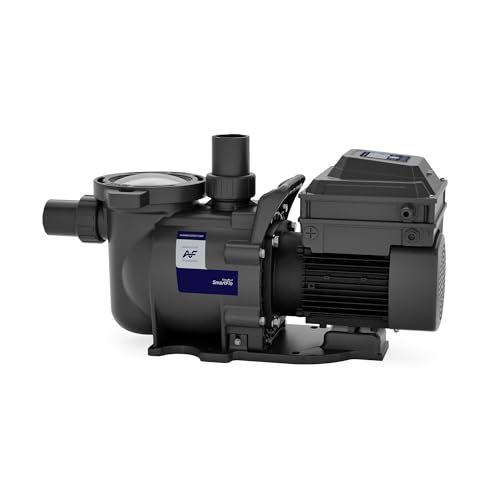
Most variable-speed pumps ask you to pick a motor speed and hope the rest works out. The CircuPool SmartFlo 1.3 HP takes a different approach: target flow control lets you program the GPM (gallons per minute) you actually want, and the pump’s adaptive algorithm adjusts motor speed behind the scenes to maintain it.
That matters when your filter backpressure changes as debris loads build, or when a solar panel array changes the system’s demand. For homeowners who think in terms of water turnover rather than RPM, this is a more intuitive interface than dial-in motor speed.
A Few Highlights
- Adaptive flow control maintains target GPM without manual speed tweaks
- 1.3 HP is a sensible match for typical residential pool volumes
- Wi-Fi connectivity enables remote scheduling and monitoring
Honest Caveats
- Adaptive logic is more complex to set up initially than a basic RPM dial
- Smaller 1.3 HP motor may be undersized for very large in-ground pools
Who Will Love This
Pool owners who prefer to set a target GPM and let the pump self-adjust, especially those with variable system demand from solar or water features.
Swap It Out When
The CircuPool SmartFlo 2.2 HP is the better match if your pool is large enough that 1.3 HP feels underpowered.
The MAXEVER focuses on one job and does it quickly: filling and emptying large pool inflatables from a standard 110-120V outlet. The listed 500 liters per minute peak airflow and three nozzle sizes cover everything from swim rings to floating islands.
It’s noticeably faster than the smaller battery-powered options later in this list, which matters when the kids are waiting by the pool. The 2-in-1 inflator/deflator design is also useful at season’s end when deflating a stack of floats for storage.
Benefits That Matter
- High 500 L/min peak airflow fills large floats quickly
- Inflate and deflate modes handle both setup and teardown
- Three nozzle sizes cover common valves on pool toys and air beds
Room For Improvement
- AC-powered only, so it needs an outlet within reach
- Not suited for high-pressure items like paddleboards or inflatable kayaks
Key Product Details
Perfect Match For
Backyard-heavy households that inflate and deflate large pool floats frequently and want fast AC-powered performance.
Skip It When
The Intex QuickFill makes more sense if you regularly need to inflate away from an outlet, at a campsite or in the car.
The 2.2 HP SmartFlo keeps the same adaptive flow logic that distinguishes the smaller model but pushes the motor hard enough for demanding systems. Owners with large pools, water features, or solar heating tend to find that 1.3 HP runs out of head, so this is the natural upgrade path within the CircuPool line.
It carries the same Wi-Fi-enabled app story, which means once you set a target GPM, the pump quietly maintains it while you handle everything else from your phone. The premium framing reflects the headroom, not just the horsepower number.
A Few Strong Suits
- Adaptive flow logic at higher 2.2 HP output for demanding pool systems
- Wi-Fi control integrates with the rest of a smart-home setup
- Variable speed operation significantly trims everyday energy use
Possible Compromises
- Costs more than smaller SmartFlo models without changing the feature set
- Overkill for small above-ground or inflatable pools
Who Should Grab It
Owners of large in-ground pools with multiple features who want adaptive GPM control at the top of the SmartFlo line.
A Better Fit Elsewhere
The Cleartide 2 HP Smart Pump 9774 GPH suits you better if you want the highest raw flow rate and prefer RPM-based programming.
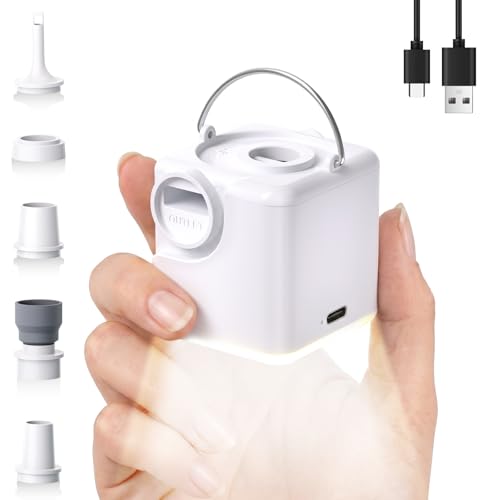
Beach days and camping trips have a way of exposing the limits of bulky inflators, which is why the KELIRAO mini pump exists. The 2,400 mAh rechargeable battery and 4.5 kPa output are modest numbers compared to the MAXEVER, but the trade is a body small enough to live in a beach bag.
Five nozzle sizes, a built-in camping light, and USB charging cover the most common campsite scenarios. For swimmers, paddlers, and travelers, the size argument tends to win over raw airflow.
Points In Its Favor
- USB-rechargeable battery frees you from outlet hunting
- Compact enough to fit in a daypack or beach tote
- Five nozzle sizes cover small valves on swim rings, pads, and toys
- Built-in camping light adds a useful second function
Small Caveats
- Lower 4.5 kPa pressure means longer inflation times on larger floats
- Battery life limits how many full inflations you get per charge
Feature Rundown
Whose Shelf It Belongs On
Travelers, campers, and beach-goers who prioritize pocket-sized portability over the fastest inflation times.
Another Choice May Suit
The MAXEVER 2-in-1 Electric Air Pump fits better when you’re at home and want the fastest possible inflation of large floats.
What Matters Most Before Choosing electric pumps for pool
Match the Pump Type to the Job
Circulation pumps and air inflators solve completely different problems, so clarifying which one you actually need is the fastest way to a good purchase. A circulation pump moves thousands of gallons of pool water through a filter every day, and its specs (horsepower, GPH, voltage) determine how cleanly your pool runs. An inflator pushes air into floats, mattresses, and toys, and its specs (peak airflow, pressure, power source) determine how fast that happens. Mixing them up is the most common reason shoppers end up with the wrong tool for the season.
Size, Power, and Electrical Setup
For circulation pumps, match the horsepower to your pool volume, and confirm your electrical service can handle the voltage the pump requires. A 1.5 HP, 110-120V pump drops into most existing residential setups with minimal rewiring, while 2 HP and 2.2 HP units often need a dedicated 220-240V circuit. For inflators, the question is whether you need AC power for speed or a rechargeable battery for portability.
Smart Features, Noise, and Long-Term Costs
Variable-speed circulation pumps typically pay back their price premium through lower monthly energy use, especially when scheduled to run at low RPM for most of the day. App control, adaptive flow logic, and brushless motors all add real value, but only if the rest of your pool system can take advantage of them. For inflators, runtime and nozzle versatility matter more than app features.
Honest Trade-Offs to Weigh
Higher horsepower always costs more upfront and requires more electrical infrastructure. The smallest units are quieter and easier to install but may struggle with large pools or features. Rechargeable inflators trade inflation speed for portability, and AC inflators do the opposite. Knowing which side of each trade-off you actually need keeps the shortlist manageable.
Key Considerations Across These Picks
Pitfalls Shoppers Hit
A common mistake is buying a single-speed pump for a large pool because the upfront cost looks appealing, only to watch the energy bill climb for the next decade. Variable-speed models usually pay back the difference. Another slip-up is pairing an inflator with a nozzle that doesn’t match the inflatable’s valve, which leaks air and frustrates everyone. Measure or test-fit a nozzle before assuming the included set covers your gear.
When Paying More Pays Off
Spending up on a circulation pump tends to buy you a brushless motor, app-based scheduling, and adaptive flow control. None of those are essential for every pool, but for a large or feature-rich system, they save real time and money over years of daily operation. On the inflator side, the premium buys speed and longer runtime rather than core inflation ability, so think honestly about how often you actually need that extra performance.
Frequently Asked Questions
What size electric pump do I need for a typical residential pool?
A 1.3 to 1.5 HP variable-speed pump is enough for most medium residential pools, while 2 HP and above suits larger in-ground systems with water features or solar heating. Match the GPH rating to your pool’s volume and turnover goals.
How much can a variable-speed pump save on energy costs?
Variable-speed pumps are often rated to use substantially less energy than single-speed pumps by running at lower RPMs for most of the day. Actual savings depend on local utility rates, run time, and the speeds you program.
Can electric air pumps handle high-pressure inflatables like paddleboards?
Most household electric air pumps, including the MAXEVER and KELIRAO in this roundup, are designed for low-pressure inflatables such as pool floats and air mattresses. Paddleboards and inflatable kayaks typically need a dedicated high-pressure pump rated for that purpose.
Do smart pool pumps need Wi-Fi to work?
Smart features like app scheduling and remote monitoring need a stable Wi-Fi signal at the equipment pad, but most smart pumps still operate manually if the network drops. Treat the connectivity as a convenience layer rather than a hard dependency.
How long do rechargeable inflators last on a single charge?
Battery life varies with battery capacity and how large the inflatable is, but a 2,400 mAh mini pump typically handles a handful of small inflatables per charge. Larger floats drain the battery faster, so plan for occasional top-ups on long beach days.


