

A chilly above-ground pool kills the mood fast, and most above-ground setups don’t have a heater at all because the wrong unit either costs a fortune to run or fights the home electrical panel. Electric heat pumps pull warmth from the surrounding air instead of generating it from scratch, which is why they’re the most sensible swap for backyards that want a longer swim season without the operating cost of gas. This shortlist covers eight electric heat pumps matched to common pool sizes, voltage setups, and climate zones, so you can find the right one without overpaying for capacity you don’t need.
The Shortlist At A Glance
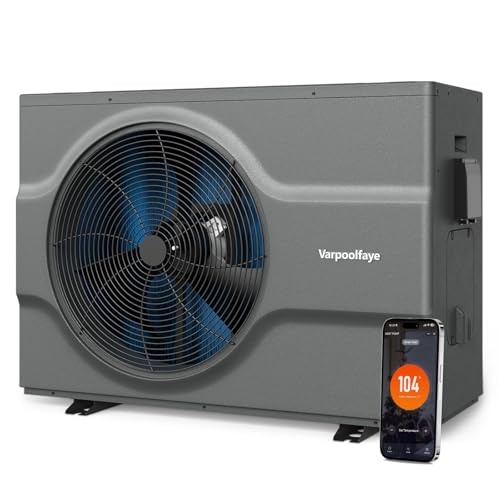
Varpoolfaye 65,000 BTU Inverter Pool Heat Pump 220V
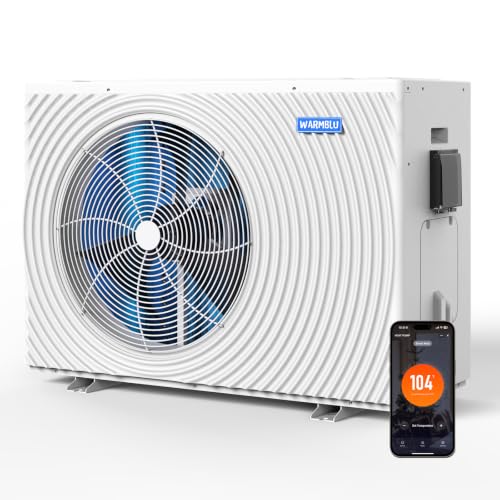
WARMBLU 21,000 Gallons Inverter Pool Heat Pump 220V

TURBRO Manatee M18 18,000 BTU Pool Heat Pump 110-120V
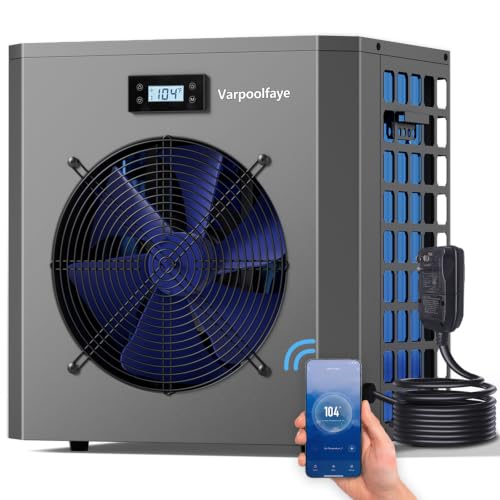
Varpoolfaye 5,500 Gallon Heat Pump Pool Heater 110V
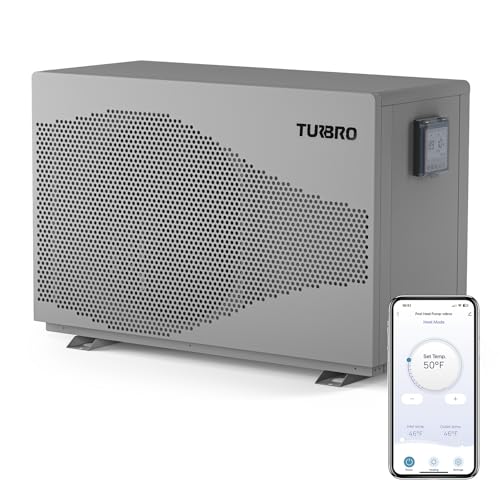
TURBRO Beluga 33,000 BTU Pool Heat Pump 10,000 Gallons

TURBRO Beluga 50,000 BTU Pool Heater 220-240V
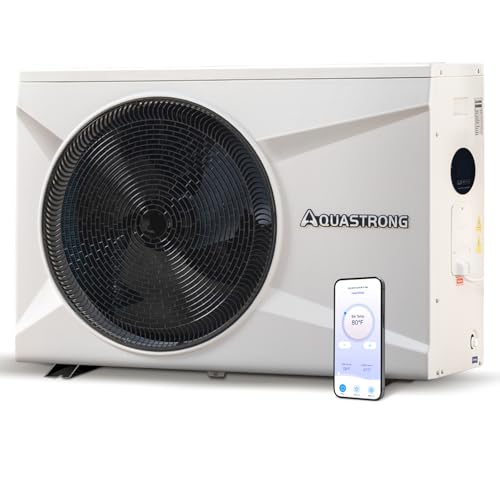
AQUASTRONG 16000 Gallons Pool Heat Pump

Varpoolfaye 16000BTU Pool Heat Pump 5000 Gallons 110V
More On The Choices That Made The List
This is the workhorse of the list, aimed at bigger above-ground pools or smaller in-ground setups where winter chill becomes a real concern. The 65,000 BTU output and a coefficient of performance (COP) of 6.6 mean the unit moves several units of heat into the water for every unit of electricity it draws, which is the key metric that keeps your utility bill in check. The inverter compressor ramps output to match demand instead of cycling on and off, so you hear less rooftop-style noise and the pool temperature stays steadier through cool nights.
You’ll need a dedicated 220V circuit and a licensed electrician for installation in most cases, which adds to the total project cost. If your backyard runs on a single 110V drop, this Varpoolfaye unit isn’t a clean fit, and stepping down isn’t really an option.
Positive Points
- 65,000 BTU handles large water volumes without struggling, which translates to faster heat-ups for families hosting weekend guests.
- COP of 6.6 signals strong year-round efficiency, especially when ambient air sits in the mild range most heaters operate in.
- Inverter modulation keeps noise low and avoids the constant on-off cycling that wears out basic compressors.
- Compatible with both freshwater and saltwater systems, so chlorinated and salt cell pools both work.
- Air-source design means no fuel line, no venting, and no combustion byproducts to manage.
Things To Consider
- Requires 220V service and likely a dedicated breaker, so installation cost climbs beyond the unit itself.
- Output drops as outdoor temperatures fall, which is true of any heat pump but more noticeable in northern climates.
Key Advantages
Made For
Homeowners with a larger above-ground pool, a 220V service panel, and a goal of extending the swim season well past Labor Day.
Where Another Pick Suits Better
The TURBRO Manatee M18 is a more approachable choice for backyards that only have a 110V outlet and a smaller pool to warm.
The WARMBLU is positioned for serious backyard builds, with a stated capacity of up to 21,000 gallons and a COP figure that climbs into the mid-teens under favorable conditions. That kind of efficiency means the unit moves a lot of heat for relatively little electricity, which is the real reason people move from propane heaters to a heat pump in the first place. A pure titanium heat exchanger resists corrosion in salt systems, and the SpringBreath 1.0 control logic adjusts compressor speed as the pool approaches the target temperature.
You’ll want a proper site survey before committing, because the unit is heavy and the airflow path around the evaporator coil needs clearance. Depending on your decking layout, the placement question may matter more than the price tag itself.
Key Advantages
- Rated for very large water volumes, which is unusual for an above-ground-friendly footprint.
- High COP under good conditions, so the cost per heated swim session stays low.
- Titanium heat exchanger handles saltwater without the corrosion risk of lower-grade metals.
- Smart inverter control avoids the temperature overshoot common in fixed-speed units.
Trade Offs
- 220V power and the unit’s size mean a more involved installation, often with electrical upgrades.
- Real-world output still depends on ambient temperature, so shoulder-season performance varies by region.
- Physical footprint is large, which can cramp tight equipment pads next to an above-ground pool.
Right Fit For
Owners of oversized or deep above-ground pools, or small in-ground pools, who want a single heater to cover both now and any future expansion.
Skip It When
A typical round above-ground pool that fits within 6,000 gallons, where the TURBRO Manatee M18 is plenty.
The Manatee M18 is the easiest entry on this list because it runs on a standard 110-120V household outlet, no electrician visit required. With 18,000 BTU and a 5.5 COP, it’s well matched to small and mid-size above-ground pools up to about 6,000 gallons, which is the bulk of backyard setups. The titanium heat exchanger and IPX4 waterproof rating suggest a build that’s at home sitting poolside, and the cooling mode is a nice bonus for hot southern summers where the pool turns into bathwater by August.
Where it falls short is raw heating muscle, since a 110V unit simply can’t push as much heat as a 220V model on the chilliest mornings. For most above-ground pools in mild climates, though, that gap is mostly theoretical.
Benefits That Matter
- Plugs into a standard 110-120V outlet, so setup skips the electrician and stays DIY-friendly.
- Heating and cooling in one unit extends the usable season in both spring and late summer.
- Titanium heat exchanger handles saltwater and chlorinated water without rust concerns.
- IPX4 waterproof rating suits the splashy reality of life next to an above-ground pool.
- Programmable timer lets you heat overnight when off-peak rates apply, depending on your utility.
Honest Caveats
- At 18,000 BTU, heating a large or deep above-ground pool will take longer than 220V models can manage.
- Like all heat pumps, output drops when outdoor air temperature falls, so winter use is limited.
Feature Snapshot
Best Suited To
First-time pool heat pump owners with a typical round above-ground pool on a 110V circuit who want simple plug-in warmth.
Look Elsewhere When
You regularly swim in shoulder seasons at temperatures well below 60°F, where the Varpoolfaye 65,000 BTU Inverter handles the load better.
For tight backyards with a smaller pool, the Varpoolfaye 5,500-Gallon Heater keeps the package simple. It runs on 110V, outputs 16,000 BTU, and supports both heating and cooling, so the same unit can warm a chilly May morning and take the edge off a sweltering July afternoon. The titanium heat exchanger is a meaningful upgrade over aluminum or copper in a salt system, and the small footprint is the real story for anyone with a narrow side yard.
It’s tuned for a fairly specific pool size, so oversizing your pool to it would mean long recovery times on cold days. Match it to the spec sheet and it does the job well.
Practical Pluses
- Compact enough to tuck beside a small above-ground pool without dominating the yard.
- Heat and cool modes keep the pool comfortable across a wider temperature range.
- 110V power means no electrician for installation in most homes.
- Titanium heat exchanger handles saltwater without corrosion concerns.
Points To Note
- Best matched to pools near the 5,500-gallon rating, so larger pools will heat slowly.
- Heating output tapers as outdoor air temperature drops below about 50°F.
- 110V design caps the BTU ceiling, which limits how fast cold water recovers.
Who It Suits Best
Suburban backyards with a compact above-ground pool in the 4,000 to 5,500-gallon range that want a heater without rewiring.
Reach For A Different Pick When
You have a slightly larger pool, in which case the TURBRO Manatee M18 gives more headroom on the same voltage.
The Beluga 33,000 BTU is the most connected option in this lineup, with built-in WiFi, programmable timers, and a temperature range that pushes into genuine year-round use. The COP rating up to 15.8 under favorable conditions is genuinely strong, and the ability to handle pools up to around 10,000 gallons makes it a step up from the Manatee without jumping to the 50,000 BTU tier. For a tech-forward household, the app control is a real daily-use win, not a novelty.
You trade away some simplicity for that feature set, and you’ll need to confirm your home network reaches the equipment area. For most people that’s a one-time setup, but it adds a small step to installation day.
Points In Its Favor
- WiFi control means you can warm the pool on the drive home from work, no manual timer dial.
- High COP keeps operating cost low relative to the heat output.
- Heat and cool modes cover both shoulder seasons and hot summers.
- Programmable timers support off-peak runtime for lower utility bills.
Worth Bearing In Mind
- WiFi setup adds a small configuration step compared to a simple analog control panel.
- Not designed to mimic a hot tub, so expect pool temperatures, not spa-level heat.
- Real heating rate still depends on ambient outdoor temperature, as with any heat pump.
Key Product Details
Whose Shelf It Belongs On
Mid-size pool owners who want smartphone control and a generous temperature range without jumping to commercial-sized equipment.
Swap It Out When
You only have a 110V outlet, where the TURBRO Manatee M18 is a simpler, lighter plug-in alternative.
The 50,000 BTU Beluga is the largest of the TURBRO trio, sized for pools up to around 15,000 gallons and built around a full DC inverter compressor. That inverter stage is the difference between a basic on-off heater and one that gently throttles output to match the moment, which translates to quieter operation and a more stable pool temperature overnight. The trade-off, as with any 220V unit, is the electrical work required to put it in service.
For most above-ground pools this is over-spec, but for a deep above-ground or a small in-ground, the headroom is genuinely useful. The honest read is that you want this size only if your pool volume genuinely demands it.
Positive Takeaways
- Full DC inverter compressor adjusts smoothly to weather changes, avoiding the wear of constant cycling.
- 50,000 BTU output handles large water volumes without long recovery delays.
- Suitable for both above-ground and in-ground installations, depending on the pad space.
- Year-round heating and cooling extends the useful season in both directions.
Trade-Offs To Consider
- Requires a 220-240V circuit and likely an electrician for first-time setup.
- Physical size and weight are substantial, so the equipment pad needs planning.
- Not designed to reach hot-tub temperatures, which is worth noting for spa-style expectations.
Who Should Grab It
Homeowners with a 15,000-gallon-class pool and an existing 220V service who want a single heater to carry the load for years.
A Better Fit Elsewhere
The TURBRO Beluga 33,000 BTU is a more proportional match for mid-size pools without the installation scale-up.
The AQUASTRONG earns its place by working in both worlds, above-ground and in-ground, on a single 16,000-gallon-rated platform. The temperature range covers 47 to 104°F for heating and 47 to 83°F for cooling, which means it can act as a year-round comfort system for the pool rather than a one-season tool. The dual-function design is genuinely useful for households that swim across spring, summer, and fall rather than in one concentrated window.
You should still plan the equipment pad and airflow clearance carefully, as the unit pulls air in from the surrounding environment. Owners commonly report that placement close to a fence or wall can short-circuit the airflow, which is worth thinking about before unboxing.
The Upside
- Works in both above-ground and in-ground setups without modification.
- Heat and cool functions support a longer swim season in both directions.
- Wide temperature range covers everything from cool spring days to hot August afternoons.
A Few Limitations
- Airflow clearance around the unit affects performance, so placement matters.
- Heating speed at the coldest ambient temperatures is slower than at mild conditions.
Perfect Match For
Households that span the above-ground and in-ground worlds, or anyone who wants one heater they can keep even if the pool setup changes.
Not Your Match When
You need raw 220V output for a very large pool, where the Varpoolfaye 65,000 BTU Inverter is a stronger match.
The 16,000 BTU Varpoolfaye is the entry-level 110V option, sized for pools up to about 5,000 gallons and rated for both freshwater and saltwater. The COP of 4.3 is the lowest on this list, but it’s still meaningfully better than a resistive electric heater, which is the comparison most shoppers are actually making. For seasonal warm-ups in mild climates, that’s often the right trade.
Where you’ll feel the limits is on raw recovery speed, since a smaller BTU rating means longer wait between cold swims. For modest use, that gap is mostly theoretical.
Where It Excels
- 120V operation means no electrical work for most homeowners, which keeps total cost down.
- Works in both freshwater and saltwater pools without modification.
- Air-source design keeps ongoing energy use well below traditional electric resistance heaters.
Possible Compromises
- Lower COP means a higher operating cost per BTU than larger inverter units on this list.
- Smaller BTU output means longer recovery times on cold mornings, especially in northern climates.
- Limited to smaller pool sizes, so the unit becomes a poor fit if the pool is ever upgraded.
Built With In Mind
Modest above-ground pools up to about 5,000 gallons where the priority is low upfront cost and a 110V-friendly install.
Consider Something Else When
Your pool is closer to 6,000 gallons or you want more efficiency, in which case the TURBRO Manatee M18 is a stronger fit.
Choosing The Right Heat Pump For Your Pool Setup
Match The Heater To The Pool’s Gallons
The most common mistake is sizing by BTU alone rather than by what the unit is rated to handle. A 16,000 BTU heater in a 6,000-gallon pool recovers water fast, while the same heater in a 12,000-gallon pool will struggle for hours. Check the manufacturer’s pool size rating first, then sanity-check the BTU against your climate.
Voltage Drives Installation Complexity
A 110-120V unit plugs into a standard outlet and lets most people handle setup on their own. A 220V model like the Varpoolfaye 65,000 BTU or the TURBRO Beluga 50,000 BTU demands a dedicated circuit, often a subpanel, and usually a licensed electrician. That difference can easily exceed the unit’s price difference, so factor it in before deciding.
Read The COP, Not Just The BTU
COP, or coefficient of performance, is the ratio of heat output to electricity input, and it tells you how cheaply the heater runs over a season. A unit with a COP of 6.6 or higher will keep monthly bills far lower than a COP of 4.3, even at the same BTU. For year-round or heavy weekly use, COP matters more than peak BTU.
Cooling Is A Real Bonus In Hot Climates
In southern states, an above-ground pool can hit 90°F by August, which feels more like a bath than a swim. Heat pumps with a cooling mode flip the cycle and act as a pool chiller, which is genuinely useful in those regions. Shoppers in northern climates care less about cooling, while shoppers in Texas or Arizona will use it weekly.
Key Considerations Across These Picks
Pitfalls Shoppers Hit
A frequent error is buying a 220V heater without confirming the home’s electrical panel has the spare amperage, which can require a panel upgrade that costs more than the heater. Another is treating the BTU figure as a measure of speed, when it’s really a measure of capacity, and undersized units will run constantly without ever reaching the set temperature. Always check the manufacturer’s pool size rating before buying.
Where The Extra Money Goes
Higher-tier models like the TURBRO Beluga 50,000 BTU or the WARMBLU 21,000-Gallon use full inverter compressors, which adjust output in fine steps rather than switching on and off. That adds material cost, but the savings show up in quieter operation, lower wear, and a noticeably better COP under partial load. For daily swimmers, the upgrade typically pays for itself in energy and comfort over a few seasons.
Frequently Asked Questions
How big of a heat pump do I need for an above-ground pool?
Match the heater’s pool size rating to your pool’s actual gallon count, then bump up one tier if you live in a cooler climate where heat loss is faster.
Can a 110V heat pump really heat an above-ground pool?
Yes, for small to mid-size pools in mild climates. A unit like the TURBRO Manatee M18 handles typical backyard pools well, but expect slower recovery on cold days.
Do heat pumps work in winter?
They work as long as ambient air temperature stays above the unit’s rated cutoff, usually around 40-50°F. Below that, output drops sharply and a gas heater becomes a better tool.
Are heat pumps cheaper to run than gas heaters?
In most climates, yes. A heat pump with a COP of 5 or higher moves several units of heat per unit of electricity, while a gas heater burns fuel for every BTU. The break-even depends on local utility and gas rates.
How loud are pool heat pumps?
Modern inverter units run quietly, around 50 dB at full output, similar to a window AC. Fixed-speed compressors and larger 220V units are noticeably louder, so placement away from seating areas helps.
Closing Remarks
The right electric heat pump depends less on brand and more on matching voltage, capacity, and COP to your specific pool and climate. Start with your pool’s gallon count, confirm what your electrical panel can support, and prioritize COP for daily use or peak BTU for shoulder-season swimming. Any of the picks above will extend your swim season meaningfully; the best one is simply the one that fits your backyard without overreaching.


