

Keeping a backyard pool swim-ready comes down to a few habits done well, and the right chlorine powder sits at the center of most routines. Pool owners running smaller residential setups, salt-water systems, or above-ground pools need a sanitizer that dissolves fast, doesn’t cloud the water, and won’t slowly build up calcium on tile lines and heaters. The six options below cover a range of pool sizes, packaging formats, and feeding styles, so you can match the right product to the way you actually maintain your water.
The Picks In Brief
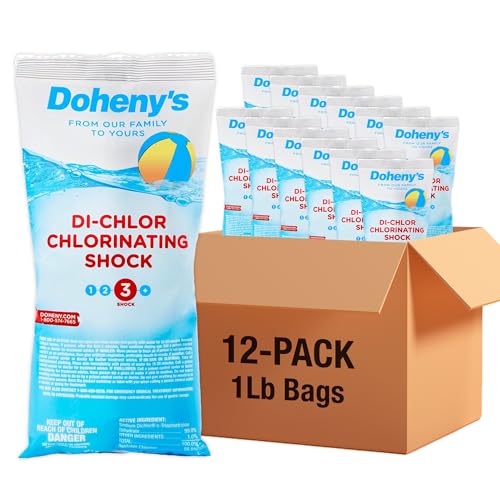
Doheny’s Di-Chlor Shock 12 x 1lb Bags (12lb Total)

Doheny’s Di-Chlor Shock 6 x 1lb Bags (6lb Total)

Doheny’s Di-Chlor Shock 24 x 1lb Bags (24lb Total)

Doheny’s Di-Chlor Granular Chlorine 50lb Bucket

Doheny’s Automatic Chlorine Feeder (In-Ground Off-Line)

Doheny’s Di-Chlor Granular Chlorine 5 lb.
What Each Pick Brings To The Table
Twelve one-pound pouches of stabilized dichlor (short for sodium dichloro-s-triazinetrione, a stabilized form of chlorine that resists UV burn-off) hit a sweet spot for most homeowners running a mid-size residential pool. The formula carries 56% available stabilized chlorine and is calcium-free, which matters in salt-water and liquid-chlorine pools where calcium hardness creeps up over time.
Owners of 15,000 to 25,000-gallon pools typically find that a dozen pounds covers routine weekly shocking for an entire season with a bag or two to spare. Compared to the smaller 6-pack, you’re paying roughly half the per-bag handling cost without committing to a 50-pound bucket you’ll struggle to lift.
What It Does Well
- Fast-dissolving granular format reduces the “powder sits on the floor” residue problem common with slower products
- Calcium-free composition protects heaters, salt cells, and tile grout from long-term scale buildup
- Stabilized chemistry holds up under summer sun, so you shock less often to maintain the same residual
- Twelve-pound pack is enough to last a typical backyard pool most of an active swimming season
Trade Offs To Consider
- Stabilized chlorine is poor match for very fresh fills that need a non-stabilized shock, since cyanuric acid (the stabilizer that protects chlorine from sunlight) will climb over time
- Pouches need dry indoor storage; humidity in a shed can clump the granules before you use them
- Larger pools burning through 2+ pounds per week will outpace this pack before the season ends
Built With In Mind
Mid-size residential pool owners on either salt-water or liquid-chlorine systems who want a season’s worth of shock in manageable one-pound doses.
Consider Something Else When
Service pros handling multiple accounts will get better economics and less packaging waste from the Doheny’s 50-pound bucket instead.
Six one-pound bags make sense for the homeowner just getting their first pool dialed in, or anyone maintaining a smaller above-ground setup. It’s the same 56% stabilized, calcium-free dichlor as the larger pack, just sized for less volume.
For an 8,000 to 12,000-gallon pool shocked once a week, this supply typically covers a couple of months of routine maintenance. New owners appreciate the smaller commitment while they learn their pool’s demand curve, and the 1-pound pouches are easier to handle than wrestling a 25-pound pail.
What Stands Out
- Same calcium-free dichlor chemistry as the bulk options, so new pool owners don’t sacrifice quality to start small
- Six-pound total is genuinely beginner-scale, so an experimental regimen doesn’t end in wasted product
- Compatible with both salt-water and traditional chlorine systems, removing the guesswork early on
- Lower per-pouch cost than buying individual pucks for quick shock boosts
Honest Caveats
- Per-bag cost runs higher than the 12- or 24-pack alternatives, which adds up over a full season
- Seasoned pool owners will burn through this supply quickly and need to reorder mid-summer
Feature Snapshot
Made For
First-time pool owners running a small to mid-size above-ground or in-ground pool who want a low-commitment introduction to dichlor shocking.
Look Elsewhere When
Anyone with a larger pool or a multi-month season will get better value from the 12-pack or 24-pack versions of the same product.
Twenty-four one-pound pouches cover owners with bigger pools, busy swim seasons, or aggressive algae challenges. The chemistry is identical to the smaller packs, so you’re not paying for anything different, just buying in bulk to drop the per-bag cost.
A 25,000 to 40,000-gallon pool running weekly shocks will typically drain a 24-pound supply in two to three months. The pouch format also beats a giant pail when you need to grab a single pound for a quick midweek top-up without dragging a scoop across the garage.
Where It Helps
- Best per-pound value among the pouched options in the lineup
- Single-pound bags keep doses precise, which prevents over-shocking that wastes product and forces long re-entry waits
- Stocking up once means no mid-summer runs to the store when a heat wave pushes chlorine demand up
- Same calcium-free, 56% stabilized profile as the rest of the line
Points To Keep In Mind
- Twenty-four individual pouches create a lot of plastic waste compared to a reusable bucket
- Need a cool, dry storage spot with room for the full case
- Overbuying locks up cash in chlorine that loses potency if you store it across multiple seasons
Right Fit For
Owners of large in-ground pools or anyone with a heavy swim season who shocks often enough to use twenty-four pounds before the product loses effectiveness.
A Better Fit Elsewhere
Small-pool owners who only need a few pounds a year should stay with the 6-pack to avoid long storage times and potency loss.
The 50-pound bucket targets service professionals, large residential pools, and anyone who treats shocking as a frequent chore. The formula is built on 99.5% sodium dichlor with 56% available stabilized chlorine, marketed as a 3-in-1 sanitizer, shock, and algaecide for routine maintenance.
Pouring straight from the bucket beats ripping open two dozen pouches, and the heavy-duty container is designed for repeated openings. The trade-off is the lift, so plan on a sturdy cart or a spot near the pool to avoid carrying fifty pounds any distance.
A Few Strong Suits
- Bulk format gives the lowest cost per pound in the lineup, which matters when shocking weekly or more
- Reusable bucket keeps product dry and protected across many openings, no plastic pouches to dispose of
- 3-in-1 claim means it pulls double duty as both routine sanitizer and an algaecide treatment after a problem
- Calcium-free composition matches salt-cell-friendly expectations for in-ground pools
Worth Noting
- Fifty pounds is a real lift; older users or anyone with a steep path to the pool pad will feel it
- Open buckets lose potency to humidity faster than sealed pouches, so a tight-fitting lid matters
- Buying this much in one go only makes sense if your pool actually burns through the volume before next season
Technical Sheet
Who It Suits Best
Pool service pros and owners of large in-ground pools who shock weekly and need the lowest per-pound cost without constant reorders.
Skip It When
Casual residential owners of small to mid-size pools will find the Doheny’s 6-pack or 12-pack easier to handle and store.
The Automatic Chlorine Feeder is a hardware piece, not a powder, but it earns its spot on this list because the powder experience gets a lot easier once you stop dumping dichlor by hand. It’s designed for in-ground pools with an off-line plumbing configuration, meaning it taps into the return line after the heater and filter rather than being plumbed directly into them.
You load the feeder with trichlor tablets (a slow-dissolving, stabilized chlorine tablet form) or bromine, and the device meters a steady dose as water circulates. Compared to weekly shocking, owners report a much more consistent chlorine residual that doesn’t swing wildly after a heavy treatment.
Features That Help
- Set-and-forget dosing frees you from remembering weekly shock sessions
- Off-line design means installation doesn’t require cutting into existing plumbing on most pads
- Steady residual keeps water safer for casual swimmers who don’t test as often as enthusiasts
- Works with both chlorine and bromine, so it adapts if you switch sanitizers later
Practical Considerations
- Not eligible for shipment to California, which limits the geographic pool significantly
- Still requires you to load tablets or pucks, just less often than shocking
- Off-line installations need a dedicated spot near the equipment pad with room for the unit and a bypass loop
- Replacing weekly shocking with a feeder means you may also want to keep some powdered shock on hand for occasional algae treatment
Spec Overview
Best Suited To
In-ground pool owners who want a hands-off chlorine residual and have the equipment pad space for a permanent feeder unit.
Another Choice May Suit
Above-ground pool owners will need a different feeder configuration, while owners who prefer powdered shock control should stick with one of the dichlor bags in this lineup.
The five-pound jar of 56% available stabilized dichlor is the smallest format in the line and the most natural fit for hot tubs, swim spas, and very small above-ground pools. It’s the same 3-in-1 sanitizer-shock-algaecide formula found in the bulk bucket, just sized for low-volume water.
A 300 to 500-gallon hot tub only needs a teaspoon or two per dose, so a five-pound jar lasts a typical owner most of a calendar year. The compact container also fits on a shelf without dominating a storage closet, which spa owners tend to appreciate.
Reasons It Performs
- Small package size is genuinely manageable for spa owners who don’t want a stack of pouches
- Same pro-grade dichlor used in the larger pool-sized products, so quality scales down cleanly
- Fast-dissolving granules mix quickly into a smaller body of water without leaving residue on seats
- Resealable jar protects the contents from humidity between uses
Where It May Fall Short
- Per-pound cost runs higher than the larger pouches or the bulk bucket
- Full-size pool owners will burn through five pounds in a single shock session
Key Product Details
Whose Shelf It Belongs On
Hot tub and swim spa owners, plus anyone maintaining a very small above-ground pool, who need a manageable supply of stabilized dichlor.
Reach For A Different Pick When
Full-size residential pool owners will save money per pound by going with the Doheny’s 12-pack of one-pound bags instead.
What To Weigh Before Choosing A Chlorine Powder
Picking the right chlorine powder comes down to matching the product to your pool’s size, your water chemistry profile, and how often you actually plan to test. Calcium-free dichlor is the safest pick for salt-water systems and any pool with a heater, since calcium hardness climbs slowly with stabilized chlorine and eventually clouds water and fouls equipment. The granular form dissolves fast, so you’re not standing over the deep end watching a cloud drift to the bottom, but it does require pre-dissolving in a bucket of pool water for the cleanest application.
Stabilized chlorine adds cyanuric acid to the water as it works, which protects chlorine from UV breakdown but also accumulates over time. Pools that have used stabilized shock for years can hit cyanuric acid levels that lock up the chlorine and force a partial drain and refill. Owners starting a fresh-fill pool should pay attention to their starting CYA (cyanuric acid) reading, not just their chlorine demand.
Packaging matters more than people expect. Individual one-pound pouches keep doses precise, but they create plastic waste. Buckets are cheaper per pound but harder to lift and store. Small jars make sense for spas and very small pools, but per-pound cost climbs at that size.
Form And Concentration
A 56% available chlorine concentration is standard across the dichlor family, so you’re really choosing between packaging and bulk size. Higher concentration means smaller doses for the same effect, which is helpful if you’re trying to keep stabilizer buildup in check on long-running pools.
Calcium-Free Composition
Calcium-free formulas protect salt cells, heaters, and tile grout from the slow scale buildup that eventually forces an acid wash. This matters most for salt-water pools and any in-ground installation with a heat exchanger.
Packaging And Storage
Pouches stack easily and keep product dry until opened. Buckets cut packaging waste and lower per-pound cost, but they demand a dry storage spot and a sturdy handle on the lid. Jars fall in between and work well for spa owners who don’t want a full pail in the closet.
Key Considerations Across These Picks
Pitfalls Shoppers Hit
The most common mistake is grabbing a calcium-based shock to save a few dollars, then watching calcium hardness climb over a couple of seasons until the salt cell starts shedding white flakes. The second is buying a 50-pound bucket for a small pool and ending up with clumpy, half-degraded product two years later because the volume outpaced the demand. Measure your weekly shock dose first, then size your supply to roughly sixteen to twenty weeks of coverage, no more.
Where The Extra Money Goes
Higher-tier options in this category usually mean bulk packaging, not stronger chemistry. The dichlor in a 5-pound jar is the same compound in the 50-pound pail, so the upgrade is about packaging, handling, and per-pound cost. Hardware like the automatic chlorine feeder is a different kind of upgrade, since it shifts you from manual weekly shocking to slow steady dosing, which trades a different set of headaches for a different set of conveniences.
Frequently Asked Questions
How much dichlor shock should I use per 10,000 gallons?
A standard dose is roughly one pound per 10,000 gallons for routine weekly shocking. Heavy algae or post-storm treatments may call for a doubled dose, but always retest before adding more to avoid over-stabilizing the water.
Is calcium-free chlorine really necessary?
Salt-water pools and any setup with a heater or salt cell benefit noticeably from calcium-free formulas. Standard chlorine pools with vinyl liners can use either type, though calcium-free still avoids gradual scale buildup on tile and plumbing.
Can I use dichlor in a hot tub?
Yes, in small doses. The 5-pound jar is sized for spa-scale water, and one to two ounces per treatment is typical for a 300 to 500-gallon tub. Always broadcast with the jets running and wait the recommended time before re-entering.
How should I store opened chlorine powder?
Keep it sealed tight, out of direct sunlight, and in a dry spot with stable temperature. A garage shelf off the floor usually works. Humidity is the main enemy, since moisture clumps the granules and slowly degrades the available chlorine.
Does stabilized chlorine ever need to be replaced with non-stabilized shock?
After a year or two of regular stabilized shock use, cyanuric acid levels often climb high enough to lock up chlorine’s effectiveness. A partial drain and refill resets the CYA, and switching to a non-stabilized shock during the reset period helps bring the level back down.


