

Pool tile work lives in a tough corner of home repair. The bond has to survive chlorinated water, freeze-thaw cycles, summer heat, and the slow creep of mineral buildup, so a generic hardware-store cement often falls short. This roundup covers nine cements that map cleanly onto the jobs you’ll actually do: setting new tile, regrouting old tile, plugging active leaks, patching plaster, repairing vinyl liners, and casting decorative stepping stones. Each pick comes with honest caveats, a clear “who it’s for,” and a pointer to a sibling product when the fit is off. Read the buying guide at the end if you want to understand the differences between thinset, Portland-cement grout, hydraulic water-stop, and vinyl cement before you choose.
An Overview Of The Picks

Oatey 16 Oz. Heavy Duty Clear Multi Purpose Cement

Oatey 16oz All Purpose Cement Medium Body Clear
Quikrete Hydraulic Water-Stop Cement 10 lb

Jennifer’s Mosaics Outdoor Cement 10 lb
HH-66 Toluene-Free Vinyl Cement 1 oz
Pool Patch Gray Tile Grout Repair Kit 3 lb
E-Z Patch 3 Thinset Pool Tile Cement White 3 lb
Pool Patch White Plaster Repair Kit 3 lb

Pool Patch White Plaster Repair Kit 25 lb
More On The Choices That Made The List
Oatey’s heavy-bodied clear cement is a workhorse solvent cement (a liquid adhesive that chemically softens and fuses PVC and CPVC surfaces on contact) that pool owners and plumbers have leaned on for decades. The thicker viscosity helps it fill small gaps around fittings and stay put on vertical surfaces, which matters when you’re reattaching a tile niche or sealing a return-line coupling near the waterline. The clear color keeps the bond visually unobtrusive in finished tile work, and the can is sized for handheld control rather than contractor-scale pours.
Think of it as a generalist with a clear advantage over gray solvent cements. For most backyards, this is the can that handles PVC pipe repairs, skimmer fixes, and light tile-adjacent jobs in one trip to the retailer.
Useful Highlights
- Heavy body fills minor gaps on couplings and fittings
- Clear finish blends with light-colored tile and trim
- Works on both CPVC and PVC, so you can keep one can on hand
- Mid-size 16 oz can suits weekend repairs without waste
- Solvent-weld bond tends to cure quickly enough for same-day fill in many cases
Things To Consider
- Not a tile-setting cement, so it won’t replace thinset on a tile face
- Strong solvent fumes call for ventilation and nitrile gloves during use
- Owners commonly report a short working time, so measure parts before opening the can
Key Specs
Whose Shelf It Belongs On
Homeowners who need a single reliable can for plumbing-side pool repairs, especially where PVC and CPVC both show up.
Consider Something Else When
Reach for the Quikrete Hydraulic Water-Stop Cement instead if the repair has water actively pushing through the joint.
Where the heavy-bodied Oatey above is built to stay put, this medium-body version is built to flow. It brushes into tight pipe joints and threads into small-diameter fittings without leaving dry pockets, which is why many pool pros reach for it on schedule-40 plumbing repairs. The model number 30834 and compact 4.2 x 3.3 x 3.3 inch can make it shelf-friendly, and the 16 oz size lands in the same sweet spot as its heavier sibling.
For pool owners, the trade-off is simple: medium body is easier to apply on horizontal pipe runs, but it can run on overhead joints. The clear formula keeps the bond line low-profile on exposed plumbing near the equipment pad.
Useful Strengths
- Medium viscosity flows into tight pipe joints without voids
- Clear color keeps repair lines discreet near equipment
- Compact can size stores easily in a small parts drawer
- Works across a wide range of PVC repair scenarios
Points To Note
- Thinner body can drip on vertical or overhead joints
- Same ventilation and glove precautions as any solvent cement
- Owners commonly report a working time that demands prep work before opening the can
Feature Snapshot
Made For
DIYers tackling horizontal pipe repairs or equipment-pad fixes where a flowing cement is easier to work into the joint.
Reach For A Different Pick When
Pick the heavy-bodied Oatey above for any vertical run where drips would compromise the joint.
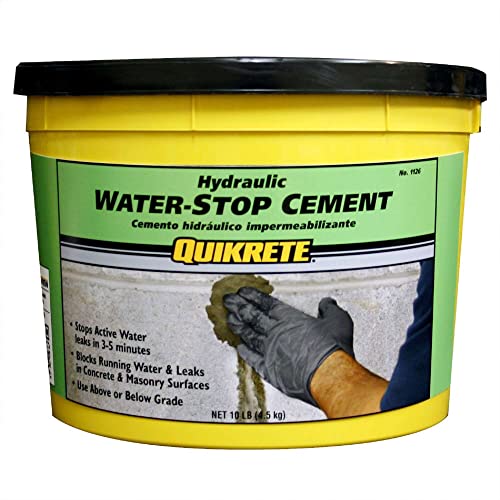
Quikrete’s hydraulic water-stop cement (a fast-curing blend that hardens through a chemical reaction with water, even when water is actively present) is the panic-button product on this list. It plugs active leaks in concrete and masonry in roughly 3 to 5 minutes, which is the kind of speed that matters when you discover a crack in the pool shell mid-season. It is rated for use both above and below the waterline, so the same tub can address foundation seepage and pool-wall drips.
For most homeowners, this is a “buy it before you need it” item. Once mixed, you cannot save the leftovers, so plan a related list of crack repairs and do them in one session.
A Strong Showing
- Sets in 3 to 5 minutes even against running water
- Listed for use in pools, foundations, and masonry
- Works both above and below grade, so one tub covers multiple repairs
- Pozzolan-modified blend (contains a volcanic ash additive that refines the cement grain and reduces permeability) for a denser patch
Room For Improvement
- Working window is short, so mixing in small batches is the practical move
- Not a finish product, so cosmetic repairs usually need a skim coat on top
- 10 lb size is overkill for a single hairline crack
Feature Rundown
Best Suited To
Homeowners with a pool shell or concrete feature showing active leaks who need a structural stop before any cosmetic finish work.
Where A Sibling Pick Shines
For a smooth cosmetic patch over the cured water-stop, the Pool Patch White Plaster Repair Kit (3 lb) lays down a much cleaner finish.
Jennifer’s Mosaics Outdoor Cement is a different animal from the structural picks above. It is a white, crack-resistant blend designed for casting garden projects, with stepping stones, mosaic birdbaths, and decorative benches as the intended use cases. The smooth porcelain-white finish takes pigment cleanly, so it suits crafters who want a consistent background color for tile-and-glass mosaic work.
For poolside decor that lives near (not in) the water, this cement’s outdoor-rated formula holds up to weather cycles without the brittleness of standard garden cement. Owners commonly report a satisfying overnight cure that lets you de-mold and continue decorating the next day.
Strengths Worth Knowing
- Smooth white finish accepts pigment and mosaic tile evenly
- Crack-reduction formula tolerates outdoor temperature swings
- Approximately 13 cups of mix in a 10 lb bag for batch planning
- Dries overnight, keeping weekend project timelines on track
Honest Caveats
- Not formulated for submerged or structural pool repairs
- 10 lb bag is a lot of mix for one small stepping stone
- Owners commonly report the need to seal finished pieces for stain resistance in pool-adjacent areas
Who Should Grab It
Garden crafters and DIY mosaic makers who want a smooth white casting cement for stepping stones, benches, and birdbaths near the pool.
Not Your Match When
Skip this for any repair that touches pool water, and grab the Pool Patch White Plaster Repair Kit (3 lb) instead.
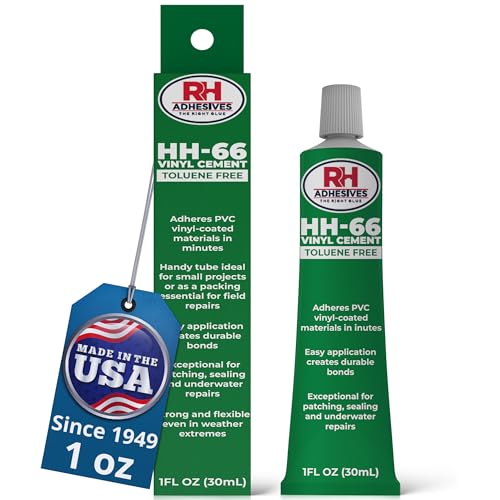
HH-66 TF from RH Adhesives is the specialty pick on this list, and it earns that label. It is a flexible, brush-on vinyl cement made for bonding PVC and vinyl pool liners, repair patches, and tarps, with a formulation that can be applied underwater and stays serviceable across a wide temperature range. The 1 oz bottle is sized for patch kits rather than full-panel work, and the built-in brush cap keeps the application controlled.
For vinyl-liner pool owners, the honest read is that this is the right tool for the right job. It is not a structural cement, it is not a tile adhesive, and it will not substitute for grout. Use it where the substrate is flexible vinyl or rigid PVC and you need a bond that flexes with the material instead of cracking off.
Advantages To Know
- Stays flexible after curing, so it moves with vinyl liners
- Listed for application underwater, useful for in-pool patches
- Toluene-free formula reduces harsh fumes during indoor or enclosed use
- IAPMO UES listings UEL-5070 and UEL-5071 back the bond claims on flexible vinyl and rigid PVC
Some Limits To Know
- Not listed for ASTM/NSF-rated PVC plumbing pipe, so keep it off pressure lines
- Does not bond polyethylene or polypropylene, which covers most blue poly tarps
- Owners commonly report the small 1 oz size running out fast on larger patches
Feature Facts
Perfect Match For
Vinyl-liner pool owners who want a flexible, brush-on cement for small patches and seal repairs around fittings.
Look Elsewhere When
Step up to Pool Patch White Plaster Repair Kit (25 lb) for cosmetic pool-surface work, or back to the Oatey heavy-bodied cement for rigid plumbing fixes.
The Pool Patch gray grout kit is built for a single job: refilling the joints between pool tiles. The waterproof Portland cement (the standard gray cement used in most masonry and pool construction) base comes with a liquid cement bonder that improves adhesion to the existing tile edges, which matters because old grout tends to reject new material. At a 1/4 inch thickness, the 3 lb tub covers roughly 10 square feet of joint area, enough for a normal waterline tile loop with some left over.
For most homeowners, the practical advantage is that this kit is designed to be applied by hand with simple tools. Owners commonly report the fast-setting nature means a small working window, so you want to stage the joints in short sections.
What Makes Sense
- Waterproof Portland cement base suited to constant waterline exposure
- Liquid bonder included for stronger adhesion to aged tile edges
- 3 lb tub covers about 10 sq ft at 1/4 in thickness
- Gray color matches older or weathered grout lines
Small Caveats
- Mixing small batches is the practical move given the working time
- Not intended for re-attaching loose tiles, only for filling joints
- Owners commonly report that tile must be clean and dry for the bonder to take hold
Spec Overview
Who It Suits Best
Homeowners regrouting a worn waterline tile band on a gunite or concrete pool where the tile itself is still firmly bonded.
Swap It Out When
Grab the E-Z Patch 3 Thinset Pool Tile Cement when individual tiles have actually come loose, since you will need a setting bed as well as grout.
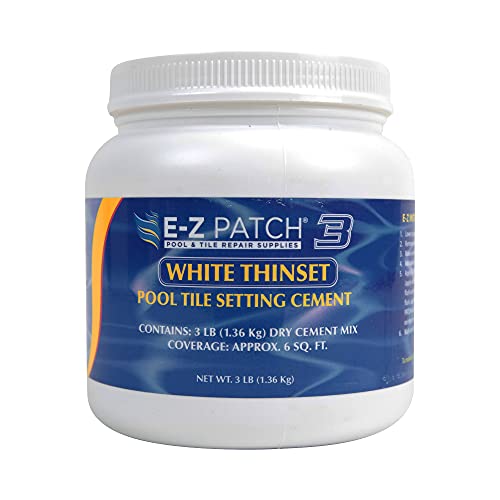
E-Z Patch’s white thinset is a tile-setting cement in the traditional sense, a polymer-modified blend (a cement with added plastic binders that improve adhesion and flexibility) designed to bond replacement tile directly to a concrete or plaster pool substrate. The 3 lb tub is sized for spot repairs, the kind of job that comes up after a freeze cycle pops one or two tiles off the waterline. The white color blends with most light-toned pool tile palettes, which is what most backyard pools tend to be.
The E-Z Patch line shares a chemistry family with the Pool Patch grout kit above, so they cooperate when used in sequence. For most homeowners, the move is thinset first to re-seat the tile, then grout to finish the joints.
Everyday Wins
- White color blends with most pool tile palettes
- Thinset consistency holds replacement tile on vertical surfaces
- 3 lb tub sized for a few individual tile replacements
- Compatible with the Pool Patch grout kit for a coordinated repair
Worth Noting
- Substrate must be clean and free of loose old thinset for a reliable bond
- 3 lb is too small for full-perimeter tile work
- Owners commonly report that curing time before grouting deserves a full 24 hours
Right Fit For
Pool owners with one to five loose tiles who want a white setting cement sized for a small spot repair.
Another Choice May Suit
For a complete waterline regrout where the existing tile is still bonded, the Pool Patch Gray Tile Grout Kit is the better match.
Pool Patch’s white plaster kit is a pozzolan-blended cement (a cement mix using siliceous additives that densify the final set and reduce permeability) aimed at the marcite and gunite (two common pool surface finishes: marcite is a smooth white plaster, gunite is a sprayed concrete shell) side of pool repair. It is designed for cracks, chips, and small pop-outs on a dry surface, with a typical 3 to 4 hour cure before the pool can be refilled. The included liquid bonding agent helps the new plaster lock into the old, which is the part most DIY repairs get wrong.
For most homeowners, this is the right size for a focused repair. If the pop-outs spread across an entire wall, you’ll want to step up to the 25 lb version reviewed next.
What Works In Its Favor
- Pozzolan-blended white cement delivers a smooth, light finish
- Includes liquid bonding agent for stronger adhesion to aged plaster
- 3 to 4 hour cure supports a same-day refill in many cases
- 3 lb tub sized for small cracks and chips
A Few Limitations
- Surface must be dry during application, so plan around rain or splash
- Color match depends on the age of the surrounding plaster
- Owners commonly report that trowel work takes practice for an invisible finish
Best Suited To
Homeowners with a small chip, crack, or pop-out on a white plaster or marcite pool who want a pro-style repair without scheduling a crew.
Skip It When
Move up to the Pool Patch White Plaster Repair Kit (25 lb) if damage spreads across a wall or the entire floor.
The 25 lb Pool Patch kit is the same chemistry as the 3 lb version above, scaled for a real resurfacing job rather than a touch-up. It suits larger delaminated areas, multiple pop-outs across a wall, and full shallow-end patches where the plaster has gone rough or pulled away from the shell. The 3 to 4 hour fast-cure characteristic still applies, so the pool can often be refilled the same day if the work is staged well.
For most homeowners, this is a weekend-project tub. The 25 lb volume means you can mix in stages, but you should plan to use most of it within a single session to avoid wasted leftovers.
The Case For It
- 25 lb volume handles delaminated walls or large pop-out fields
- Same pozzolan-blended white cement formula as the smaller kit
- Liquid bonding agent included for adhesion to existing plaster
- Fast 3 to 4 hour cure supports a same-day refill when staging works out
Trade Offs
- Too much product for a single small repair
- Surface must be dry during application, so weather matters
- Owners commonly report a learning curve for trowel finish on large patches
Who Will Love This
Homeowners and small contractors taking on a multi-square-foot plaster repair who want the same formula as the 3 lb kit in a job-sized volume.
A Better Fit Elsewhere
For a single small chip, the 3 lb Pool Patch kit is the right-sized, less wasteful option.
How To Match The Right Cement To Your Pool Repair
Match Cement Type To The Substrate
Pool repairs split into three substrate families, and each wants a different cement. Rigid PVC and CPVC plumbing respond to solvent cements, which chemically fuse the plastic on contact. Concrete, gunite, and marcite shells respond to Portland-based or pozzolan-blended cements, which cure by reacting with water. Flexible vinyl liners need a contact adhesive that stays flexible after curing, since anything rigid will crack off as the liner moves with water and temperature. Picking a cement that fights the substrate is the most common way DIY repairs fail in the first season.
Decide Between Thinset, Grout, And Plaster Cement
These three terms are easy to mix up, and using the wrong one wastes a tub. Thinset is a setting cement that holds tile to the wall. Grout fills the joints between tiles after they are set. Plaster cement is the surface coat on the pool shell itself. The Pool Patch gray grout kit is grout only, the E-Z Patch thinset is thinset only, and the Pool Patch plaster kits are surface cement, not grout. Many real repairs need two of these, in order, on the same area.
Plan Around Working Time And Cure Time
Fast-set cements like the Quikrete hydraulic water-stop set in minutes, which is a feature during an active leak and a liability if you mixed too much. Plaster kits cure in 3 to 4 hours before refill, which beats a full re-plaster but still blocks the pool for the afternoon. Solvent cements cure in stages, with a working bond in minutes and a full cure in 24 hours, so the pool should stay drained during that window. Match the working time to your project size, not the other way around.
Look At Compatibility, Not Just Color
Color matching matters for visible areas like the waterline, but it should never override chemical compatibility. Vinyl cement will not bond polyethylene. Portland cement will not bond PVC pipe. Solvent cement will not bond back into a porous plaster crack. The pool world has well-established rules about which cements go where, and the product listing is the place to confirm them before you open the tub.
Smart Buying Notes Across This Lineup
Traps First Timers Fall Into
The most common error is grabbing a hardware-store multipurpose cement and assuming it covers pool tile, pool plaster, and pool plumbing. The chemistry does not work that way. A second trap is underestimating coverage, since a 1/4 inch grout joint consumes more material than a quick visual estimate suggests. A third is opening the full tub before staging the area, which forces a rushed application and a wasted remainder. Measure twice, mix in small batches, and stage the surface dry and clean before you cut open the bag.
What The Higher Tier Buys
Stepping up to a larger tub, like the 25 lb Pool Patch plaster kit, generally pays off when damage has spread beyond a single spot, since the per-pound cost drops and you avoid a mid-project run for more material. Specialty chemistry, like the toluene-free HH-66 vinyl cement, costs more per ounce but is the right product for flexible substrates where rigid cement would crack off. The upgrade is worth it when the repair would otherwise be repeated next season, and not worth it for a one-off touch-up where a smaller, simpler product is the better fit.
Frequently Asked Questions
What cement is best for pool tile?
For setting new tile, a polymer-modified thinset like the E-Z Patch white pool tile cement is the right pick. For regrouting existing joints, a waterproof Portland cement grout like the Pool Patch gray kit is the better match. For active leaks behind tile, start with the Quikrete hydraulic water-stop before any cosmetic work.
Can I use regular cement for pool tiles?
Standard masonry cement is not formulated for the chemical exposure and constant water contact around a pool. Pool-rated thinsets and grouts include additives that resist chlorine, mineral buildup, and freeze-thaw cycling. Use a product listed for pool or submerged use, not a generic hardware-store cement.
How long does pool tile cement take to cure?
It depends on the product. Thinset typically needs 24 hours before grouting, and grout needs 24 to 48 hours before the pool is refilled. Plaster repair kits like the Pool Patch line often cure in 3 to 4 hours. Hydraulic water-stop sets in 3 to 5 minutes for the structural bond, but the cosmetic layer on top still needs its own cure time.
Can pool tile cement be used underwater?
Some specialty products can. The HH-66 TF vinyl cement is listed for underwater application on flexible vinyl and rigid PVC. Portland-based pool cements generally need a dry surface during application, even when the final bond is rated for submerged use. Check the product listing for the specific surface condition it requires.
How do I know if I need thinset or grout?
Thinset holds the tile to the wall. Grout fills the joints between tiles. A loose or missing tile needs thinset. Worn, cracked, or missing joint material needs grout. A full tile repair usually calls for both, in that order.
The Takeaway
The right cement depends on the substrate, the size of the repair, and whether water is actively involved. Solvent cements handle rigid plumbing, hydraulic water-stop handles active leaks, thinset and grout handle tile work, and plaster kits handle the pool shell itself. Match the product to the substrate first, then to the project size, and the rest tends to fall into place. If you are staring at a single loose tile and a small crack, the E-Z Patch thinset plus the 3 lb Pool Patch plaster kit is a practical starting pair. For broader work, scale up the volume rather than the chemistry.


