

A dedicated break jump cue earns its place on a wall rack faster than most players expect. Power breaks scatter the rack, a jump cue lifts the cue ball over a blocker, and a 2-in-1 hybrid handles both jobs without swapping sticks. The right pick depends on how often you play, how hard you swing, and whether portability matters more than raw mass. The five cues below cover the common scenarios home players and league regulars actually face.
The Leading Options At A Glance

RHINO Retro Carbon Fiber Pool Cue
ISZY Billiards Short Hardwood Pool Cue

Kmise 2-in-1 Break Jump Pool Cue

RAGE RGJBHH Heavy Hitter Jump/Break Cue
AKLOT 58″ Canadian Maple Pool Cues
Inside Each Recommended Option
The RHINO Retro sits at the top of this list because carbon fiber changes the feel of every stroke. A carbon shaft resists the side-to-side wobble that throws a cue ball off line on harder hits, so what you aim at is closer to what you pocket. Players who already own a solid wood breaking stick often pick up a cue like this to see whether the upgrade actually shows up on the table.
For most home rooms, the lighter feel takes a few sessions to get used to. Once adjusted, the tradeoff is usually a more accurate break and a quieter thud on contact. The retro styling is a bonus for anyone who likes a cue that looks traditional without giving up modern materials.
Real Benefits
- Carbon fiber shaft keeps the cue ball straighter on off-center hits, which matters most on long shots
- Stiffer construction transfers more energy into the rack, helping the balls spread on the break
- Low deflection design suits league players who already know their preferred English
- Classic look pairs with modern performance, so it fits a traditional game room aesthetic
Trade Offs
- Carbon shafts can feel harsh to players used to the softer feedback of maple
- Premium materials usually come with a steeper upfront cost than wood-only options
Feature Snapshot
Right Fit For
Intermediate to advanced players who want a stiffer feel and a cleaner break on every rack.
Swap It Out When
The RAGE RGJBHH Heavy Hitter is a better call for players who want maximum mass behind the break rather than low deflection.
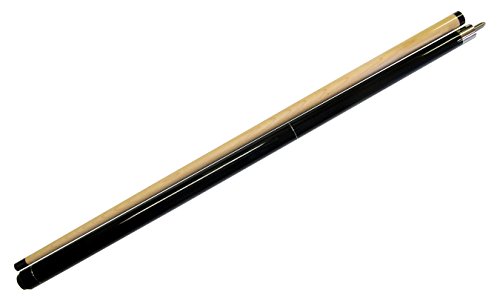
Compared to the carbon-fiber RHINO above, the ISZY Billiards short cue takes the opposite approach. It is built from Canadian maple in a shorter, travel-friendly form factor with a steel joint that breaks down for storage. Anyone working in a tight apartment, a converted garage, or a small bar setup will appreciate how much wall space a shorter stick saves.
The 13mm leather tip is harder than a standard layered tip, which gives a crisp hit on the break. Owners commonly report that the glazed finish holds up well to regular handling, though a leather tip benefits from a light scuff now and then to keep chalk biting properly.
Positive Points
- Hardwood Canadian maple body keeps the cue straight under regular use
- Shorter overall length fits in small rooms and tight cue racks
- Steel joint makes the cue easier to disassemble for transport or storage
- Hard 13mm leather tip delivers a clean, solid contact on the break
Worth Noting
- A shorter cue gives up some reach, which can be limiting on long shots
- Glossy finish shows chalk dust and fingerprints more than matte options
- Not a dedicated 2-in-1, so jump shots may feel underbuilt compared with hybrid cues
Best Suited To
Players with limited space or anyone who needs a portable cue for travel play and casual home use.
Where Another Pick Suits Better
The Kmise 2-in-1 fits better when you want one cue that handles both breaking and jumping without swapping sticks.
The Kmise 2-in-1 solves a real problem: most players do not want a separate jump cue and break cue cluttering the rack. The three-piece design lets the front section unscrew, leaving a shorter stick that can flick the cue ball over a blocker. For casual home games, that single cue can do almost everything.
Weight options at 23, 25, and 28 ounces cover most player preferences, and the North American ash construction is treated to resist warping. The honest read is that a hybrid cue will never match a dedicated 25oz power breaker, but for most players the convenience wins out. Maintenance is straightforward, with a light oiling now and then keeping the wood from drying out in dry climates.
Useful Touches
- Three-piece design handles both breaking and jumping without a second cue
- Multiple weight options let you match the cue to your stroke and table speed
- 14mm tip gives a solid contact area for controlled breaks
- Treated ash resists warping in typical indoor humidity
Honest Caveats
- Joint connections can loosen over time and may need a periodic check
- Break power is lower than a dedicated heavy hitter like the RAGE
Who Will Love This
Home players who want a single cue that handles both jobs and who do not want to manage a full cue rack.
Consider Something Else When
League players who break hard every game should look at the RAGE RGJBHH Heavy Hitter for more mass behind the cue ball.
The RAGE Heavy Hitter is the stick you reach for when breaking is the priority. At 25 ounces, it carries more mass than most playing cues, which translates into faster ball spread on the break. The 14mm phenolic tip is rock-hard and holds its shape through thousands of hits, so you do not have to re-tip every few months like a standard leather tip.
The wrapless maple handle and matte finish feel slightly different from a traditional Irish linen wrap. Players used to a grippy wrap may find the surface a touch slick at first, though most adjust after a few sessions. The cue doubles as a jump cue thanks to its shorter build, so the practical tradeoff is one stick that breaks hard and clears blockers reasonably well.
What It Does Well
- 25oz mass drives a powerful, full-table break
- Phenolic tip resists mushrooming and holds chalk well
- Hard rock maple construction gives a stiff, solid feel
- Doubles as a jump cue without needing a second stick
Points To Note
- Wrapless handle can feel slick without a wrap, especially with chalky hands
- Heavier weight may tire out players with a slower stroke
- Matte finish can show scuffs from regular rack contact over time
Feature Snapshot
Who Should Grab It
Power breakers and league players who want maximum energy transfer on the break shot.
A Better Fit Elsewhere
The RHINO Retro Carbon Fiber Pool Cue is a smarter choice for shooters who care more about accuracy than raw mass.
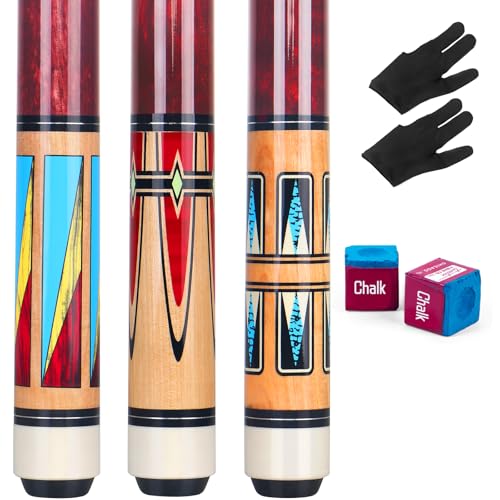
Where the Kmise gives you flexibility and the RAGE gives you mass, the AKLOT four-pack gives you options. A set of four cues at 18, 19, 20, and 21 ounces covers nearly every household player at once, which is the real reason game rooms and family tables lean toward multi-cue bundles. Different players at the table can grab a weight that matches their stroke without arguing over the rack.
Each 58-inch cue is built from Canadian maple with a 13mm tip, and the included weights let the set scale as your game grows. A common ownership note is that bundled cues are slightly less refined than standalone picks like the RAGE, so expect a break-in period before the tip and ferrule settle in.
A Few Strong Suits
- Four-cue set covers multiple players and weight preferences in one purchase
- 58-inch length suits standard 7, 8, and 9-foot tables
- 13mm tip gives a familiar contact area for casual play
- Canadian maple body keeps each cue straight with basic care
Factors To Consider
- Top weight tops out at 21oz, which is light for power breakers
- Not a dedicated break or jump design, so it is best for all-around play
- Bundle cues may need tip shaping or ferrule checks out of the box
Whose Shelf It Belongs On
Game rooms, family setups, and shared spaces where several players need a cue that fits their weight.
Look Elsewhere When
Solo players who want a single high-impact option should pick the RAGE RGJBHH Heavy Hitter for break power.
Choosing A Break Jump Cue That Fits Your Game
Start with how and where you actually play. A 25oz stick like the RAGE Heavy Hitter makes sense on a standard 9-foot table where breaking power matters, but a 21oz cue is easier to control in tight strokes and small rooms. Weight is a personal feel, not a rule, so trying a few ounces at a local hall before committing helps.
Tip material changes the long-term cost of ownership. A standard leather tip needs shaping and occasional replacement, while a phenolic tip on the RAGE holds its form much longer. For casual players who chalk and shoot without much maintenance, phenolic saves time. For shooters who like a soft, scuffed feel on spin shots, leather still wins.
Shaft material is the biggest jump in price. Carbon fiber shafts like the one on the RHINO Retro reduce deflection, meaning the cue ball drifts less when you apply English. Maple shafts cost less and feel warmer in the hand, but the cue ball will curve a bit more on hard, angled hits. If most of your game is straight-in shots, maple is plenty. If you rely on cut shots, the upgrade is real.
Portability is the last practical check. A 2-in-1 like the Kmise breaks down into three pieces, which fits a closet or car trunk easily. A one-piece or two-piece cue is sturdier but harder to store. Players in apartments and small game rooms should weigh the storage question before falling in love with a longer stick.
Key Things Worth Knowing Before You Buy
Where Shoppers Go Wrong
The most common mistake is buying a heavy break cue because heavier feels more powerful on the first swing. A cue that is too heavy for your stroke can throw off your aim and tire your arm before the third game. Match the weight to your natural tempo instead of chasing the heaviest option on the listing.
Another trap is ignoring the tip. A phenolic tip and a leather tip play very differently, and the choice depends on whether you break more than you cut. Reading the product page carefully before checkout saves a return trip.
What Separates Premium From Basic
Premium cues earn their price with stiffer shafts, better joint hardware, and tighter quality control on the wood. A higher-tier carbon fiber shaft like the RHINO’s reduces deflection noticeably, which shows up on long, angled shots where cheaper shafts push the cue ball off line. Joints that screw together smoothly and stay tight over time also separate premium from basic.
For casual home play, the upgrade to a premium shaft is mostly about feel and longevity. For league players and tournament shooters, the precision difference justifies the cost quickly.
Frequently Asked Questions
What is a break jump cue?
A break jump cue is a hybrid cue designed to handle both the opening break shot and jump shots over a blocker. Most 2-in-1 models like the Kmise use a three-piece design so the front section detaches, leaving a shorter stick capable of lifting the cue ball off the table.
How heavy should a break cue be?
Most players break best with a cue between 21 and 25 ounces. Lighter weights give more control, heavier weights transfer more energy. The RAGE Heavy Hitter comes in 25oz, which suits power breakers, while the AKLOT bundle tops out at 21oz for general play.
What is a phenolic tip?
A phenolic tip is a hard, resin-based tip that resists wear and holds chalk well. It lasts far longer than a standard leather tip and delivers a crisp hit on the break, which is why it shows up on dedicated breakers like the RAGE Heavy Hitter.
Can a 2-in-1 cue really jump?
Yes, within reason. A 2-in-1 cue like the Kmise can handle standard jump shots over a single blocker. It will not match the dedicated jump performance of specialty cues, but for most home situations it clears the obstacle reliably.
Does shaft material matter for casual play?
For straight-in shots and soft breaks, a maple shaft is more than enough. The difference between maple and carbon fiber shows up on long, angled shots with English, where low deflection shafts keep the cue ball closer to the aimed line.
The Takeaway
A break jump cue should match the room, the player, and the kind of shots that come up most. The RHINO Retro suits shooters chasing accuracy, the RAGE Heavy Hitter delivers break power, and the Kmise 2-in-1 trades a little of each for the convenience of one cue doing both jobs. The AKLOT bundle covers a full game room, and the ISZY Billiards short cue handles tight spaces without complaint. Pick the stick that fits the way you actually play, and the table will feel easier from the first rack.


