

Pool safety starts at the gate. A wobbly latch or rusting hinge can turn a code-compliant barrier into a liability overnight, which is why the hardware holding that barrier together deserves as much attention as the panels themselves. For homeowners installing or upgrading a pool enclosure, the right combination of self-closing hinges, gravity latches, and corrosion-resistant balusters makes the difference between a system that works for a season and one that works for a decade. The four options below cover the core components most DIYers need: gate latching hardware from two brands, a complete shed-style kit, and aluminum balusters for clean railing infill.
A Quick View Of The Lineup
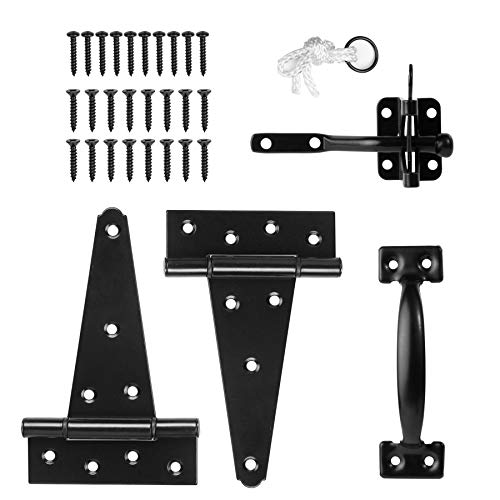
HILLMASTER Heavy Duty Gate Latch & Hinge Kit (Black)

HILLMASTER Self-Locking Gate Latch for Pool & Garden

SANKINS Heavy Duty Gate Hardware Kit (Black)

Myard 32-1/4″ Grooved Aluminum Balusters (Matte Black)
The Strengths Of Each Pick
Pool gates take a beating: wet hands, chlorine residue, and constant swinging. The HILLMASTER Heavy Duty Gate Latch & Hinge Kit tackles both halves of that equation in a single box, pairing a self-latching fingertip release with a pair of 6-inch T-strap hinges and a decorative pull handle. The hinges use a bearing design that keeps metal-on-metal contact to a minimum, which translates to quieter operation and less wear over time, the kind of detail that matters when a gate opens and closes dozens of times a day during summer.
Where this bundle earns its keep is the full-system convenience. There’s no hunting for a matching handle or scrambling for hinges after the latch arrives, since everything shares a black powder-coated finish that blends with typical wood or vinyl gate construction. For homeowners building a single wooden pool gate from scratch, the kit removes the usual compatibility guesswork.
Key Advantages
- All-in-one packaging means no mismatched finishes or hunting for separate components
- Bearing-style hinge design reduces metal-on-metal wear for smoother long-term operation
- 270-degree hinge rotation accommodates inward and outward swing configurations
- Black powder coat over zinc plating holds up well in humid poolside environments
- Self-latching fingertip release can also be triggered with a pull cord, helpful for caregivers
Things To Consider
- Designed primarily for wood, so vinyl or metal gate frames may require additional mounting hardware
- At 6 inches, the T-strap hinges suit standard residential gates rather than oversized driveway entries
Key Specs
Who It Suits Best
DIYers building a single wooden pool gate who want a matched hardware set without sourcing pieces from three different listings.
Where Another Pick Suits Better
The HILLMASTER Self-Locking Gate Latch for Pool & Garden is a stronger fit for households that already have serviceable hinges and just need a dedicated pool-rated latching mechanism.
While the previous HILLMASTER kit bundles everything together, this second option zeroes in on the latch itself. The Self-Locking Gate Latch for Pool & Garden uses gravity-based locking, the mechanism many pool codes reference, so the gate falls into the secured position the moment it swings shut. That automatic behavior removes the “did I remember to latch it?” worry that comes with spring-style or thumb-latch designs.
Weighing in at roughly 1.47 pounds of steel, the unit has real substance behind the post, which is reassuring for an application where a stuck latch can mean a failed inspection. The same powder-coated black finish as the kit above keeps the look consistent, and a pull-string option offers a way to operate the latch from inside the pool area without reaching over the gate.
Where It Delivers
- Gravity self-locking design meets the type of latching requirement many local pool codes call for
- Pull-string operation lets users open the gate from inside the enclosure without climbing
- Substantial 1.47-pound steel build feels planted rather than flimsy once mounted
- Works on inward or outward swinging gates, including wood, vinyl, and metal frames
Worth Noting
- Latch only, so existing hinges and handles must already be in serviceable condition
- Heavier mass means mounting screws need to bite into solid posts, not hollow vinyl sleeves
Made For
Households retrofitting an existing pool gate that already has good hinges but needs a code-friendly, self-engaging lock.
Not Your Match When
The SANKINS Heavy Duty Gate Hardware Kit is a smarter grab for someone building a gate from scratch and needing hinges, handle, and latch in one shipment.
The SANKINS Heavy Duty Gate Hardware Kit covers the three components most gates need: a self-locking latch, a pair of 6-inch T-strap hinges, and a 10-inch pull handle. That lineup overlaps with the HILLMASTER bundle from pick one, but the SANKINS set leans into shed, farm, and garden duty alongside pool-adjacent use, which makes it a flexible choice for properties with more than one type of gate.
The steel construction and rust-resistant black powder coating handle weather exposure well, and the longer 10-inch handle offers a comfortable grip even with wet or gloved hands. For homeowners juggling a pool gate plus a garden gate on the same fence run, one kit can cover both installations with leftovers to spare.
Notable Upsides
- Three core components ship together, simplifying multi-gate projects
- 10-inch pull handle offers better leverage than shorter decorative handles
- Steel body with powder coat finish handles outdoor moisture year-round
- Works on wood, vinyl, and farm-style gate builds, useful beyond the pool perimeter
Trade Offs
- Not specifically marketed for pool-code gravity latching, so check local requirements before relying on it for primary pool access
- Handle and hinges share a finish but lack the bearing-style hinge detail of some premium alternatives
Best Suited To
Property owners outfitting multiple gates around a yard, including sheds, gardens, and secondary pool-adjacent entries, with one consistent hardware order.
Consider Something Else When
The HILLMASTER Self-Locking Gate Latch for Pool & Garden is a better fit when pool-code compliance is the priority and a dedicated gravity latch matters more than a bundled handle.
Swapping in the right infill changes how a railing or pool barrier looks and holds up. The Myard 32-1/4″ Grooved Aluminum Balusters offer a contemporary alternative to traditional wrought iron, using aluminum that won’t rust even when splashed with chlorinated or salt water. The grooved face adds visual depth without busy ornamentation, which suits modern deck and pool designs where clean lines carry the look.
Each baluster measures 32-1/4 inches long by 1 inch wide with a 1/5-inch thickness, sized to drop into standard 36-inch-tall railings with appropriate top and bottom rails. Screws come in the box, coated for outdoor duty, so most installs don’t require a separate fastener run to the hardware store.
Everyday Perks
- Aluminum construction means no rust streaks down the deck or pool surround over time
- Grooved flat profile adds texture without the maintenance of ornamental ironwork
- Matte black finish blends with most modern railing top rails and post caps
- Lightweight aluminum is easier to position and fasten than steel during installation
Small Caveats
- 32-1/4-inch length suits 36-inch rail heights; taller guardrail codes may require a different size
- Aluminum dents more easily than steel if a ladder or lawn equipment leans against the railing
Quick Facts
Perfect Match For
Homeowners building a new deck railing or replacing rusted iron balusters on a pool-adjacent guardrail who want a low-maintenance modern finish.
Look Elsewhere When
The HILLMASTER Heavy Duty Gate Latch & Hinge Kit is the right call if the actual problem is a sagging, noisy pool gate rather than the railing infill between the posts.
Picking Hardware That Holds Up Poolside
A pool fence is only as dependable as its weakest hinge, latch, or baluster. The first thing to confirm is local code, since many jurisdictions require self-closing hinges and self-latching gates that engage without manual action. Gravity latches and spring-style latches satisfy different rules, so check before choosing one over the other.
Material matters as much as mechanism. Poolside hardware lives in a corrosive environment thanks to chlorine splash, salt air, or both. Powder-coated steel, zinc-plated steel, and aluminum each handle that exposure differently, with aluminum offering the best rust resistance for railing infill and coated steel providing the heft needed for latching components. Matching finishes across hinges, latch, and handle also keeps the install looking intentional rather than pieced together.
Sizing the hardware to the gate prevents the most common mid-project frustration. Standard residential pool gates run 36 to 48 inches wide, and 6-inch T-strap hinges cover that range well. Oversized driveway gates, or unusually tall fences, need longer hinges and heavier-gauge steel. For balusters, 32-1/4-inch pieces fit 36-inch rail heights; taller guardrails call for a longer baluster or a top rail spacer.
Finally, think about the install surface. Wood posts accept standard lag screws cleanly. Vinyl sleeves often need internal wood blocking or specialized brackets. Metal posts may require through-bolts and backing plates. Choosing hardware that matches the post material up front avoids a return trip and a half-finished gate.
Quick Notes Before You Order
Pitfalls Shoppers Hit
Picking a beautiful latch before checking the swing direction of the gate is one of the most common mistakes, since some latches only function on inward-swinging setups. The same goes for balusters: ordering the wrong length means cutting every piece on site or returning the whole pack. Buy a sample baluster and a piece of chalk, and dry-fit one baluster into the railing before unboxing the full count.
Where The Extra Money Goes
Premium hardware costs more for a few specific reasons. Heavier-gauge steel resists bending when the gate is slammed. Bearing-style hinges, where metal parts roll against ball bearings rather than sliding together, last far longer in high-traffic pool gates. Coatings also vary: a basic black paint may chip within a season, while AAMA-rated powder coats hold their finish through years of UV and water exposure. Spending up matters most on the latch and hinges, the two components doing the actual safety work.
Frequently Asked Questions
What height does a pool fence need to be? Most local codes require a minimum of 48 inches of barrier height, with no more than a 4-inch gap at the bottom or between balusters. Always confirm with the local building department before finalizing the design.
Can I install pool gate hardware on a vinyl fence? Yes, but vinyl posts are often hollow, so the latch and hinges need internal wood blocking or vinyl-rated mounting brackets. Standard lag screws alone may pull out under repeated gate use.
How often should pool gate hardware be checked? Twice a year is a practical rhythm: once before pool season opens and once mid-summer. Tighten any loose screws, lubricate hinge pivots, and confirm the latch still self-engages without a manual push.
Do aluminum balusters meet pool codes? In most jurisdictions, aluminum balusters spaced less than 4 inches apart meet code when combined with a compliant top rail height. Confirm the exact spacing rule and rail height with local authorities.
What’s the difference between a gravity latch and a spring latch? A gravity latch uses the gate’s own weight to drop into the locked position as it closes. A spring latch relies on a spring mechanism to catch. Many pool codes specifically require the self-engaging behavior that gravity latches provide.
Wrap Up
The right pool fence hardware is the part no one sees until it fails, which makes choosing well worth the small extra effort. Match the latch mechanism to local code, the finish to the install environment, and the components to the post material, and the rest of the project tends to fall into place. A short planning pass up front saves the weekend of trial and error later.


