

There’s a particular kind of frustration that hits when the kids are suited up, the sprinkler is ready, and the inflatable pool sits there like a sad, flat pancake. A good air pump turns a 20-minute arm workout into a 60-second job, and the right one depends on where and how you actually use it. Whether you’re setting up a backyard kiddie pool, hauling gear to the lake, or just need a quick top-off before guests arrive, these four pumps cover the most common scenarios without overcomplicating the choice.
The Picks In Brief
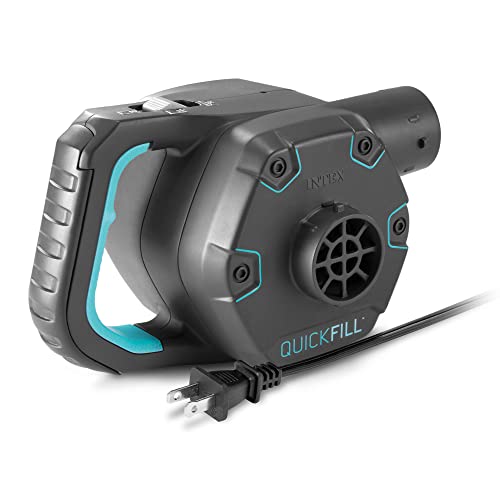
Intex QuickFill

MAXEVER 2 in 1 Inflator Deflator
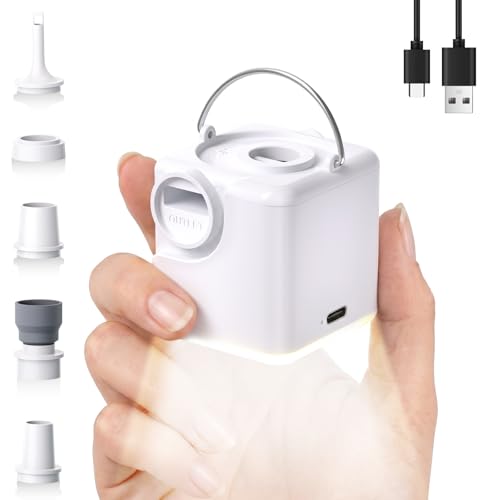
KELIRAO Mini Pump with Camping Light

ETENWOLF Pump with 10400 mAh Battery
More Details On Our Top Picks
The Intex QuickFill stands out for shoppers who want one pump that works in the living room and at the tailgate. It runs off a standard household outlet for indoor pool toys, then plugs into a 12V cigarette lighter when you’re inflating a float at the campsite or the lake house. That dual-power approach removes a real headache: most budget pumps lock you to one power source and force you to plan around it.
Three interchangeable nozzles come in the box, which covers the standard valve sizes you’ll find on most pools, rafts, and air mattresses. The nozzle fit can be a touch loose on some third-party valves, so you may find yourself pressing the pump firmly against the port during inflation. For households that split time between the backyard and the road, this flexibility tends to matter more than raw speed.
The Helpful Details
- Plugs into both a standard 120V home outlet and a 12V car accessory socket
- Three interconnecting nozzles cover common pool, raft, and mattress valves
- Handles both inflation and deflation, useful when packing up at the end of a trip
- Lightweight enough to toss in a trunk without thinking about it
Points To Keep In Mind
- Run time and noise level are best suited to short bursts rather than marathon inflation sessions
- 12V cable length is fairly short, so vehicle placement matters when reaching a pool
Right Fit For
Families and travelers who split time between home inflation and outdoor setups and want one pump that handles both without swapping gear.
Where Another Pick Suits Better
Shoppers who need genuinely cordless operation and longer battery life for repeated inflations will get more from the ETENWOLF pump covered below.
The MAXEVER pump earns its spot as a straightforward, indoor-focused workhorse for the average backyard. It runs off a standard 110 to 120V outlet, which is what most people already have at the patio door, and the switch between inflation and deflation mode is essentially instant. For families who mostly inflate a kiddie pool or a stack of floats before a weekend cookout, the simplicity is the point.
Where it beats older budget pumps is in the air flow. At a top rate around 500 liters per minute, you can stand there with a float and watch it take shape in roughly a minute. The trade-off, compared to the Intex QuickFill above, is the lack of a 12V option: this is a plug-in-the-wall pump, and it wants to stay there. It also doesn’t ship with the deepest nozzle assortment, so check your valve types before assuming everything will fit.
Good Reasons To Consider
- High air flow for the price tier makes short work of full-size floats
- Doubles as a deflator, so end-of-summer storage goes faster
- Three nozzle sizes cover the valves most common on pool inflatables
Worth Noting
- No battery or 12V option, so outdoor use requires a long extension cord
- Body runs warm during extended use, which is normal but worth knowing for marathon jobs
Key Product Details
Made For
Backyard households who mostly inflate at home and want a fast, no-frills pump without paying for features they won’t use.
Consider Something Else When
Anyone heading off-grid to the lake or a campsite will find the KELIRAO Mini Pump covered next far more convenient.
For travelers and beach-goers, size matters more than raw power, and the KELIRAO mini pump leans into that. It weighs around 3.7 ounces and fits in a hand, so it disappears into a beach bag or a car console without a second thought. A built-in camping light adds a small but genuinely useful touch when you’re inflating something after sundown at a remote campsite.
Charging happens over USB, which means the same cable you carry for your phone tops off the pump. The 2400 mAh battery is enough for a few floats or a single air mattress per charge, though heavy users will want to recharge between rounds. With five nozzles in the box, this is the most versatile fit in the roundup for odd valve sizes, even though the airflow itself is modest compared to the larger pumps above.
Real-World Strengths
- Compact and light enough to live in a daypack or glove box permanently
- Built-in LED light makes evening setup less fumbling
- Five nozzles handle everything from swim rings to inflatable sofas
- USB-C charging means no special cable to pack
Trade Offs
- Air flow is lower than the larger pumps, so expect a longer wait on bigger inflatables
- Battery is best suited to a couple of inflations between charges
Best Suited To
Frequent travelers, campers, and beach households who prize portability over speed and only need a pump occasionally on the road.
Skip It When
You’re inflating a full-size pool or several large floats in one session. The MAXEVER 2 in 1 Inflator Deflator will finish the job much faster.
The ETENWOLF is the pump you grab when you want the muscle of a plug-in model with the freedom to go cordless. Its 10400 mAh battery is large for the category, and the airflow is high enough to inflate a full air mattress in roughly half a minute. For households that inflate often, or for a family that runs a float-filled lake weekend, that headroom removes the bottleneck from the whole setup.
It’s also worth noting what this pump is not designed for: stand-up paddleboards, sports balls, and high-pressure inflatables. It’s tuned for the same low-pressure pool and mattress jobs as the other picks on this list, just faster and with more battery. The integrated camping light echoes the KELIRAO mini’s party trick, but on a much bigger chassis. Owners commonly report that the body gets warm during long sessions, so giving it a breather between inflatables extends its life.
A Favorable Mix
- Large battery supports multiple inflations per charge
- High airflow rivals many plug-in pumps without the cord
- Built-in light is handy for evening and campsite use
- Sturdy build that feels closer to a tool than a toy
Honest Caveats
- Not compatible with stand-up paddleboards, balls, or tire-type inflatables
- Larger and heavier than travel-focused options like the KELIRAO
- Body heat builds up during continuous use, so brief pauses help
Whose Shelf It Belongs On
Heavy-use households, frequent entertainers, and pool owners who inflate often and want cordless freedom without giving up speed.
Reach For A Different Pick When
Occasional light users who only inflate a single float a few times a year will get everything they need from the Intex QuickFill and save some cash.
What To Weigh Before Buying An Air Pump For A Blow Up Pool
Matching a pump to a real-life routine matters more than chasing specs. Air flow and pressure get the headlines, but the deciding factors are usually simpler: where you’ll plug it in, how often you’ll use it, and how big your average pool actually is.
Power Source And Where You Inflate
The single biggest fork in the road is corded versus cordless. Plug-in pumps like the MAXEVER 2 in 1 Inflator Deflator deliver consistent power and tend to cost less, but they anchor you to a wall outlet. Battery-powered models like the KELIRAO Mini or the ETENWOLF free you to inflate at the lake, the campsite, or anywhere a long extension cord would be a hassle. For households that mostly inflate at home, corded wins on value. For road warriors, cordless wins on convenience.
Air Flow Versus Air Pressure
Air flow, measured in liters per minute, determines how fast a pool inflates. Air pressure, usually given in psi or kPa, determines what kinds of valves the pump can handle. Pool floats, rafts, and kiddie pools are low-pressure items, so almost any pump on this list handles them. Stand-up paddleboards, sports balls, and bicycle tires need much higher pressure, which is why a general pool pump isn’t the right tool for those jobs.
Nozzle Fit And Valve Compatibility
The single most common reason a pump review goes sideways in real life is a nozzle that doesn’t quite match the valve. Most pools use one of a few standard sizes, but a few use proprietary fittings. Pumps with three to five nozzles cover the typical household without surprises. If your collection includes specialty inflatables, a wider nozzle set saves frustration.
Battery Size And Run Time
Battery capacity, given in mAh, gives a rough sense of how many inflations you can expect per charge. A 2400 mAh pack handles a couple of floats. A 10400 mAh pack handles a long afternoon of setup. For casual use, smaller batteries charge faster and weigh less. For frequent use, larger batteries remove the need to recharge mid-session.
Smart Choices Across The Range
Pitfalls Shoppers Hit
A common slip is buying the cheapest pump and expecting it to handle a full-size family pool. Many entry-level pumps simply don’t have the airflow to make that practical, leading to a long wait or overheating. Another trap is assuming every nozzle fits every valve: the standard three-nozzle kit covers most situations, but unusual inflatables may need adapters sold separately. Finally, ignoring power source needs is a recurring mistake. A corded pump at a tailgate party, or a battery pump in a power-hungry garage, creates friction that didn’t have to exist.
What The Higher Tier Buys
Stepping up from a basic pump to a more capable one usually buys two things: faster air flow and a larger battery. Faster flow turns a 10-minute job into a one-minute job, which matters when you have impatient kids or a campsite to break down. A larger battery means you can inflate more items on a single charge, which is the real difference between a casual-use pump and a frequent-use one. For households that inflate a few times a season, the upgrade may not pay off. For households that inflate every weekend, the upgrade pays for itself in saved time and frustration.
Frequently Asked Questions
How long does it take to inflate a blow up pool with an electric pump?
Most electric pumps on this list inflate a standard inflatable pool in one to five minutes, depending on the pool size and the pump’s air flow rating.
Can one air pump work for both pools and air mattresses?
Yes, the pumps in this roundup ship with multiple nozzles designed to fit common pool, raft, and mattress valves, making them genuinely multi-purpose.
Are battery-powered pumps powerful enough for a full-size pool?
Modern battery pumps with high airflow, like the ETENWOLF, can handle a full-size inflatable pool on a single charge, though smaller battery pumps work best for compact pools and floats.
Do these pumps also deflate inflatables?
Most electric pumps in this category include a deflate mode that pulls air out, which speeds up end-of-season storage and packing for trips.
How do I know which nozzle fits my pool?
Check the valve opening on your pool and match it to the included nozzles by size. If the nozzle feels loose, press the pump firmly against the valve during use or look for a tighter-fitting adapter.
Closing Remarks
A reliable air pump for blow up pool setups removes one of the small but persistent hassles of summer living. Match the pump to the way you actually use it: corded for the backyard, cordless for the road, heavy-duty for frequent use, and pocketable for occasional top-offs. Any of the four picks here will do the job well, and the right one for you depends mostly on where the inflatable pool is waiting.


