

Soft, squishy play zones have become a small but steady fixture in homes with toddlers, and the inflatable pool ball pits market has grown right alongside that trend. The challenge isn’t finding a ball pit, it’s choosing between soft foam walls, inflatable Gaga-style arenas, and refill packs of pit balls at a sensible size. This roundup sorts six of the strongest options on the retailer right now, from enclosed foam pools for infants to a 15-foot inflatable built for bigger kids and group play. Every pick here is rated for a specific kind of household, so the goal is to match a real play space to the right shape, scale, and material.
A Quick View Of The Lineup

Wilwolfer Foam Ball Pit for Toddlers (Pink, No Balls)

OZIS Gaga Ball Pit Inflatable 15FT with Built-in Blower

STARBOLO Ball Pit Balls for Kids (Pack of 150/200/500)
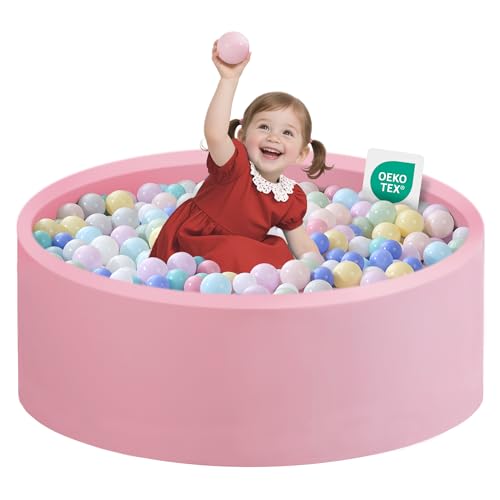
Zedachica Ball Pit for Toddlers 35.43″x11.81″ (Pink, No Balls)

STARBOLO Ball Pit Balls Pearl Colors (Pack of 150)

Dodozen Foam Ball Pit 35.4″x11.8″ (Sage, No Balls)
The Strengths Of Each Pick
The Wilwolfer foam ball pit is built for the youngest crowd, the toddler set who is still learning to sit, scoot, and tumble without tears. Soft memory foam walls absorb the awkward side-rolls that come with early play, which is the main reason parents tend to gravitate toward foam over inflatable at this age. The pink finish keeps it visually tied to a nursery, and the pit can be staged in a corner of a playroom without looking out of place.
Where the Wilwolfer stands out is in the wall thickness, which feels generous compared with thin inflatable tubes of similar size. Parents running a single-child household typically find the size comfortable for one or two small kids at a time, while larger families may need to rotate. Balls ship separately, which gives a chance to pick a count and colorway that suits the room rather than settle for a default bundle.
The Value In It
- Thick memory foam walls that cushion tumbles during early toddler years
- Soft pink cover that blends into a nursery palette without clashing
- Open shape makes cleanup quicker than a tent-style pit
- Pair with the STARBOLO 150-count set for a starter bundle at low total cost
Things To Consider
- Balls sold separately, so the all-in cost adds up once a fill is included
- Foam covers can absorb small spills, so spot cleaning tends to be part of regular care
Made For
Parents of one or two toddlers in a standard playroom who want a soft, contained play zone without the commitment of a larger inflatable.
Consider Something Else When
Households hosting groups of older kids should reach for the OZIS Gaga Ball Pit instead, since the Wilwolfer’s scale is too small for active group play.
The OZIS Gaga Ball Pit is a different beast from the foam toddler pools earlier on this list. At a 15-foot diameter, it reads more like a backyard arena than a nursery accessory, and the built-in blower keeps it inflated without manual pumping. It works indoors and out, which makes it appealing for schools, family reunions, and weekend birthday setups where the play zone needs to move with the event.
Where this pit earns its place is in the wear-resistant Oxford base layer, which is the part that actually meets the ground. Compared to the foam walls of the Wilwolfer, this thing is built for rougher use, and a typical backyard with grass or a smooth garage floor handles it well. The trade-off is storage and footprint, since 15 feet of inflated space is a real commitment in a small home.
A Favorable Mix
- Generous 15-foot diameter supports group play for school or family events
- Built-in blower cuts setup to a few minutes, no pump required
- Thickened Oxford base layer handles outdoor surfaces better than thin nylon pools
- Portable design that deflates and packs down for transport between events
Trade Offs
- Loud blower noise runs continuously during use, which can interrupt nearby conversation
- Requires substantial outdoor space or a tall-ceiling room to deploy fully
- Not designed for infants or non-mobile toddlers who need soft walls
Feature Snapshot
Right Fit For
Hosts and event organizers running active group play for kids roughly ages four and up, with a yard, gym, or large basement to spare.
Look Elsewhere When
Anyone shopping for a soft, contained zone for one or two infants should turn to the Wilwolfer Foam Ball Pit, since this scale is overkill for that use case.
The STARBOLO Ball Pit Balls are a refill-first pick, and they fit the gap left by every foam pool on this list that ships without balls. A household that already owns a pit, or that just ordered a foam frame from Wilwolfer, Zedachica, or Dodozen, will end up here at some point. Multiple pack sizes take the guesswork out of the math, since 150 works for a partial fill and 500 fills a deeper pit.
The crush-proof plastic claim is the detail that matters for toddlers, since play pits see a lot of compression. In a typical nursery, the bright multicolor mix doubles as a color-sorting tool, which adds a quiet developmental benefit alongside the obvious play value. Compared to the pearl-toned STARBOLO pack later on, this one leans into the classic rainbow look.
Features That Help
- Three pack sizes, 150, 200, and 500, to match any pit volume
- Crush-proof plastic construction survives toddler weight and rough play
- Bright multicolor mix doubles as a color-recognition tool
- Works in dry pits, play tents, and shallow water setups
Points To Note
- 500-count bags run bulky and need somewhere dry to store spares
- Multicolor may clash with a neutral-toned nursery or playroom palette
Best Suited To
Parents filling a foam pit for the first time, or topping up a play tent and ball pool combo where the rainbow color scheme fits the room.
Skip It When
Anyone building a coordinated, soft-tone nursery should look at the STARBOLO Pearl Colors pack instead, since the rainbow palette may not match the room.
The Zedachica sits in the same family as the Wilwolfer, both are round foam pools aimed at the toddler age group, but the dimensions here lean more toward a footprint that fits an apartment corner. At roughly 35 inches across and just under a foot deep, it tucks alongside a toy shelf without taking over the room, which matters in a smaller home where every square foot earns its keep.
The soft memory foam construction shares the same safety logic as other foam pits on this list, cushioning the inevitable topples. For a single toddler, the size feels just right, while siblings tend to crowd it quickly. The pink colorway is the obvious visual cue, and the no-balls model means pairing it with a STARBOLO 150-count fill is the natural next step.
A Few Highlights
- Compact 35.43-inch footprint fits apartments and small playrooms
- Soft memory foam walls reduce impact during early walking stages
- Pink colorway suits a toddler girl’s room without extra decor work
- Lightweight build makes it easy to move between rooms for playtime
Honest Caveats
- Smaller capacity than the Wilwolfer, so two toddlers feel crowded fast
- Balls not included, which is a separate purchase for most households
Quick Facts
Who Should Grab It
Parents in a small apartment or studio with a single toddler who needs a contained, cushioned play corner without sacrificing floor space.
A Better Fit Elsewhere
Families with two or more active toddlers in a larger playroom should pick the Dodozen Foam Ball Pit, which offers more room to spread out.
The STARBOLO Pearl Colors pack is the more design-conscious sibling of the multicolor set covered earlier. Where that one aims for high-contrast rainbow play, this one leans into a softer pearl pink, purple, and white palette that looks at home in a styled nursery. For parents who care about how a play corner photographs or fits the wider room, that color choice carries real weight.
The 150-count sizing is a partial fill, so it works best paired with a smaller foam pit like the Zedachica or Dodozen rather than a deep Gaga-style arena. Owners commonly report the pearl finish holds its color through regular cleaning, which is a small but real upside over cheaper alternatives that yellow or fade. The material specs point to food-grade PE plastic, a sensible baseline for anything a toddler mouths.
The Helpful Details
- Pearl pink, purple, and white palette coordinates with soft nursery themes
- Food-grade PE plastic construction, a sensible baseline for toddler toys
- Crush-proof build handles toddler weight without permanent denting
- 150-count sizing matches smaller foam pits for a starter fill
Small Caveats
- 150 balls is a light fill for a larger foam pool, so topping up later is likely
- Pearl tones may show scuffs and stains more visibly than solid colors
Who Will Love This
Parents decorating a soft, neutral-toned nursery who want pit balls that match the room rather than disrupt the palette.
Another Choice May Suit
Households building a high-energy play tent with a deep fill should look at the 500-count STARBOLO multicolor pack, which covers the volume at a better per-ball value.
The Dodozen foam ball pit closes out the list with a sage velvet cover and dimensions that target three-toddler play sessions. The OEKO memory foam inside is the kind of detail that matters for households watching material safety closely, since OEKO certification (an independent textile safety standard) covers the foam itself rather than just the outer cover. The sage colorway is the visual standout, fitting rooms that lean into muted, earthy palettes.
At 90 by 30 centimeters, the pit is large enough for shared play without tipping into inflatable-territory footprint. The velvet cover feels noticeably softer to the touch than standard foam pit fabric, which can matter for kids with sensitive skin. Like the other foam pits here, balls are a separate purchase, so pairing with a STARBOLO 150-count set rounds out the setup.
Notable Upsides
- OEKO-certified memory foam, an independent textile safety standard, for material peace of mind
- Velvet cover feels softer against skin than standard foam pit fabric
- 90 by 30 cm dimensions fit three toddlers during shared play sessions
- Sage colorway blends with neutral, earthy nursery decor
Some Limits To Know
- Balls not included, so total cost rises once a fill is added
- Velvet cover can attract lint and pet hair, so frequent light vacuuming is part of ownership
Perfect Match For
Parents of multiple toddlers who want a soft, material-conscious play zone that holds three kids without expanding into an inflatable footprint.
Reach For A Different Pick When
Single-toddler households in tight apartments can save space with the Zedachica, which trims down the diameter without losing the foam wall concept.
Picking The Right Pit For The Playroom
The first fork in the road is foam versus inflatable. Foam walls suit infants and early toddlers, since the cushioning matters more than the size, and the smaller footprint fits inside a playroom without dominating it. Inflatable arenas like the OZIS Gaga Pit serve an older, more active crowd and need a yard, basement, or large room to deploy properly. Most households will settle into the foam side of that decision.
Size is the next call. A 35-inch round pit is comfortable for one or two small kids, while anything at or above 40 inches starts to feel shared. Going beyond a single-child setup means committing to more floor space and a higher ball count to keep the pit looking full. Storage is the easy-to-miss factor, since foam pits fold down compactly while inflatables need a deflate-and-roll routine.
Material safety deserves real attention at this age. Food-grade PE plastic is a sensible baseline for any ball a toddler might mouth, and OEKO-certified foam offers an independent textile safety signal for the pit walls. Both standards cover what shoppers most often worry about, and they tend to be specified on the product page when a brand has paid for the testing.
Match the ball count to the pit, not the other way around. A 150-count pack suits a small foam pool, a 500-count bag fills a deeper tent or arena. Color choice is the lighter consideration, though it does shape how the play corner feels in the wider room, with pearl and sage tones leaning soft and multicolor leaning energetic.
What To Watch Before You Commit
Common Slip Ups Shoppers Make
The most frequent mistake is buying a foam pit without budgeting for the balls that fill it. Every foam pool on this list ships empty, which is fair, but the all-in cost is the pit plus a 150 or 200-count pack. Skipping that math leaves a sad, half-empty pool on the playroom floor. Another trap is oversizing the pit to the room, since a 15-foot inflatable can swallow a small yard and make the rest of the space feel cramped.
Where The Extra Money Goes
A higher-tier foam pit tends to spend its premium on the cover fabric and the foam certification, with velvet covers and OEKO-certified foam both adding visible comfort. Inflatables price up with material weight, base reinforcement, and the blower system. For a household that uses the pit daily, those upgrades pay back in durability and quieter operation, while a once-a-week household can stay at the entry tier without much compromise.
Frequently Asked Questions
How many balls does a toddler ball pit actually need?
A small foam pit looks full with around 150 to 200 balls, while a larger foam pool or play tent typically wants 300 to 500. Going over the recommended count tends to make the pit feel cramped rather than more fun.
Are foam ball pits safe for infants?
Foam walls with thick, soft construction are widely used at the infant and early toddler stage, since the cushioning absorbs the awkward tumbles of early standing. Adult supervision still matters, especially for kids who are still learning to sit up on their own.
Can inflatable ball pits be used indoors?
Yes, provided the room has enough ceiling height and floor space to deploy the pit fully. The OZIS 15-foot model needs a tall-ceiling basement or garage, and the continuous blower noise is worth factoring into the setup.
How do you clean pit balls and foam walls?
Pit balls are typically wiped down with a mild soap solution and air-dried, while foam pit covers spot clean with a damp cloth and gentle detergent. Regular light cleaning is more practical than waiting for a deep-soil moment.
Do these pits deflate or lose shape over time?
Foam pits keep their shape as long as the cover and foam stay intact, and a torn cover is the most common reason a foam pit gets retired. Inflatables rely on the blower staying powered, so a backup plan for power outages keeps the pit upright.
Final Takeaway
The right inflatable pool ball pits pick depends less on hype and more on the size of the play space and the age of the kids using it. Foam pits handle the toddler years, inflatables handle the big-kid energy, and refill packs tie the whole setup together. Match the shape to the room, the material to the kid, and the ball count to the pit, and the play corner earns its keep for years.


