

Standing water on a pool cover is one of those quiet headaches that gets worse the longer you ignore it. The right pump moves that water sideways, away from the cover, and keeps your deck dry through storm season. This list gathers nine horizontal discharge pool pumps worth a look, from a clever spray attachment to full-size variable-speed workhorses for in-ground setups. You’ll find options for above-ground pools, large backyard installations, and everything between, with honest trade-offs called out for each.
The Picks In Brief

CoverBlast Pool Cover Pump Attachment 25ft Range

Aquastrong Riptide 3 HP Dual-Speed Pool Pump

Aquastrong Riptide 1.5 HP Dual-Speed Pool Pump
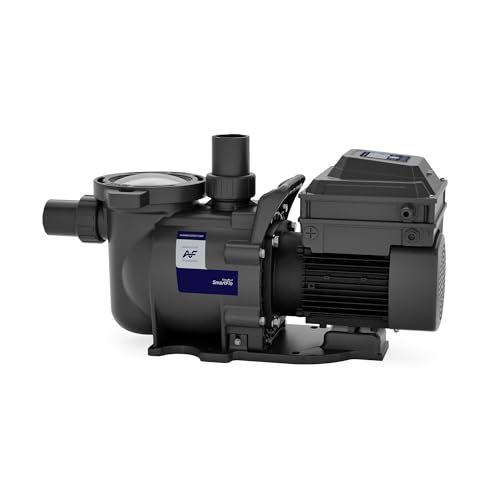
CircuPool SmartFlo 1.3 HP Variable-Speed Pump
CircuPool SmartFlo 2.2 HP Variable-Speed Pump
Aquastrong Riptide 2 HP Dual-Speed Pool Pump
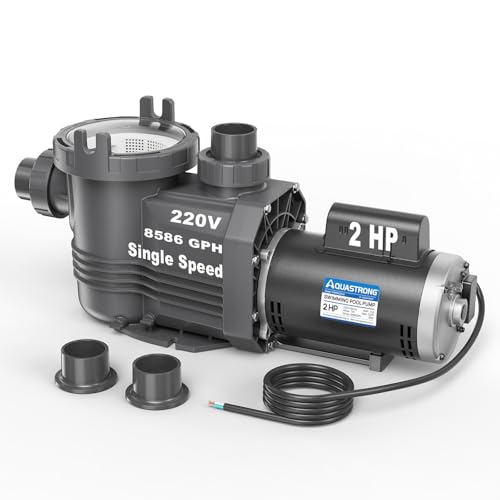
Aquastrong Riptide 2 HP Single-Speed Pool Pump

Aquastrong Riptide 1.5 HP Single-Speed Pool Pump

Swimline HYDROTOOLS 71236 Above-Ground Pump
More Details On Our Top Picks
Most pool cover pumps send water through a garden hose that snakes across the deck, and that hose becomes a trip hazard the moment the yard gets busy. The CoverBlast attachment takes a different route: it clips onto a standard cover pump and sprays water sideways, throwing the stream up to 25 feet away from the pool. The vertical S-shape design is meant to lift the discharge arc over the cover edge and beyond your walking path.
For owners with winter covers and a long stretch of lawn or landscaping to aim at, the no-hose approach is genuinely useful. Setup is install-and-go, and the light blue housing stays in place through a season of freeze-thaw cycles. The catch is that it only works with pumps you already own, so it is an add-on, not a standalone solution.
Well-Handled Touches
- Eliminates hose clutter along the pool edge
- 25-foot spray range keeps the deck dry and clear
- Year-round usability for cover seasons and post-storm drainage
- Simple install that does not require permanent fittings
Worth Noting
- Requires a compatible cover pump, sold separately
- Performance depends on your existing pump’s flow output
- Lightweight plastic may need careful handling in freezing temps
Right Fit For
Homeowners with seasonal pool covers who want to ditch the long hose for a cleaner deck.
A Better Fit Elsewhere
Shoppers needing an actual pump should look at the Aquastrong Riptide 1.5 HP Single-Speed Pool Pump for a complete above-ground solution.
Large in-ground pools put ordinary pumps on notice. The Aquastrong Riptide 3 HP handles up to 10,032 GPH (gallons per hour) on high and drops to 4,755 GPH on low, which means you can run it at near-silent circulation most of the day and crank it up for vacuuming or backwashing. The pure copper motor is built for the long haul, and 220V power is standard for residential equipment of this size.
Self-priming (the pump can clear air from its lines and get water moving without manual help) is genuinely useful during spring start-up. The included filter basket catches leaves and debris before they reach the impeller, a quiet time-saver. Keep in mind that 220V hookup usually means a dedicated circuit and possibly an electrician, depending on your setup.
Practical Pluses
- Up to 10,032 GPH on high for large pools and water features
- Dual-speed flexibility trims long-term energy costs
- Pure copper motor for extended service life
- Self-priming cuts down on start-up fuss
Trade Offs
- 220V wiring may need professional installation
- Larger footprint than mid-size pumps
Key Specs
Who It Suits Best
Homeowners with large in-ground pools who want high output without sacrificing the option of energy-saving low-speed circulation.
Consider Something Else When
Smaller pools and tighter electrical setups pair better with the Aquastrong Riptide 1.5 HP Dual-Speed Pool Pump.
Mid-size pools are the sweet spot for this 1.5 HP variant. It pushes up to 6,604 GPH on high for vacuuming and algae cleanups, then drops to 3,302 GPH for daily circulation that barely registers on the electric bill. The pure copper motor and 220V operation match the build quality of the larger Riptide models, just with flow numbers sized for typical residential pools up to around 20,000 gallons.
Self-priming keeps spring start-up simple, and the integrated filter basket traps debris before it reaches the impeller. The dual-speed switch gives you real control without a smart controller. For many homes, this hits the right balance between power and practicality.
Good Reasons To Consider
- 6,604 GPH high speed handles most mid-size pools easily
- Low-speed mode cuts daily operating costs
- Pure copper motor designed for longevity
- Self-priming and filter basket included
Soft Spots
- 220V wiring still required
- Higher initial cost than single-speed equivalents
Made For
Owners of mid-size in-ground or larger above-ground pools who want flexibility between high-flow tasks and quiet daily circulation.
Look Elsewhere When
Pool owners wanting app-based scheduling and automatic flow adjustment should look at the CircuPool SmartFlo 1.3 HP Variable-Speed Pump.
Variable-speed pumps (units that let you adjust motor RPM across a wide range) are where pool ownership gets interesting, and the CircuPool SmartFlo takes a different angle. Instead of dialing in RPM and hoping the flow rate is right, you set a target GPM and the pump adjusts its own motor speed to maintain it. For most owners that removes a layer of guesswork from equipment pad tuning.
Built-in Wi-Fi opens up app control, which makes scheduling and remote adjustments practical from inside the house. The 1.3 HP motor is modest on paper but plenty for many residential pools when paired with adaptive flow management. Where this model really earns its place is for energy-conscious shoppers who want the pump to do the math for them.
Real-World Strengths
- Adaptive flow control keeps GPM steady without manual tweaks
- Wi-Fi connectivity for app-based scheduling and monitoring
- Variable-speed design supports significant energy savings
- Quieter operation than single-speed pumps at typical settings
Honest Caveats
- 1.3 HP may be undersized for pools with attached spas or water features
- Wi-Fi setup requires a stable home network and some patience
Best Suited To
Tech-forward pool owners who prefer set-it-and-forget-it operation and want to optimize energy use without manual recalibration.
Skip It When
Pool owners who do not need smart controls and want more raw power should consider the Aquastrong Riptide 2 HP Dual-Speed Pool Pump.
The 2.2 HP SmartFlo brings the same adaptive flow logic as its smaller sibling, with a motor that can push water through larger plumbing runs, raised water features, and spa spillovers without breaking a sweat. GPM-based programming means the pump chases the target you set, not a motor speed, so the system stays in tune even as filter load shifts over the season.
Wi-Fi control adds scheduling flexibility, and the higher horsepower opens the door to bigger pools and more demanding equipment pads. Compared to the Aquastrong Riptide 3 HP, this is the smarter, more efficient choice for similar-sized pools when you want the automation layer. The trade-off shows up in upfront cost, which is steeper than non-smart pumps of similar output.
Reasons It Performs
- Adaptive flow technology keeps target GPM consistent
- 2.2 HP motor handles larger pools and water features
- Wi-Fi integration for remote scheduling and adjustments
- Variable-speed design supports long-term energy savings
Points To Keep In Mind
- Higher price point than non-smart dual-speed alternatives
- 220V electrical service typically required for installation
Who Should Grab It
Owners of larger residential pools who want automated flow control and are willing to invest in smarter equipment pad management.
Another Choice May Suit
Shoppers who want high output without the smart features should look at the Aquastrong Riptide 3 HP Dual-Speed Pool Pump for similar horsepower at a different price tier.
The 2 HP dual-speed Riptide lands in a familiar spot: enough muscle for standard residential pools without overshooting into commercial-grade territory. Up to 8,586 GPH on high covers vacuuming and backwashing duties, and the 4,427 GPH low setting handles all-day circulation without the electric bill climbing noticeably. The pure copper motor and 220V setup mirror the rest of the Riptide family.
Self-priming and a built-in filter basket keep the maintenance window manageable. For most homeowners replacing an aging single-speed pump, this hits the upgrade without overcomplicating the equipment pad. The honest read is that 220V wiring remains the main installation hurdle for households used to 115V outlets.
Useful Strengths
- 8,586 GPH on high for thorough cleaning cycles
- Low-speed mode supports energy-efficient daily operation
- Pure copper motor built for long service life
- Self-priming and integrated filter basket included
Things To Consider
- 220V electrical may require a professional hookup
- No smart connectivity for app-based scheduling
Perfect Match For
Standard residential pool owners looking to replace an older single-speed pump with a more efficient dual-speed option.
Swap It Out When
Homeowners wanting remote scheduling and automatic flow adjustment should consider the CircuPool SmartFlo 1.3 HP Variable-Speed Pump.
Not everyone needs dual speeds or smart controls. This single-speed version of the Riptide 2 HP keeps things straightforward, delivering up to 8,586 GPH for pools that run on a simple timer and a fixed schedule. The pure copper motor, self-priming design, and integrated filter basket are unchanged from the dual-speed sibling.
For owners who want reliable flow without paying extra for variable-speed electronics, this is the workhorse option. Compared to the CircuPool SmartFlo 1.3 HP, it trades efficiency for simplicity. Where it really makes sense is in replacement scenarios where the existing wiring and timer are already dialed in.
Useful Highlights
- 8,586 GPH handles full-size residential pools with ease
- Pure copper motor built for long-term reliability
- Self-priming for easier start-ups
- Filter basket included to protect the impeller
Points To Note
- Single-speed operation costs more to run long-term than variable-speed alternatives
- 220V wiring required for installation
Built With In Mind
Homeowners who want a strong, no-fuss pump on a fixed schedule and do not need app-based or speed-adjustable controls.
Reach For A Different Pick When
Energy-conscious pool owners running long daily cycles should consider the Aquastrong Riptide 2 HP Dual-Speed Pool Pump instead.
The compact 1.5 HP single-speed Riptide is sized for smaller in-ground pools and larger above-ground installations where full-size pumps would be overkill. Up to 6,604 GPH keeps water moving at a healthy clip, and the pure copper motor carries the same build quality as the larger models in the lineup.
Self-priming and a filter basket are both included, which keeps routine maintenance simple. Compared to the Swimline HYDROTOOLS 71236, this is the step up in power and build for homes that have outgrown a smaller replacement pump. The single-speed design keeps the cost and complexity down, which is the main draw.
Noteworthy Benefits
- 6,604 GPH suits mid-size and larger above-ground pools
- Pure copper motor for thermal durability
- Self-priming simplifies seasonal start-ups
- Filter basket included to catch debris early
A Few Limitations
- Single-speed operation is less efficient than dual or variable alternatives
- 220V wiring required for installation
Right Fit For
Pool owners with smaller residential setups who want a reliable single-speed pump with more output than a basic above-ground replacement.
Not Your Match When
Shoppers prioritizing daily energy savings should look at the Aquastrong Riptide 1.5 HP Dual-Speed Pool Pump for the low-speed option.
Small above-ground pools need a pump that fits the scale, and the Swimline HYDROTOOLS 71236 is built for exactly that. At 0.45 HP and 2,400 GPH, it is the lightest-duty option on this list, but for a typical 15- to 24-foot round pool with a sand, cartridge, or DE filter, that flow is plenty. The 115V plug means no special wiring, which is a real convenience for seasonal setup.
The extra-large strainer basket catches leaves and hair before they reach the impeller, and the wide-opening impeller design resists clogging. This is a replacement pump more than a primary workhorse, ideal when the original equipment has given up. For larger in-ground pools, the Aquastrong Riptide line is the more capable path.
Useful Touches
- 115V operation plugs into standard household outlets
- 2,400 GPH suits typical above-ground pool sizes
- Large strainer basket extends time between cleanings
- Works with sand, cartridge, and DE filter systems
Where It May Fall Short
- 0.45 HP is underpowered for in-ground or large above-ground pools
- Single-speed design lacks energy-saving flexibility
Made For
Owners of small above-ground pools who need a straightforward 115V replacement pump that pairs with their existing filter system.
Look Elsewhere When
Homeowners with larger pools or those wanting long-term energy savings should consider the Aquastrong Riptide 1.5 HP Dual-Speed Pool Pump instead.
Picking The Right Pump For Your Pool Setup
Choosing a pool pump comes down to matching the motor’s power and the pump’s flow rate (measured in gallons per hour, or GPH) to your pool’s size, your equipment pad layout, and how much attention you want to pay to running costs year-round.
Sizing The Flow To Your Pool
The first real decision is gallons per hour, because flow dictates how quickly your pool turns over its water. Most residential pools aim for one full turnover every 8 to 12 hours. A smaller above-ground pool in the 10,000- to 15,000-gallon range handles this comfortably with pumps in the 2,000 to 6,600 GPH range, like the Swimline HYDROTOOLS or the Aquastrong Riptide 1.5 HP. Mid-size in-ground pools typically need 6,500 to 9,000 GPH, putting the 2 HP Aquastrong models in the sweet spot. Larger pools and those with attached spas or water features lean toward 9,000 GPH and up, which is where the 3 HP Riptide earns its place. Oversizing is wasteful; undersizing leaves the water cloudy and the filter working overtime.
Single-Speed, Dual-Speed, And Variable-Speed
The difference between these comes down to how much you want to think about the pump after installation. Single-speed pumps run at one fixed RPM, full tilt, whenever they are on. They are simple, affordable, and fine for small pools on short daily cycles. Dual-speed pumps add a low setting that runs at a quieter, more efficient RPM for daily circulation and a high setting for vacuuming and backwashing. Variable-speed pumps (like the CircuPool SmartFlo) let you dial in any RPM, and the smarter versions target a specific GPM and adjust the motor to maintain it, which is the most efficient approach long-term.
Electrical And Installation Realities
Voltage matters more than most shoppers expect. Pumps running on 220V typically deliver more power and better efficiency, but they require a dedicated circuit and, in many homes, professional wiring. Pumps running on 115V plug into standard outlets and are easier to set up, which is why the Swimline HYDROTOOLS appeals to seasonal and above-ground pool owners. Before committing, check your equipment pad’s available circuit and whether an electrician is in the budget.
Features That Actually Matter Day To Day
Beyond raw specs, the features that earn their keep are self-priming (saves headaches at spring start-up), a built-in filter basket (cuts down on cleaning frequency), and corrosion-resistant housing (extends service life in humid pad environments). Wi-Fi and app control are genuinely useful for variable-speed pumps but add little to a single-speed setup. For seasonal cover maintenance specifically, an accessory like the CoverBlast attachment can be the difference between a tidy deck and a hose-strewn hazard zone.
Key Considerations Across These Picks
Pitfalls Shoppers Hit
The most common mistake is buying a pump that is too big or too small for the pool. A pump that is oversized wastes energy and can damage filter media with too much pressure. A pump that is undersized leaves the water murky and forces the filter to work harder than designed. Another trap is ignoring voltage requirements: a 220V pump on a 15-amp household outlet is a non-starter without rewiring. Lastly, skipping the filter basket check is a small oversight that turns into a big maintenance headache. Always confirm basket size, impeller clearance, and compatibility with your existing filter type before ordering.
Where The Extra Money Goes
Higher-tier pumps like the CircuPool SmartFlo and the Aquastrong Riptide 3 HP cost more up front, but the money goes into better motors, smarter controls, and longer service life. Variable-speed technology, in particular, can cut energy use significantly compared to single-speed pumps, and the savings accumulate over years of daily operation. The upgrade makes the most sense for owners of larger pools, those running pumps on long daily cycles, and anyone who wants remote scheduling and adaptive flow management. For small above-ground pools on short cycles, a simpler pump is the more honest fit.
Frequently Asked Questions
What does “horizontal discharge” mean for a pool pump?
Horizontal discharge means the water exits the pump through a port that points sideways rather than straight up, which can simplify plumbing layouts and routing in tight equipment pads.
How many gallons per hour do I need for a 20,000-gallon pool?
A 20,000-gallon pool typically needs a pump rated between 6,500 and 9,000 GPH to achieve a full turnover in roughly 8 to 12 hours.
Are variable-speed pumps worth the extra cost?
For pools running long daily cycles, variable-speed pumps can meaningfully reduce energy use, and the savings often offset the higher upfront price over several years.
Can I install a 220V pool pump myself?
Installing a 220V pump typically requires a dedicated circuit, and most local codes require a licensed electrician for the wiring, even if the pump hookup itself is straightforward.
How often should I clean the pump filter basket?
Most pool owners should check and empty the filter basket every one to two weeks during heavy use and once a month during cooler seasons.
Final Take
The best horizontal discharge pool pumps for 2026 run the gamut from a clever cover attachment to fully connected variable-speed systems. Match the pump’s flow and voltage to your pool’s size and your equipment pad’s wiring, and you will save yourself a season of headaches. Browse the picks above, weigh the trade-offs that matter to your setup, and pick the one that fits how you actually use your pool.


