

Owning a pool or hot tub means juggling a small chemistry set, a filter system, and the slow creep of seasonal change. One week it’s pH balance, the next it’s winter prep, and somewhere in between the water goes cloudy. The picks below cover the everyday tasks: sanitizing, balancing, filtering, shocking, and shutting things down. Whether you soak weekly in a backyard spa or swim laps in an in-ground pool, there’s something here to round out your routine.
How The Shortlist Stacks Up
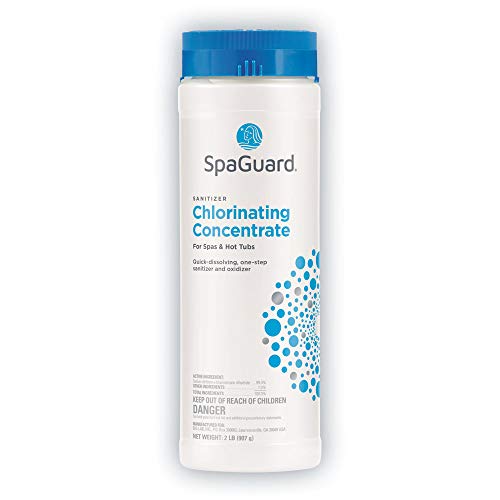
SpaGuard Spa Chlorinating Concentrate, 2 lb

SpaGuard pH Increaser, 1.12 lb

Dicalite DE25BOX Diatomaceous Earth, 25 lbs

Leisure Time Spa 56 Chlorinating Granules, 5 lbs

HTH 52031 Swimming Pool Care Shock

POOLHACKER 3 in 1 Winter Closing Kit

POOLHACKER Winter Pool Pillow 4 x 4 FT
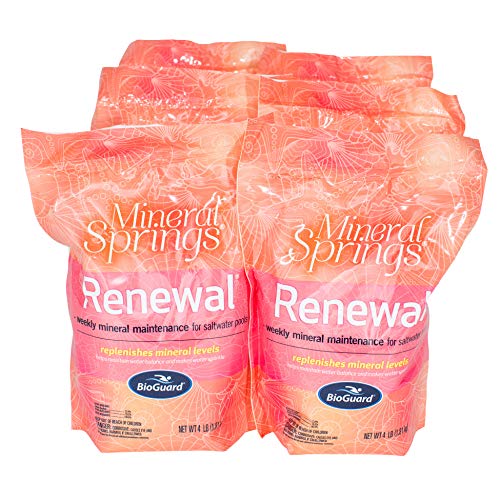
BioGuard Mineral Springs Renewal, 4 lb (6-Pack)

BioGuard Smart Shock, 1 lb (6-Pack)
A Closer Look At Each Pick
Hot tub water demands fast-acting chemistry, especially with a few bathers and warm temperatures feeding bacteria. SpaGuard’s chlorinating concentrate delivers chlorine in a granular form that dissolves quickly when broadcast across the surface with the pump running. For most spa owners, the routine is straightforward: dose, circulate, test.
The 2 lb size suits a small-to-mid hot tub used a few times per week. You can also use a heavier dose as a shock treatment to oxidize organic buildup between regular sanitizing cycles. Unlike the HTH shock covered later, this product is dialed in for spa volumes, so you measure in teaspoons rather than cups.
A Few Strong Suits
- Quick-dissolving granular cuts down on cloudy residue after dosing
- Doubles as a shock treatment for routine oxidation between water changes
- Compact 2 lb container stores easily in a covered deck box or shed
- Trusted brand in the spa chemicals category, with predictable dosing
Honest Caveats
- 2 lb runs out fast for larger spas or hot tubs used daily, so plan on restocking often
- Requires careful measurement: overdosing drives chlorine high and demands waiting before soaking
Right Fit For
Hot tub owners maintaining a small or mid-size spa with a few weekly soaks who want a simple sanitizer that doubles as an oxidizer.
Consider Something Else When
You soak most nights and want a bulk format, in which case the Leisure Time Spa 56 Chlorinating Granules below will save a few restocking trips.
pH is the silent variable that makes every other chemical decision harder when it drifts. A low reading eats at metal fittings, stings eyes, and chews through chlorine before it can sanitize. SpaGuard’s pH increaser pulls that number back into the safe zone (typically 7.2 to 7.8) using a quick-dissolving granular formula.
The 1.12 lb container is sized for spas, where small corrections are the norm rather than the exception. It’s a straightforward tool: test the water, dose in small amounts, retest after circulation. Pair it with the chlorinating concentrate above and you have a minimal two-product routine that covers sanitizing and balance.
Practical Advantages
- Quick-dissolving formula goes to work without long wait times
- Compact size fits the typical spa use case where adjustments are small and frequent
- Protects heaters, jets, and plumbing from the slow corrosion that low pH causes
- Plays well with chlorine-based sanitizers already in your routine
Trade Offs
- Small container means heavy spa users may need to reorder more often than expected
- Requires a reliable test kit to dose correctly; guessing leads to overshooting
Key Product Details
Made For
Spa owners who test water regularly and want a small-format pH adjuster that dissolves cleanly without leaving residue.
Skip It When
You own a larger pool where the bulkier Dicalite DE25BOX is more useful as an all-purpose water-care product.
D.E. stands for diatomaceous earth, a powder made from the fossilized shells of tiny aquatic organisms. It’s the filter media of choice for pool owners chasing the clearest possible water. The Dicalite DE25BOX delivers 25 lbs of high-grade powder designed to catch particles as small as 3 to 5 microns, which is finer than what most cartridge or sand filters can handle.
The product works in both above-ground and in-ground D.E. filter systems. You coat the filter grids after a backwash, and the powder forms a thin layer that traps dirt as water passes through. The trade-off is that D.E. requires more hands-on maintenance than a cartridge filter: regular backwashing, fresh powder coats, and proper disposal of spent media.
Strengths Worth Knowing
- Filters down to 3 to 5 microns, catching particles most other media miss
- All-natural composition made from fossilized diatoms
- Compatible with both above-ground and in-ground D.E. filter systems
- 25 lb box covers many filter cycles for a typical residential pool
Points To Note
- Requires D.E.-specific filter equipment: a sand or cartridge pool won’t use this media
- Spent powder needs careful disposal and should never go down a storm drain
- Coats must be replenished after backwashing, which adds a step to maintenance
Best Suited To
Pool owners with an existing D.E. filter system who want the finest filtration their setup can deliver and don’t mind the extra maintenance steps.
Look Elsewhere When
You want a simpler chemical-only routine, in which case the BioGuard Smart Shock offers multi-purpose water care without any filter media commitment.
Where the SpaGuard concentrate comes in a 2 lb jar, Leisure Time’s Spa 56 ships as a 5 lb jug aimed at heavier spa use. The granules are concentrated chlorine designed specifically for hot tub water, dissolving quickly and evenly without leaving clumps at the bottom of the tub.
This format makes sense for owners who run their spa several times a week or host guests often. The 5 lb size lasts noticeably longer than smaller containers, and the dosing scale stays the same so you don’t need to learn a new routine. Compare that to SpaGuard’s 2 lb jar, which suits lighter weekly use.
What Earns Its Place
- 5 lb jug offers a better cost-per-dose than smaller spa chlorine formats
- Quick-dissolving granules keep water clear and reduce cloudy residue
- Controls both bacteria and algae growth in warm spa water
- Resists chlorine loss so you dose less often than with weaker formulas
Worth Noting
- Bulk size means a heavier container to store and handle
- Still requires careful measuring; overdoing it stalls your soak time
Feature Snapshot
Whose Shelf It Belongs On
Hot tub owners who soak often or run a rental/host property and want fewer restocking cycles between chemical purchases.
Another Choice May Suit
You run a smaller spa on a relaxed schedule, in which case the SpaGuard 2 lb chlorinating concentrate keeps things simple without the bulk.
Shocking is the reset button for pool water. The HTH 52031 uses a cal hypo (calcium hypochlorite) formula that sanitizes, clarifies, and helps control bacteria and algae in one dose. It’s labeled for both regular weekly shocking and heavier problem-solving treatments, so you reach for the same container whether the water is mildly dull or visibly green.
The 1-pack format is built around the typical residential pool. The formula dissolves quickly when broadcast across the surface, and importantly, it works without adding cyanuric acid (CYA) the way stabilized chlorine products do. That matters for anyone who has watched their CYA creep up over multiple seasons and now needs a non-stabilizing option to bring levels back down.
What Makes Sense
- Cal hypo formula works for both weekly shock and problem-water rescue
- Dissolves fast, which shortens the wait time before swimming
- Does not add cyanuric acid, helping long-term CYA management
- Handles bacteria, algae, and clarity in a single treatment
Where It Is Less Suited
- Cal hypo raises calcium hardness over time, so regular testing matters in hard-water regions
- 1-pack size suits typical residential pools; very large pools may need multiple containers per shock
Built With In Mind
Pool owners running a standard weekly maintenance schedule who want a versatile shock that doubles as a problem-solver when water turns cloudy.
Reach For A Different Pick When
You want a multi-action shock that also buffers pH, in which case the BioGuard Smart Shock adds a clarifier step to the same routine.
Closing a pool for winter is one of those chores that either goes well or sets up a miserable spring. POOLHACKER’s 3 in 1 kit bundles the products needed to keep water clear through the cold months in a single purchase, rated for pools up to 30,000 gallons. The goal is simple: walk away in fall, open in spring to blue water rather than a swamp.
It’s designed to work for both above-ground and in-ground pools, which is handy if you manage more than one setup. Note that a floating element is part of the kit by design, and vertical floating is normal behavior, not a defect. Pair it with the POOLHACKER Winter Pool Pillow from the next pick to handle ice expansion against the walls.
Good Reasons To Consider
- Single kit covers pools up to 30,000 gallons, so no separate shopping trips for winter chemicals
- Works for both above-ground and in-ground setups
- Designed to maintain water clarity and color through the off-season
- Reduces the heavy cleaning chore when reopening the pool in spring
Soft Spots
- 30,000-gallon ceiling may not cover very large residential or commercial pools
- The floating component can confuse first-time closers; it is meant to float vertically
Perfect Match For
Pool owners with a typical residential setup who want a one-purchase winterization bundle and don’t want to source three separate products.
Where A Sibling Pick Shines
You have an above-ground pool that needs ice-expansion protection, in which case pairing this kit with the POOLHACKER Winter Pool Pillow covers the physical side of winter prep.
When water freezes, it expands, and that expansion pushes against whatever contains it. In an above-ground pool, that’s the wall. The POOLHACKER Winter Pool Pillow is a 4 x 4 foot inflatable cushion that sits on the water and absorbs that pressure, so the ice pushes the pillow instead of buckling the wall.
You inflate it to about 50 to 70 percent of full capacity, leaving room for compression. It also props up the center of a winter cover, which helps shed rain and snow rather than letting it pool on top. The pillow is a one-job tool, but for above-ground pool owners in freezing climates, it’s the kind of thing you only skip once.
Reasons It Performs
- 4 x 4 ft size suits most residential above-ground pool walls
- Absorbs ice expansion pressure that can otherwise damage pool walls
- Supports the cover to reduce leaf and snow accumulation
- Inflates to a partial fill on purpose, leaving room for ice compression
Things To Consider
- Specific to above-ground pools; in-ground owners don’t need this
- Air capacity changes in extreme cold, so midwinter checks are a common routine
Feature Rundown
Who Should Grab It
Above-ground pool owners in regions with sustained freezing temperatures who want to protect their pool walls through winter.
Swap It Out When
You have an in-ground pool and only need chemical winterization, in which case the POOLHACKER 3 in 1 Winter Closing Kit covers the water-care side.
The BioGuard Mineral Springs system is a salt-alternative sanitizer that uses minerals plus a chlorine generator to produce chlorine on demand. Mineral Springs Renewal is the refill product that keeps those mineral levels topped up, and it ships here as a 6-pack of 4 lb jugs.
This is not a standalone sanitizer. You add it weekly to an existing Mineral Springs setup, where it replenishes the minerals that the system relies on. If you don’t already own the Mineral Springs hardware, none of this applies, and you should look at the chlorine or shock options earlier in the list instead.
Where It Delivers
- 6-pack format covers a full season of weekly replenishments for most pools
- Replenishes the minerals that make the Mineral Springs system effective
- Works with the system’s on-demand chlorine generation, reducing how often you handle raw chlorine
- Compatible with a salt-alternative approach for sensitive skin and swimwear
Points To Keep In Mind
- Only useful if you already run a Mineral Springs system; it is not a generic pool chemical
- Six 4 lb jugs require dedicated storage space in a dry, ventilated area
Who Will Love This
Existing Mineral Springs system owners who want to stock up on a season’s worth of renewal product in a single purchase.
Not Your Match When
You don’t have the Mineral Springs hardware, in which case the HTH 52031 shock is a more universally useful pool chemical.
BioGuard Smart Shock is a weekly shock treatment that does four jobs in one dose: shocks, oxidizes, buffers pH, and clarifies. The blue algae-fighting crystals target visible algae while the clarifier pulls suspended particles out of the water column. For a pool that struggles with recurring cloudiness, that combination cuts a step or two from the routine.
Unlike the cal hypo HTH shock, this is a non-chlorine-oxidizer plus clarifier blend, so it works alongside your regular sanitizer rather than replacing it. You can usually swim sooner after dosing, which is the practical upside. The 6-pack format covers a full season of weekly treatments, useful if you set a reminder and don’t want to reorder mid-summer.
What Works In Its Favor
- Combines shock, oxidizer, buffer, and clarifier in a single dose
- Blue crystals target algae while the clarifier pulls particles from suspension
- 6-pack covers a typical season of weekly treatments
- Generally allows a faster return to swimming than heavier shock products
Honest Caveats
- Works with, not instead of, a primary sanitizer, so it isn’t a complete replacement
- 6-pack is a meaningful storage commitment in a small utility area
Quick Facts
Right Fit For
Pool owners with a recurring algae or clarity problem who want a weekly multi-action shock that simplifies the maintenance routine.
Where Another Pick Suits Better
You prefer a pure shock without the buffer and clarifier steps, in which case the HTH 52031 cal hypo shock keeps things single-purpose.
What To Weigh Before Choosing Pool Care Products
Start with the body of water you actually own. Spa owners and pool owners live in different chemical worlds: spa doses are measured in teaspoons, pool doses in cups, and the products are formulated for those different volumes. The SpaGuard chlorinating concentrate and pH increaser are spa-formulated, while the HTH and BioGuard shocks are built for residential pool volumes.
Next, think about the water itself. Calcium hardness, CYA buildup, and pH drift all change which chemical is the right fit. If you live in a hard-water area, cal hypo shock raises hardness over time, so a clarifier-shock blend like BioGuard Smart Shock may suit you better. If your CYA is already high, the non-stabilizing HTH 52031 lets you shock without piling on more.
Finally, match the product to your filter system. The Dicalite DE25BOX is only useful if you run a D.E. filter, and the BioGuard Mineral Springs Renewal only works inside its own hardware. The winter closing items earn their place for anyone in a freezing climate, and the pool pillow specifically serves above-ground setups where ice pressure can buckle walls.
Key Considerations Across These Picks
Where Shoppers Go Wrong
The most common slip is grabbing a spa chemical for a pool or vice versa. The concentrations are tuned to specific water volumes, and swapping them throws dosing off. Another pitfall is buying shock without checking your CYA and calcium numbers, which can quietly climb over seasons. Test the water first, then choose the chemical that addresses what the test actually shows.
What The Higher Tier Buys
In this category, a higher tier often means multi-action formulas rather than bigger containers. BioGuard Smart Shock costs more than a basic shock because it combines oxidizing, buffering, and clarifying in a single dose. The 6-pack Mineral Springs Renewal costs more upfront than a single jug, but it covers a full season of weekly top-ups. The upgrade usually buys you fewer steps and fewer mid-season reorders, not stronger chemistry.
Frequently Asked Questions
Can you mix chlorine shock and non-chlorine shock in the same pool?
It is generally not recommended. They serve different purposes, and combining them in the same dose can produce unpredictable reactions in the water. Pick one based on what your test results show, dose, and wait before adding anything else.
How often should you shock a residential pool?
For most pools, a weekly shock keeps bacteria and organic buildup in check. Heavily used pools or those recovering from algae may need more frequent treatments until the water stabilizes.
What is the difference between sanitizer and shock?
Sanitizer keeps the water safe day to day at a low, steady level. Shock is a higher-dose treatment that burns off organic buildup, kills algae, and resets the water chemistry, usually on a weekly schedule.
Do pool pillows really protect above-ground walls?
Yes, in freezing climates. The pillow absorbs ice expansion pressure that would otherwise push outward on the pool walls. Inflating it to 50 to 70 percent capacity leaves room for the ice to compress the pillow rather than the wall.
Is diatomaceous earth safe for all pool filters?
No. D.E. powder is specific to D.E. filter systems. Using it in a sand or cartridge filter will clog the media and cause pressure problems. Match the product to the filter type you actually own.
The Takeaway
Pool and spa care is less about a single magic product and more about matching each chemical to the water, the filter, and the season. Use the list above to fill the gaps in your current routine, whether that’s balancing spa pH, shocking a stubborn pool, or winterizing before the first freeze. With the right products in the shed, the weekly maintenance gets shorter and the water stays clearer.


