

Installing or replacing an above-ground pool liner is one of those projects where the prep work quietly decides everything. The liner itself gets the spotlight, but what sits beneath it, the wall foam, the underlayment pad, the bead receiver, decides whether your finish looks crisp for a decade or develops wrinkles, pinholes, and rust stains by the second summer. That is why this roundup leans heavily into the under-pool and behind-liner accessories that often get skipped.
Below, you will find wall foam for protecting liners from rough metal or wood walls, heavy-duty geotextile (a tough, felt-like fabric used as a ground barrier) pads sized for round and oval pools, and a bead receiver for re-hanging a liner. Most owners shopping this category fall into two camps: first-time installers trying to get the foundation right, and seasoned pool people replacing worn padding. Either way, the picks below should help you match the right material to your pool size, wall type, and ground conditions.
The Shortlist At A Glance

Gladon 1/8in. x 48in. Above Ground Pool Wall Foam (125ft)
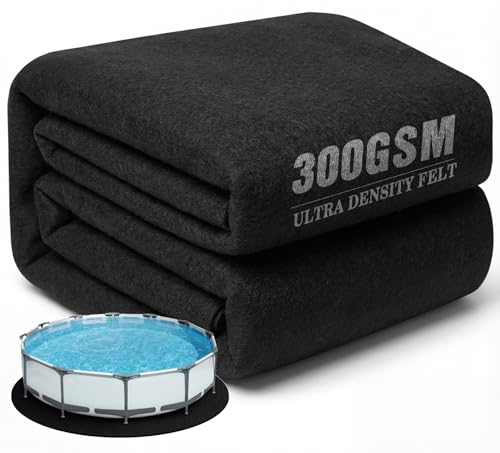
UIRWAY 24FT Round Pool Liner Pad (300G/M²)

Swimline Bead Receiver for 18′ Round Pool Liners

UIRWAY 15FT Round Pool Liner Pad (300G/M²)
UIRWAY 18FT Round Pool Liner Pad (300G/M²)
UIRWAY 21FT Round Pool Liner Pad (300G/M²)

Gonioa 15 FT Round Pool Pad Tarp
UIRWAY 16FT Round Pool Liner Pad (300G/M²)

UIRWAY 12 x 24ft Oval Pool Liner Pad (300G/M²)
UIRWAY 12×18 ft Oval Pool Liner Pad (300G/M²)
Meet The Standout Selections
Most above-ground pool owners think about the liner and the ground beneath it, but the wall in between is just as exposed. The Gladon 1/8in. closed-cell wall foam (a dense foam that resists water absorption) installs directly against the inside of metal, wood, or concrete pool walls before the liner goes on, creating a smooth buffer that keeps rust, splinters, and corrosion from eating into the vinyl. The 125-foot roll gives you enough length to wrap most standard round or oval pool walls without splicing.
For anyone replacing a liner on a slightly rusted steel wall, this kind of foam can buy you a few extra seasons before the wall itself becomes a problem. It also softens the feel of the wall slightly underfoot along the shallow edges.
Practical Pluses
- Closed-cell structure that resists waterlogging and stays firm season after season
- Compatible with metal, wood, and concrete pool walls, so it suits mixed rebuilds
- 125-foot roll covers large round and most oval pools in a single run
- Adds a noticeable cushion along the upper seam, where the liner tends to press hardest
Things To Consider
- Requires a separate spray-on adhesive, which adds a step and a small extra cost to installation
- Thin 1/8-inch profile will not flatten out seriously dented or warped wall panels
Best Suited To
DIYers re-lining an above-ground pool with a slightly rough or mildly rusted wall who want a clean, cushioned surface before the liner goes in.
Reach For A Different Pick When
If your priority is ground-level puncture protection rather than wall smoothing, the UIRWAY 24FT Round Pool Liner Pad is a better fit.
The UIRWAY 24FT round liner pad uses a 300G/M² heat-pressed geotextile (a fabric made by bonding fibers with heat, creating a dense, mat-like material), which is meaningfully thicker than the 200G/M² pads that dominated the category a few years back. That density shows up where it matters: blocking grass and weed growth under the pool and absorbing the small stones and root fragments that would otherwise press up against the liner over time.
For a 24-foot round above-ground pool sitting on a lawn that is not perfectly manicured, this kind of pad does a lot of the heavy lifting that the liner cannot do on its own. It also helps even out minor dips in the ground, so the liner lays flatter during the fill.
Points In Its Favor
- 300G/M² double-layer construction gives noticeably more puncture resistance than older 200G/M² pads
- Doubles as a weed barrier, cutting down on growth pushing into the liner
- Pre-cut to a 24-foot round layout, which removes a measuring and trimming step
- Black color hides staining from leaf tannins and dirt over the years
Trade Offs
- Larger pad is heavier and a bit awkward to position alone, so a second pair of hands helps
- May need ground prep beforehand, since thick fabric cannot fully compensate for a noticeably uneven base
Made For
Homeowners with 24-foot round pools on grassy yards who want the strongest underlayment available without stepping up to a full foam base.
A Better Fit Elsewhere
For an oval-shaped pool, the UIRWAY 12×18 ft Oval Pool Liner Pad is shaped to match and worth considering instead.
The Swimline bead receiver is a small but critical piece of hardware if you are replacing a beaded liner (a liner finished with a thick welded edge that snaps into a track around the top of the pool wall) on an 18-foot round pool. It is the plastic track that the liner’s bead snaps into, and over time the original receiver becomes brittle, cracked, or warped, especially after a hard winter. This 15-section kit replaces the full perimeter in pieces that join together along the wall.
For most people, this is not a “new pool” item. It is a mid-summer rescue part. If your liner keeps popping out of the top of the wall or the old receiver is visibly cracked, swapping it out usually solves the problem without forcing a full liner replacement.
Real-World Strengths
- 15-section design lets you replace a damaged section without disturbing the full track
- Specifically sized for 18-foot round pools, which removes any sizing guesswork
- Restores a secure snap fit for beaded liners that have started slipping
Honest Caveats
- Only fits 18-foot round pools, so it is not useful if your pool is a different size or shape
- Old sections often need to be pried off, and that process can leave sharp metal edges worth watching during removal
Right Fit For
Anyone re-hanging a beaded liner on an 18-foot round pool where the original receiver has cracked, warped, or lost grip.
Skip It When
Pool owners with overlap-style liners (liners that drape over the pool wall and are held in place with coping strips) will not need a bead receiver at all and should focus on wall foam or ground pads instead.
Smaller pools tend to get short-changed on underlayment because people assume a thinner pad will be enough. The UIRWAY 15FT round pad uses the same 300G/M² heat-pressed geotextile build as the larger sizes, which means a 15-foot pool gets the same puncture and weed protection as a 24-foot one. It cuts to a round shape, so there is no measuring tape math involved at install time.
For a tight backyard, a 15-foot round pool often sits in the most visible corner of the lawn. The reinforced cushioning here helps the liner keep its shape better over the years, especially on soil that shifts a little between wet and dry seasons.
What Works In Its Favor
- 300G/M² weight class, which is the thicker end of what is widely available for above-ground pads
- Pre-cut round shape suits 15-foot pools without trimming
- Dense enough to suppress grass and weed growth directly under the pool
Points To Keep In Mind
- Pads of this density can fold or bunch if the ground is not raked smooth before laying it down
- Smaller size means any wrinkle shows up more obviously under the liner once the pool is filled
Who It Suits Best
Smaller-yard owners with 15-foot round pools who still want the heavier 300G/M² protection rather than a thinner budget pad.
Look Elsewhere When
You have an oval pool, in which case the UIRWAY 12×18 ft Oval Pool Liner Pad is shaped for that footprint.
An 18-foot round pool is one of the most common above-ground sizes, and the UIRWAY 18FT round pad is built for exactly that. The 300G/M² double-layer geotextile is heat-pressed, which tightens the fiber structure and makes the pad noticeably more puncture-resistant than older felt-style pads. It also doubles as a weed barrier, so you are not fighting grass poking up through the liner in midsummer.
For a family pool that gets daily use, that puncture resistance matters more than people expect. Kids dragging pool toys, dogs scrambling in and out, and feet shuffling along the bottom all add up to real wear, and the pad takes the brunt of it instead of the liner.
Strong Points
- 300G/M² double-layer construction handles frequent foot traffic under the pool
- Pre-cut round shape sized to common 18-foot pools
- Acts as a weed barrier, reducing cleanup at the pool base over time
Soft Spots
- Heavier fabric is harder to reposition once laid out, so getting it square on the first try matters
- May show wrinkles if the ground was not raked flat ahead of install
Built With In Mind
Active family households with 18-foot round above-ground pools who want the underlayment to keep up with daily use.
Where A Sibling Pick Shines
For a 21-foot round pool, the UIRWAY 21FT Round Pool Liner Pad offers the same build with extra coverage.
Larger round pools put more stress on every layer, because the volume of water presses down harder and there is more liner area exposed to ground irregularities. The UIRWAY 21FT pad uses the same 300G/M² heat-pressed geotextile as the smaller UIRWAY round options, but with a 21-foot pre-cut round shape so it covers the full footprint without leaving an unprotected ring at the edge.
For a 21-foot pool, a partial pad can cause a visible step or wrinkle where the pad ends, so the full-coverage cut here is the real feature. It also handles the wear of larger family pools where four or five people may be in and out on a hot day.
A Few Highlights
- Full 21-foot round coverage prevents the edge-step problem that smaller pads can create on bigger pools
- 300G/M² density holds up under the heavier water weight of a 21-foot pool
- Reinforced cushioning extends liner life in high-traffic family pools
A Few Limitations
- Bigger pad is bulky, so transportation and positioning take a bit of planning
- Benefit of the upgrade over a thinner pad is harder to notice on freshly leveled sand bases
Whose Shelf It Belongs On
Households running a 21-foot round above-ground pool as a true family pool, where liner protection translates directly to fewer replacements.
Not Your Match When
For a smaller backyard pool in the 15-foot range, the UIRWAY 15FT Round Pool Liner Pad is a more appropriately sized pick.
The Gonioa 15 FT round pool pad is a PE (polyethylene, a flexible and water-resistant plastic) ground tarp rather than a geotextile felt. That material choice is the entire story. PE is waterproof, sun-resistant, and folds up small, which makes it an attractive option for first-time pool owners who need a basic protective layer without committing to a heavier felt pad.
It also works well as a secondary layer over sand, where the sand levels the ground and the tarp provides a slick barrier that helps the liner slide into place more easily during installation.
The Value In It
- PE material is waterproof and resistant to sun degradation, so it holds up across full summer seasons
- Folds and stores compactly between installations, ideal for seasonal take-down pools
- Soft and flexible enough to contour over slightly uneven ground
Some Limits To Know
- Thinner than a geotextile pad, so it offers less puncture resistance against sharp stones or roots
- Less effective as a weed barrier than denser felt-style pads over multiple seasons
Who Will Love This
First-time pool owners with a 15-foot round pool who want a simple, lower-cost ground cover rather than a heavy-duty felt pad.
Consider Something Else When
You are installing on rocky or root-heavy ground, where the UIRWAY 15FT Round Pool Liner Pad offers meaningfully better puncture protection.
The UIRWAY 16FT round liner pad slots into one of the more common above-ground pool sizes. The 300G/M² heat-pressed build gives it the same puncture resistance and weed-blocking behavior as the rest of the UIRWAY round lineup, just sized for a 16-foot footprint. For a lot of suburban backyards, 16 feet is the sweet spot, big enough to swim in, small enough to heat efficiently.
Compared to the Gonioa tarp covered earlier, this is a meaningful step up in protection. The denser fabric absorbs the kind of small ground irregularities that, over a few seasons, wear through a thinner layer.
The Good Stuff
- 300G/M² double-layer geotextile stands up to typical suburban ground conditions
- Pre-cut to 16 feet, removing layout guesswork at install
- Provides a flat, cushioned base that helps the liner lay smooth during fill
Less Ideal Details
- Performance advantage over a basic tarp is only obvious on rough ground, not on a perfectly smooth base
- Black color can absorb heat during unboxing on a hot day, so a shaded workspace helps
Right Fit For
Homeowners with a 16-foot round above-ground pool who want a standard heavy-duty pad without over- or under-buying.
Swap It Out When
You have an oval pool, in which case the UIRWAY 12×18 ft Oval Pool Liner Pad is shaped to match that footprint.
Oval pools are harder to fit than round ones, and a square pad just does not work. The UIRWAY 12×24 oval pad is pre-shaped to match the curved footprint of a 12-by-24 oval above-ground pool, which means no trimming at the curved ends and full coverage along the long straight sides. The 300G/M² heat-pressed build is the same heavy material used in the round options, just cut to an oval template.
For an oval pool, the pad also helps the liner settle into the curves without bunching. That matters more than it does for round pools, because oval liners have more stretch zones where wrinkles tend to collect.
Key Advantages
- Pre-cut oval shape fits 12×24 pools without trimming, which is rare at this size
- 300G/M² density gives the same puncture resistance as the round UIRWAY options
- Full coverage along straight sides reduces the chance of edge wrinkles under the liner
Practical Considerations
- Large pad is the heaviest in this roundup, so help with positioning is almost a must
- Oval pools often need extra ground leveling along the long axis to get the full benefit
Perfect Match For
Homeowners installing or re-padding a 12×24 oval above-ground pool who want a pad shaped exactly to the pool footprint.
A Better Fit Elsewhere
For a smaller oval pool in the 12×18 range, the UIRWAY 12×18 ft Oval Pool Liner Pad is the right shape and saves a bit of material.
The 12×18 oval is a popular middle-ground size, big enough for a few swimmers, small enough to fit in a modest yard. The UIRWAY 12×18 oval pad matches that footprint with a pre-cut shape that follows the curves at each end, so the liner does not have to bridge an unprotected gap at the round caps. The 300G/M² build is the same proven geotextile used in the rest of the UIRWAY oval range.
Compared to the 12×24 option, this pad sacrifices a bit of coverage along the long axis. For most 12×18 pools, that is exactly the right trade: the pool is shorter, the pad is lighter and easier to position, and the protection still covers the full footprint.
Where It Helps
- Pre-cut oval shape follows the curved ends, eliminating exposed ground at the caps
- 300G/M² heat-pressed material handles typical root and stone intrusion
- Lighter than the larger 12×24 oval pad, so it is easier to maneuver during install
Where It Is Less Suited
- For very rocky soil, a foam base beneath this pad is still a smart addition
- Coverage at the long straight sides leaves less margin for error in pad placement
Who Should Grab It
Owners of 12×18 oval above-ground pools who want a pad that matches their pool’s exact oval shape rather than trimming a generic sheet.
Where Another Pick Suits Better
For a 12×24 oval pool, the UIRWAY 12 x 24ft Oval Pool Liner Pad offers the additional length along the straight sides.
Picking The Right Underlayment For Your Pool
The most important decision is matching the pad or foam to your pool’s size and wall type. A round pad that is too small leaves a vulnerable ring around the edge, and a foam that is too thin will not protect against a wall that has already started to rust.
For ground protection, density matters more than thickness. A 300G/M² heat-pressed geotextile will outlast a thicker but lighter felt pad, because the bonding process tightens the fiber structure and improves puncture resistance. For wall protection, closed-cell foam is the standard because it does not absorb water and stays firm over many seasons.
Measure the pool’s outer diameter or oval dimensions before ordering, and account for any coping strips (the plastic edging that locks the liner over the top of the wall) that add to the total footprint. If the pool sits on a sloped or partially sandy base, plan on a bit of ground leveling before laying the pad down.
A Few Things To Keep In Mind
Common Shopping Slip Ups
The most frequent mistake is buying a pad that is the right shape but the wrong size, ending up with exposed ground at the edge. Another common slip is skipping wall foam on a metal pool, then watching rust bleed through the liner within a season. Measure twice, and treat the wall and the floor as two separate problems rather than one.
Why Top Tier Costs More
The upgrade from a 200G/M² pad to a 300G/M² pad costs more because the bonding process uses more material and a heat-pressing step, but the real payoff is puncture resistance and longer liner life. For a pool that gets daily summer use, that extra material often pays for itself by avoiding one liner replacement down the road.
Key Considerations Across These Picks
Pitfalls Shoppers Hit
Buying a round pad for an oval pool is the most common shape mismatch, and it usually means trimming, which can leave exposed seams where weeds eventually push through. Skipping the wall foam to save a step tends to backfire on metal pools, where rust staining shows through lighter liners within a season or two.
What The Higher Tier Buys
Stepping up to a 300G/M² heat-pressed geotextile instead of a standard felt pad adds real puncture resistance and noticeably better weed blocking. For a pool that stays up year-round or sees daily family use, that extra weight in the fabric is what keeps the liner looking clean into its fourth or fifth season.
Frequently Asked Questions
Do I need wall foam if I already have a ground pad?
Yes, they protect different surfaces. Wall foam guards the liner against rough or rusty pool walls, while a ground pad protects against punctures from below. Skipping either one leaves a weak point in the installation.
What does G/M² mean on a pool liner pad?
It stands for grams per square meter, a measure of fabric density. Higher numbers mean a heavier, denser pad, which generally translates to better puncture resistance and longer life under the pool.
Can I reuse my old pad when I replace the liner?
It depends on its condition. A pad that still feels firm and shows no tears or root intrusion can often be reused. A pad that has thinned, grown mildew, or developed holes is worth replacing along with the liner.
Are oval and round pads interchangeable?
Not really. Oval pools need a pad cut to an oval shape so the curved ends are covered, otherwise the liner is unsupported at the caps. Round pads in an oval pool leave exposed curved sections, which leads to uneven liner support.
How long does a 300G/M² pool pad typically last?
Under normal use on a well-prepared base, a dense geotextile pad of this class can last as long as the liner it protects, often several seasons. Heavy root intrusion or sharp stones can shorten that lifespan, so ground prep matters.
Closing Remarks
The right combination of wall foam, ground pad, and a working bead receiver is what separates a pool that looks good for one summer from one that looks good for many. Match the pad to your pool’s exact size, add wall foam for metal or rough-walled pools, and treat the underlayment as part of the liner, not a separate purchase.


