

Pool electrical bonding protects swimmers by equalizing voltage potential between metal components, water, and surrounding earth. Without a solid bonding loop, stray current from a pump, light, or heater can turn the water itself into a hazard. Most local codes reference NEC Article 680, which is why inspectors look for a continuous #8 (or larger) copper conductor tied to every metallic fitting, ladder, and water feature.
The picks below cover two product families. Brass water-bonding fittings (Items 1, 2, and 4) thread directly into your plumbing and create a dedicated bonding point. Lay-in grounding lugs (Items 3, 5, 6, 7, and 8) clamp onto that copper conductor wherever it lands on a piece of equipment, rebar tie, or conduit bushing. You will typically need both styles on a complete job. Read through, match the fitting size to your existing pipe, and confirm AWG compatibility before ordering.
The Leading Options At A Glance

Axfvd PB-2008 Brass Pool Bonding Kit

Aoheke PB-2008 Brass Pool Bonding Kit

Landhoow 40 Pack Lay-in Lugs

Perma-Cast .25″ Pool Bonding Kit PB-AG
Morris Direct Burial Lay-in Connectors
OHLECTRIC Lay-in Grounding Connectors 10-Pack

Swess Pool Bonding Lug 10 Pack
Pafeooui 40pcs Aluminum Pool Bonding Lug
More On The Choices That Made The List
For a fresh inground build, the Axfvd PB-2008 anchors the bonding loop right at the equipment pad. Its 1″ MPT (Male Pipe Thread) brass body drops into a return-line tee, manifold, or water-feature riser, giving you a dedicated lug to land your #8 solid copper conductor on. The brass construction resists corrosion in the harsh chemistry of a chlorinated pool, and the threaded connection installs with basic plumbing tools.
If you are upgrading an older system that has a tired or missing fitting, this kit covers that replacement scenario. It pairs well with the lay-in lugs reviewed below, since those handle the secondary termination points around the rest of the bond.
The Case For It
- Solid brass body delivers dependable conductivity and long service life in pool water.
- 1″ MPT thread matches common return-line fittings, simplifying a retrofit.
- Works for inground pools, attached spas, and standalone water features.
- Provides a clean, dedicated bonding point that inspectors typically look for.
Things To Consider
- Brass needs Teflon tape or pipe dope on the threads to avoid slow seeps at install.
- You still need a separate lay-in lug at each motor housing and rebar tie to complete the loop.
Key Specs
Who It Suits Best
Pool owners and contractors building or renovating an inground system who want a single code-ready bonding point at the equipment pad.
Where Another Pick Suits Better
For an above-ground pool pump, the Perma-Cast PB-AG 0.25″ pump-mount fitting is sized to fit smaller ports without reducers.
The Aoheke kit uses the same PB-2008 form factor as the Axfvd above, so it drops into identical plumbing runs. Brass gives you the same corrosion resistance and conductivity, and the 1″ MPT thread is universal across most inground return and manifold setups. For a replacement or a single new bonding point, this is the lower-tier option to reach for.
It fits the same role in a complete bonding loop, sitting at one of the water-side termination points while lay-in lugs cover the equipment-side. In most backyards, the difference between this and the Axfvd comes down to brand preference rather than function.
The Practical Payoff
- Same PB-2008 form factor, so existing tees and manifolds fit without rework.
- Brass construction is rated for inground pool, spa, and fountain duty.
- Threads onto return lines, manifolds, or feature piping with standard tools.
Trade Offs
- Brass threads can gall if you skip Teflon tape at install.
- Does not include a lay-in lug, so you will need a separate connector for the wire.
Made For
Shoppers replacing a single lost or corroded water-bonding fitting without overspending.
Skip It When
If you also need dozens of secondary termination points, step up to the Landhoow 40-pack lay-ins for one combined order.
Where the brass fittings above handle the water side, lay-in lugs handle the equipment side. The Landhoow 40-pack is copper alloy, accepts 4 to 14 AWG conductors, and uses an open-faced channel so you can drop the wire in without cutting it. For a full inground loop with a pump, heater, sanitizer, multiple rebar ties, and a light niche, you can easily chew through 20 or 30 of these on one job.
You will still want a primary water-bonding fitting from above, but this pack covers the rest of the loop. A torqued-down set screw locks the wire, and the copper body is rated for outdoor grounding duty.
Useful Strengths
- 40-pack covers a full residential bonding loop in one order.
- Copper alloy body resists rust and stays conductive.
- 4-14 AWG range matches the #8 and #6 wire most pools call for.
- Open channel lets you land the wire without cutting it, which is a real time-saver on a long run.
Honest Caveats
- Set screws need a calibrated torque driver to avoid over- or under-tightening.
- Spare 40 connectors may sit in the bin, so small one-point repairs end up wasteful.
Quick Facts
Best Suited To
Contractors and hands-on homeowners wiring a complete inground bonding loop in a single afternoon.
Not Your Match When
For a quick single-point repair, the Swess 10-pack is a better fit than a 40-count box.
Above-ground pools bond differently than inground ones. Most use a 0.25″ MPT port on the pump housing, which is far too small for the 1″ fittings reviewed above. The Perma-Cast PB-AG is built for that exact port, threading into the pump itself rather than a return line. You land your bonding wire directly on the motor case, which is the equipment most likely to develop a ground fault.
If your pool is the soft-sided or framed variety sitting on a lawn, this is the fitting that matches your hardware. Pair it with a handful of lay-in lugs for any metal ladder or frame tie.
Noteworthy Benefits
- 0.25″ MPT thread matches the dedicated bonding port on most above-ground pumps.
- Pump-mount design places the bond right at the equipment most likely to fault.
- Sized for residential above-ground pool and spa systems.
Small Caveats
- Not a fit for inground returns, which use larger 1″ or 1.5″ MPT ports.
- You still need a bonding lug at any metal ladder or frame contact point.
Feature Snapshot
Whose Shelf It Belongs On
Owners of above-ground pools who need a pump-side bonding point without buying reducers or adapters.
Look Elsewhere When
For an inground system, the Axfvd PB-2008 1″ MPT is a more honest match for your plumbing.
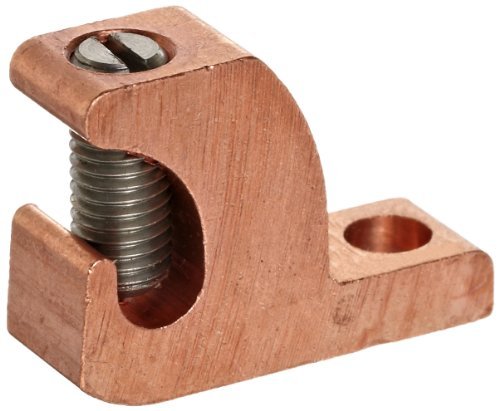
When the bonding conductor enters the soil or runs through a conduit, generic lugs can corrode inside a few seasons. The Morris Products direct-burial connector is built for that environment, using a high-copper alloy that holds up to soil moisture and pool-deck runoff. Its open-faced channel accepts copper conductors and lets you use it as a jumper between multiple conduits, which is handy when the bonding loop crosses more than one equipment pad.
At 1.04″ long, 0.47″ wide, and 0.76″ tall, with a 0.26″ bolt, it is small enough to tuck into a tight conduit bushing. The 2-pack is a measured option for installers who need a couple of heavy-duty terminations rather than a 40-count box.
Bright Spots
- Rated for direct burial and outdoor grounding, including soil contact.
- Open-faced design lets you jumper multiple conduits without breaking the conductor.
- Compact footprint fits inside crowded equipment enclosures and bushings.
- High-copper alloy stands up to chlorinated and salty environments.
Points To Note
- Copper-only rating means you cannot use it with aluminum conductors.
- Higher tier typically costs more per piece than bulk lay-ins.
Perfect Match For
Installers running a bonding loop through conduit or into the ground who need a small quantity of heavy-duty connectors.
Swap It Out When
For a budget-friendly 40-count box, the Pafeooui aluminum lug pack covers similar wire ranges at a lower tier.
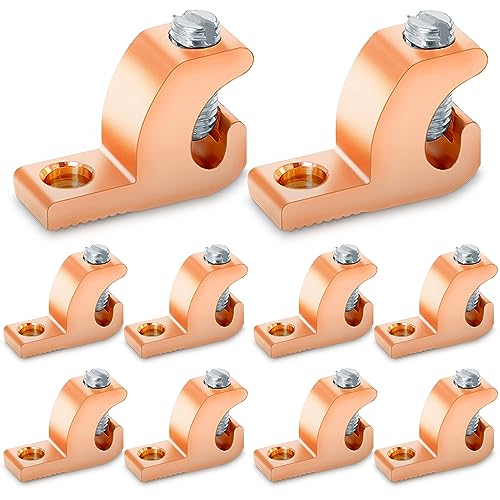
OHLECTRIC’s 10-pack sits in the middle ground between a 2-piece premium set and a 40-count bulk box. Each connector is rated for direct burial, handles 4 to 14 AWG copper, and uses a lay-in channel that lets you seat the conductor without cutting it. The 10-pack suits a small above-ground loop or a mid-size inground where you only need a handful of secondary terminations.
You will still want a primary water-bonding fitting like the Axfvd or Aoheke from above, and the OHLECTRIC lugs finish off the equipment-side tie-ins. Owners commonly report that the set screws hold torque well on a properly sized copper conductor.
Real Benefits
- 10-pack fits small to mid-size pools without leftovers piling up.
- Direct burial rating allows outdoor and in-ground placement.
- 4-14 AWG window covers the most common pool wire sizes.
- Lay-in design speeds up the install on long conductor runs.
Worth Bearing In Mind
- Owners commonly recommend a torque driver to avoid loose set screws.
- Copper-only rating rules out aluminum wire.
Who Should Grab It
Homeowners with a smaller pool who need only a handful of reliable secondary bonding terminations.
Reach For A Different Pick When
For a heavier commercial-style install, the Morris direct-burial connector offers thicker copper alloy in a 2-pack.
Swess goes with solid copper rather than copper alloy, which holds conductivity well over time. The 10-pack is sized for a typical residential bonding loop: a pump, a heater, a salt cell, a few rebar ties, and an equipment-enclosure ground. The lay-in slot saves you from cutting the wire, and the 4-14 AWG window covers the #8 and #6 conductors most codes call for.
Use these alongside a primary water-bonding fitting from earlier in the list. Solid copper bodies are also easier to inspect visually, which matters if your local inspector wants to see the metal type on a rough inspection.
A Strong Showing
- Solid copper body maximizes long-term conductivity and corrosion resistance.
- 10-pack suits a typical residential pool’s secondary terminations.
- 4-14 AWG range covers the most common bonding conductor sizes.
- Lay-in design is friendly to long, unbroken wire runs.
Points To Weigh
- Not rated for direct burial, so you will need an above-grade or conduit location.
- Set screws require a torque driver for a proper, lasting connection.
Who Will Love This
Residential pool owners who want solid copper terminations for above-grade equipment bonding.
A Better Fit Elsewhere
For a buried run, the OHLECTRIC 10-pack or Morris 2-pack is direct-burial rated.
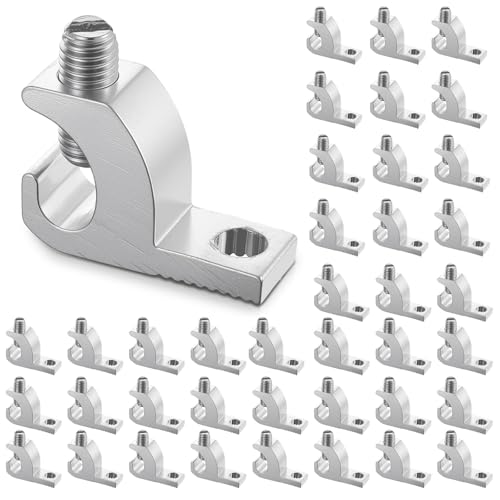
The Pafeooui 40-pack is aluminum alloy rather than copper, which keeps cost low when you need volume. It accepts the same 4-14 AWG range and uses the same open-faced lay-in channel as the copper options above. For a large above-ground build or a budget-driven install with many secondary tie-ins, the count makes sense.
Aluminum does not behave the same as copper in a wet environment, so most pool electricians pair it with a small dab of antioxidant compound at the lug and verify the conductor is also aluminum. Mismatched metals at a bonding lug is one of the most common inspection flags.
Notable Gains
- 40-pack offers strong value for high-volume secondary terminations.
- Corrosion-resistant aluminum alloy is lighter than copper.
- 4-14 AWG range matches standard pool bonding wire sizes.
- Lay-in design supports quick wire seating on long runs.
Some Limits To Know
- Aluminum should not sit directly against copper without antioxidant compound to prevent galvanic corrosion.
- You will want to confirm your local code accepts aluminum bonding lugs in pool applications.
Spec Overview
The Right Fit
Budget-minded installers working on a high-volume pool bonding loop who can use aluminum-compatible conductors.
Consider Something Else When
For a copper-only bonding system, the Swess 10-pack keeps the entire loop in one metal family.
Key Specs To Match Before You Order
Thread Size and Connection Type
MPT stands for Male Pipe Thread, a tapered thread that seals as you wrench the fitting tighter. The brass water-bonding fittings above use 1″ MPT (for inground returns) or 0.25″ MPT (for above-ground pump ports). Match the MPT size to the threaded port already on your equipment. A reducer bushing is an option, but direct sizing keeps the install cleaner.
AWG Wire Range
AWG (American Wire Gauge) describes the cross-sectional size of copper or aluminum wire: smaller numbers mean thicker wire. Pool bonding loops typically use #8 AWG solid copper, and the lugs in this list all accept 4 through 14 AWG, which covers that range with headroom. A lug that does not match your wire gauge is a poor mechanical connection, even if it clamps down.
Lay-in vs. Pressure Set
Lay-in lugs have an open channel that lets you seat the wire without cutting it, which is faster on long runs. Pressure-set lugs (or set-screw lugs) clamp down on a wire end. Both styles work for bonding, but lay-ins are friendlier when you want one continuous conductor looping through multiple equipment points.
Material Choice: Brass, Copper, or Aluminum
Brass water-bonding fittings are standard for the water side. For secondary lugs, copper alloy and solid copper are the most common pool-rated choices, and aluminum shows up on budget jobs. Keep the metals compatible at each termination to avoid galvanic corrosion, and apply antioxidant compound where copper meets aluminum.
Where Shoppers Go Wrong On Pool Bonding
Pitfalls Shoppers Hit
The most common mistake is treating bonding as optional or skipping it during a renovation. Even when the pump and heater are properly grounded (a separate, equipment-grounding concern), the water itself needs to be at the same electrical potential as the surrounding metal. That is what bonding accomplishes, and inspectors do flag pools without a continuous bond loop.
A second slip is mixing metals without antioxidant compound. A copper conductor landed directly on an aluminum lug will corrode at the contact point, and the connection can fail within a few seasons. A thin layer of antioxidant paste at every mixed-metal junction prevents that.
A third trap is undersizing the conductor. Some homeowners assume any wire will do, but most codes call for #8 AWG solid copper (or larger) on a pool bonding loop. Smaller wire cannot safely equalize fault current, and an inspector will reject it.
Where The Extra Money Goes On Premium Tier
Higher-tier lugs like the Morris direct-burial connector use more copper in the alloy, which holds up to soil contact and chlorinated runoff longer than budget options. That buys you peace of mind on the buried portion of the loop, where a failed lug means digging back up.
Premium brass fittings tend to use denser castings with tighter machining tolerances. The thread seats more cleanly, the included sealing surface is more consistent, and you are less likely to fight a slow seep months after install. For a once-in-a-decade plumbing job, the labor savings often justify the modest upgrade.
Frequently Asked Questions
What wire gauge do most pool bonding loops need?
Most local codes call for #8 AWG solid copper, with #6 AWG used for larger residential pools. The lugs in this list all accept that range, but always confirm with your local inspector before finalizing.
Can a lay-in lug be used outdoors without a junction box?
Direct-burial-rated lugs like the Morris and OHLECTRIC options are designed for outdoor and in-ground use. Non-rated lugs like the Swess solid copper pack should sit in a weatherproof enclosure or above-grade location.
Do I need both a water-bonding fitting and lay-in lugs?
Yes, in most cases. The water-bonding fitting (brass, threaded into the plumbing) puts the bond on the water itself, while lay-in lugs handle the equipment-side terminations at the pump, heater, rebar, and ladder. Together they form the complete loop that codes and inspectors look for.
Is aluminum acceptable for pool bonding lugs?
Aluminum is allowed in many jurisdictions when paired with aluminum-compatible conductors and antioxidant compound. Copper is the more common choice, but the Pafeooui 40-pack offers a budget option for aluminum-rated installs. Always check your local code.
How many bonding lugs does a typical inground pool need?
For a residential inground pool with a pump, heater, salt cell, light, and rebar tie, plan on 10 to 20 lugs for the equipment side alone, plus at least one water-bonding fitting. Larger pools with water features and multiple lights can push past 30.
The Takeaway
Your bonding loop is the part of the pool you never see, and that is exactly the point. A brass water-bonding fitting on the return line plus a healthy supply of lay-in lugs at every equipment termination gives inspectors what they look for and gives swimmers a safer water column. Match the MPT thread to your plumbing, match the AWG to your wire, and keep the metals compatible at every junction. Once the loop is in place and torqued, you can stop thinking about it and get back to the water.


