

Testing pool water by eye alone leads to cloudy swims and overcorrected chemistry. The right electronic or digital test setup reads your water in real numbers, so you stop guessing whether the chlorine is doing its job. This roundup covers eight solid options for beginners, routine owners, and serious troubleshooters, from app-connected 7-in-1 readers to reagent kits that pool professionals have trusted for decades.
The Shortlist At A Glance
Wynvex 7-in-1 Digital Pool Water Test Kit with Reader

Clorox Pool&Spa 3-Way Water Test Kit

Wynvex 7-in-1 Test Strip Refill 150 Strips

Poolmaster 22240 3-Way Pool & Spa Test Kit

Taylor K-1000 Basic Residential Test Kit

Taylor K-2005C Complete Pool & Spa Test Kit
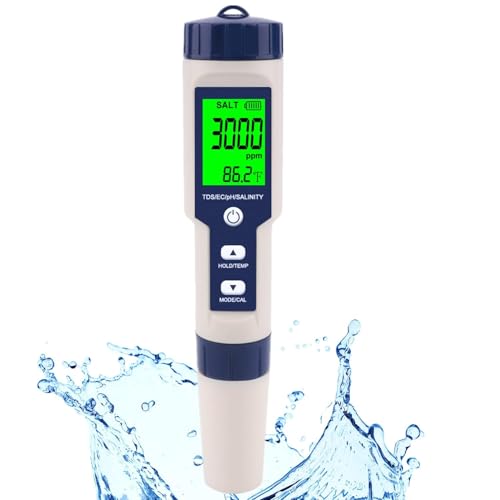
Hofun 5-in-1 Digital Salinity and pH Meter

Clorox Pool&Spa 3-Way Test Kit Refill Solutions
What Each Pick Brings To The Table
The Wynvex 7-in-1 is the most approachable electronic entry in this list. You dip a strip, slide it into the included handheld reader, and the screen spits out a numerical value for each parameter in roughly 15 seconds. No color charts, no squinting under patio light at sunset. Cyanuric acid is one of seven readings, which matters because most basic kits skip it entirely, even though CYA dictates how much free chlorine is actually doing its job.
For someone who wants one test session a week without feeling like a chemistry student, this lands in a sweet spot. Compared to the reagent-style kits below, there’s no measuring and no drop counting, which removes the most common point of human error. The 150 included strips cover a full season of routine checks for a single backyard pool, depending on frequency.
A Favorable Mix
- Digital readout removes the color-matching guesswork that trips up strip-only users
- Covers seven parameters in one dip, including CYA, which many basic kits miss
- Handheld reader is small enough to live on a pool shelf next to the skimmer pole
- Guided on-screen prompts help beginners interpret what each number means
Things To Consider
- Strips are single-use, so cost per test adds up over a long swim season
- Refills must be the matching Wynvex 7-in-1 strips, which limits swap-in options
Key Specs
Who It Suits Best
First-season pool owners and anyone who finds color charts frustrating will get the most from this kit’s guided, screen-based approach.
Where Another Pick Suits Better
Owners running saltwater systems who want salinity readings should look at the Hofun meter instead.
The Clorox 3-Way kit keeps things deliberately small: bromine, chlorine, and pH, and nothing else. It pairs with the free Clorox Pool app, so you snap a photo of the color comparator block with your phone and the app helps interpret the result. For someone who only needs to know whether to add sanitizer or adjust pH, the narrow scope is a feature, not a limitation.
It won’t replace a full panel like the Taylor K-2005C further down, and that’s fine. Most first-year pool owners spend the season checking just two or three numbers anyway. Where the Wynvex reader above leans into digital, this one stays analog and pushes the interpretation to a phone screen, which keeps the physical kit simple and cheap to replace.
Everyday Wins
- App-assisted color reading is forgiving for colorblind users and dim patio lighting
- Three parameters cover the most common weekly decisions
- Compact form factor is easy to store by the pump house
Honest Caveats
- Reagent drops need to be replaced as they run out, so plan for a refill pack
- Phone photo interpretation depends on consistent lighting conditions
Made For
New pool owners running a basic chlorine or bromine setup who want an easy, low-cost weekly check.
Skip It When
Anyone needing calcium hardness, CYA, or alkalinity detail should step up to the Taylor K-2005C.
This isn’t a new test setup; it’s the refill bottle for the Wynvex 7-in-1 reader reviewed above. Each bottle carries 150 strips, the same seven parameters, and the same pad layout that the reader expects. If you already own that reader, keeping a refill on hand means you never run out mid-season and have to wait for shipping before rebalancing your water.
It’s worth treating the refill as part of the ecosystem rather than a standalone product. The strips won’t work in the Taylor kits, the Clorox kit, or the Poolmaster set, since the pad chemistry is tuned to the Wynvex reader. Once you’re locked in, though, the refill flow becomes routine: open, dip, scan, store the rest sealed.
The Practical Payoff
- Removes the gap between running out of strips and getting replacements
- Identical pad layout to the original kit, so no recalibration needed
- Sealed bottle keeps strips dry between uses
Soft Spots
- Useless without the matching Wynvex reader, so it locks you into one ecosystem
Right Fit For
Anyone already running the Wynvex 7-in-1 reader who wants to keep a full season of strips in the supply closet.
Consider Something Else When
Shoppers without the Wynvex reader will get nothing from this refill, and should start with item 1 instead.
Poolmaster’s 22240 is the old-school workhorse of this list. You get a clear-view test block, two dropper bottles (OTO for chlorine, Phenol Red for pH), and a small carrying case that snaps shut for pool-deck storage. The included solutions analyze three core parameters: chlorine, bromine, and pH. There’s no digital reader, no app, no phone, just a comparator block and your eyes.
That simplicity is the appeal. Nothing to charge, no strips to dry out, no firmware to update. Owners who have used this style of kit for years know the small skill of matching the tinted sample to the printed swatch, and for them the Poolmaster feels instantly familiar. It also travels well, so spa, hot tub, and poolside testing all use the same routine.
Reasons It Performs
- Snap-shut case keeps reagents contained during transport to and from the deck
- No batteries or strips to replace, so long-term ownership costs stay low
- Clear-view test block makes color comparison easier than open-vial designs
Trade Offs
- Only three parameters; no CYA, no hardness, no alkalinity
- Color matching under bad lighting is the most common source of misreads
- Reagents eventually need refilling, so plan a replacement schedule
Best Suited To
Owners with a smaller above-ground pool or hot tub who only need a quick chlorine and pH sanity check each week.
Not Your Match When
Anyone who wants alkalinity, calcium, or CYA in the same session should reach for the Taylor K-2005C instead.
Taylor has been supplying water-testing reagents since 1930, and the K-1000 reflects that institutional patience. The kit covers three parameters with OTO chemistry: total chlorine, total bromine, and pH. A small comparator block holds the water sample, a few drops of reagent go in, and the color reveals the result. It’s reagent-based, not electronic, but the accuracy is the reason pool service pros have used Taylor kits for decades.
For a residential owner who wants something more disciplined than a color-block test but doesn’t need a full nine-parameter deep dive, the K-1000 sits comfortably in the middle. The pictogram instructions are unusually clear, and the storage case holds everything in one place. It’s a kit you can hand to a spouse or house-sitter without much explanation.
The Good Stuff
- Taylor’s reagent consistency makes results easier to trust than generic dropper kits
- Sturdy case keeps the comparator block and bottles organized
- Pictogram-based instructions are friendly for non-technical users
Worth Noting
- Only three parameters, so alkalinity and hardness still need a separate approach
Quick Facts
Who Should Grab It
Residential owners who want reliable, no-frills readings and trust traditional reagent chemistry.
Look Elsewhere When
Shoppers wanting a full nine-parameter panel should jump to the Taylor K-2005C reviewed next.
The K-2005C is the kit you graduate to when the three-parameter basics stop answering your questions. It measures nine water parameters using DPD high-range chemistry: free chlorine, total chlorine, bromine, pH, acid demand, base demand, total alkalinity, calcium hardness, and cyanuric acid. Thirteen reagent bottles ship in the case, which sounds intimidating until you realize each one maps to a specific question about your water.
Where the K-1000 covers the minimum useful panel, the K-2005C answers the follow-up questions. Why does the pH keep drifting? Probably the alkalinity. Why is the chlorine getting eaten so fast? Probably the CYA. The 2 oz reagent bottles are larger than the K-1000’s, so the kit runs longer between refills. The trade is time per test: a full panel takes longer than a quick strip dip.
What Works In Its Favor
- Nine parameters cover the full diagnostic picture, not just surface symptoms
- Larger 2 oz reagent bottles extend the interval between refills
- DPD chemistry gives chlorine readings that distinguish free from total, which matters for shocking decisions
Things To Weigh
- Full panel takes several minutes, so this is a weekend routine, not a quick midweek check
- More bottles to keep organized; lose one cap and the test becomes unreliable
Whose Shelf It Belongs On
Detail-oriented owners and anyone troubleshooting persistent water-balance issues will find the depth worthwhile.
Reach For A Different Pick When
Shoppers who only need a fast weekly chlorine and pH check will find the Wynvex 7-in-1 a faster fit.
The Hofun probe takes a different path than the rest of this list. Instead of strips or reagents, it’s a handheld electronic meter that dips directly into the water and reads five parameters at once: salinity (in PPM, PPT, and %), pH, temperature, EC (electrical conductivity, which indicates how well the water carries a current), and TDS (total dissolved solids, the broad measure of everything carried in the water). The salinity range covers 0 to 9999 ppm, which fits standard residential saltwater pools.
For saltwater pool owners, the salt reading is the daily question that strips don’t answer. Chlorine generators need a specific salt window to keep producing, and guessing leads to either a red “low salt” light or a chlorinator that quietly stops making chlorine. The pH and temperature readings are useful bonuses. Where this differs from a strip-based reader: the probe needs rinsing and storage care to stay accurate over months.
Everyday Perks
- Salt reading in three units (PPM, PPT, %) suits different generator documentation
- Five readings from one dip speeds up saltwater routine checks
- Works in pools, hot tubs, and aquariums, so the meter travels with you
Points To Note
- Probe needs rinsing and proper storage to maintain calibration over time
- Doesn’t measure chlorine, alkalinity, or CYA, so it’s a complement, not a replacement, for a strip or reagent kit
Built With In Mind
Saltwater pool and hot tub owners who need to keep a close eye on salt and pH between full water tests.
A Better Fit Elsewhere
Traditional chlorine pool owners will get more value from the Wynvex 7-in-1 reader’s broader parameter set.
This is the second refill in the roundup, and like the Wynvex refill, it only matters if you own the matching kit. The 0.5 oz dropper bottles replace the OTO and Phenol Red solutions in the Clorox 3-Way kit, keeping the same three parameters: bromine, chlorine, and pH. The bottles are smaller than the originals, which is fine for topping off a kit that’s already in regular rotation.
Treat refills as a recurring line item, not a one-time purchase. The honest read is that any drop-based kit needs replacement reagents eventually, and buying a smaller refill when you’re running low beats replacing the whole kit. For a pool owner who has been using the Clorox 3-Way through a full season, this is the natural next order.
Where It Helps
- Smaller 0.5 oz bottles fit easily in a storage bin with the original kit
- Keeps an existing Clorox kit functional without a full re-purchase
Some Limits To Know
- Only useful for the matching Clorox 3-Way kit, no cross-compatibility
- Three-parameter scope mirrors the parent kit, so it inherits the same limits
Perfect Match For
Existing Clorox 3-Way kit owners who have burned through their original reagent supply and need a quick top-up.
Swap It Out When
Shoppers who don’t already own the Clorox 3-Way kit should start with that item instead of the refill.
What Matters Most Before Choosing Pool Test Kit Electronics
The right pool test kit electronics depend on how much of the water chemistry picture you actually want to see each week. A two-minute strip dip with a digital reader covers routine maintenance for most backyard pools, while a multi-reagent kit gives deeper answers when something is clearly off.
Match The Method To Your Routine
Strip-based digital readers like the Wynvex 7-in-1 trade depth for speed: one dip, one scan, seven readings. Reagent kits like the Taylor K-2005C trade speed for accuracy and breadth, requiring a longer session but returning nine parameters, including the alkalinity and calcium hardness that strips skip. A saltwater pool adds a third path, since salt-specific meters like the Hofun probe answer a question the others don’t even ask.
Count The Parameters You Actually Need
Free chlorine, combined chlorine, pH, alkalinity, calcium hardness, and cyanuric acid form the standard residential panel. The CYA reading matters more than most beginners realize, because cyanuric acid acts as a sunscreen for chlorine, and too much of it silently weakens the sanitizer even when readings look fine. A kit that includes CYA saves a separate purchase down the line.
Think About Refill Logistics
Strips and reagent drops both run out. Before buying, check that the matching refill is easy to find, since a kit with no reliable refill becomes a kit you’ll replace rather than maintain. Locked ecosystems, like the Wynvex reader, work well as long as you stay inside them.
Consider Storage And Conditions
Drop bottles can crack in a freezing pump house, and strips degrade in humidity. If your storage spot is a damp shed, a sealed digital reader with a closed strip bottle will outlast an open reagent kit. The Taylor kits ship in hard cases that protect against exactly that kind of environment.
Key Considerations Across These Picks
Pitfalls Shoppers Hit
The most common mistake is buying a kit that only tests chlorine and pH, then discovering mid-season that the real problem was alkalinity or calcium hardness. Another frequent misstep is assuming all test strips are interchangeable, since different readers expect specific pad chemistries and the wrong strip can give nonsense numbers. A third trap is ignoring storage: a strip bottle left open on a wet deck shelf will give unreliable readings long before it runs out.
When Paying More Pays Off
Higher-tier kits earn their cost in two ways: more parameters per session and better reagent consistency. The Taylor K-2005C’s nine-parameter panel catches the silent problems, like creeping calcium hardness, that a three-parameter kit misses entirely. For owners who troubleshoot water-balance issues every season, the upgrade is less about accuracy and more about reaching a diagnosis in one session instead of three.


