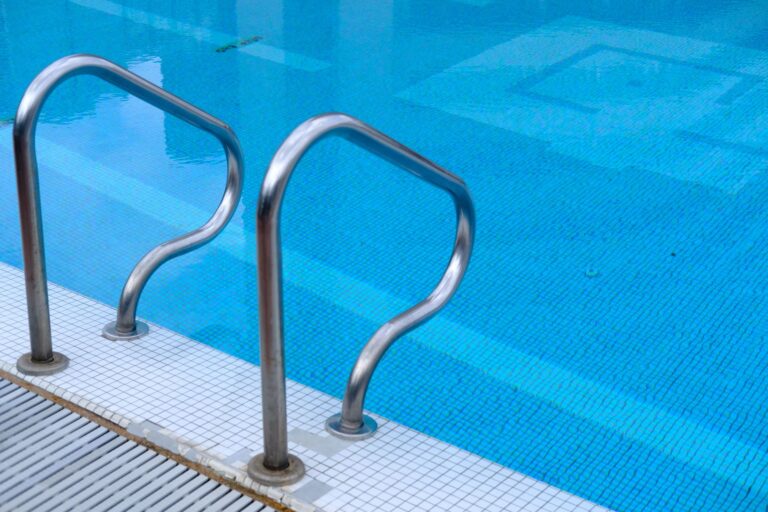
Leaves, dissolved metals, algae, calcium scale, and aging finishes can each leave distinct marks on a pool surface. Your brown patch could come from an oak leaf, iron in well water, or a rusting screw, so color alone cannot identify the source or the safest cleanup method.
You can sort out the mark by checking its color, texture, location, timing, water chemistry, and pool material before using a spot treatment.
A Mark on the Finish Points to a Specific Source
A spot on a pool step records what touched that area, what entered the water, and how the finish reacted. Organic stains, metals, algae, calcium scale, and surface wear can leave similar-looking marks from five feet away.
Your diagnosis becomes clearer once color is paired with texture, placement, and timing. A smooth brown mark after a refill points toward a different source than a rough white waterline band or a black patch in a shaded corner.
| Clue | What it can suggest | Detail that narrows the source |
|---|---|---|
| Flat yellow-brown patch | Tannins or iron | Debris contact versus a recent well-water fill |
| Blue-green or dark mark | Copper or algae | Water chemistry shift versus a slick texture |
| Raised white crust | Calcium scale | Roughness near the waterline or heater return |
| Uneven gray area | Etching or finish wear | Rough plaster, exposed aggregate, or faded liner |
For example, a circular rust-colored dot beneath a ladder rail can point to a corroding fastener. A broad brown shadow below wet leaves points toward tannins, even though both marks share a brown color.
That distinction gives you a safer starting point. A deposit can respond to targeted cleaning, while finish damage needs surface evaluation rather than stronger chemicals.
Color, Texture, and Location Separate Common Stain Types
Brown stains on pool walls and floors need close inspection because iron, dead algae, plant tannins, embedded debris, and nearby metal hardware can all leave brown discoloration. Your hand gives a useful clue: scale feels gritty, algae feels slick, and a metal stain stays smooth.
| Color or appearance | Common source | Safer confirmation step |
|---|---|---|
| Yellow or orange | Iron, pollen, or leaf tannins | Review refill history and use a vitamin C spot screen |
| Brown or rust | Iron, tannins, dead algae, or metal debris | Inspect nearby fittings and screen a tiny area with chlorine |
| Green | Active algae growth | Brush lightly and check sanitizer level |
| Blue-green or teal | Copper deposits | Use vitamin C on a small mark and check metal content |
| Black or purple-black | Black algae, copper, or manganese | Check for a raised or rooted-looking texture |
| Gray or dark haze | Copper, mottling, or finish wear | Inspect texture and compare it with unstained plaster |
| White, tan, or dirty crust | Calcium scale | Feel for a hard mineral layer |
Pool stain colors and meanings become clearer once texture enters the picture. Copper staining can look blue-green, teal, gray, purple-black, or nearly black, while active algae has a slick or raised feel.
Location adds another clue. Marks below a return fitting can follow water flow, stains around steps can trace trapped debris, and isolated dark circles can reveal a coin, hairpin, or metal object left against the finish.
Copper deposits can appear after pool pH, chlorine, or another water condition shifts and dissolved copper settles onto pool plaster, grout, fiberglass, or vinyl pool liners. The same color range can appear with black algae, so texture still matters.
Organic Matter, Metals, Algae, and Minerals Leave Different Patterns
Organic debris leaves contact marks
Leaves, berries, acorns, pollen, and mulch release tannins while they sit in water. A damp leaf pressed against a white step can leave a tea-colored outline within a day after a storm drops landscaping debris into the pool.
Your skimmer basket cannot catch material already pinned behind a ladder, beneath a cover fold, or along a step seam. Brush those resting zones during leaf season because weak circulation gives tannins more time against the surface.
Metals enter through water and equipment
Iron leaves yellow, orange, brown, and rust-colored marks. It can enter through well water, municipal fill water, corroding equipment, metal fixtures, and chemicals used for algae control.
Copper can come from copper-based algaecides or corrosion inside a heater, heat exchanger, or plumbing component. Manganese can leave brown, gray, or black discoloration, though residential pools see iron and copper more regularly.
- Iron source clues: Look for discoloration after topping off with well water or adding source water that contains metals.
- Copper source clues: Check for blue-green marks after low-pH episodes, heater trouble, or copper algaecide use.
- Algae source clues: Watch shaded walls, low-flow steps, and corners where sanitizer levels have dropped.
- Tannin source clues: Clear leaf piles, berries, acorns, and wet cover debris before they rest against the finish.
Algae has a physical texture
Active algae growth feels different from a metal deposit, even where the colors look similar. Green algae can feel slippery, while black algae can form stubborn, rooted-looking spots in porous pool plaster and grout.
Dead algae residue can leave a gray, green, or brown film after a sanitizer correction. Brushing, filtration, circulation, and balanced sanitizer clear that residue, while metal staining needs source control beyond routine brushing.
When brushing changes neither color nor feel, the mark may be mineral buildup or altered finish instead.
Scale and Finish Damage Can Resemble Stains
A rough white waterline is not a pigment stain. Calcium scale forms as calcium comes out of solution, then traps dirt, metals, and oils that turn the crust gray, tan, or brown.
High pool pH, high calcium hardness, elevated total alkalinity, warm water, and evaporation push water toward scale formation. Heated surfaces and tile lines show the problem early because heat and air exposure concentrate minerals in those areas.
| Surface condition | How it feels | Your next step |
|---|---|---|
| Calcium scale | Hard and gritty | Correct water balance and use material-safe descaling |
| Plaster etching | Rough, pitted, or sandpaper-like | Arrange a surface evaluation before spot treatment |
| Finish mottling | Flat but uneven in color | Compare broad areas for a finish-related pattern |
| Exposed aggregate | Textured stones or worn cement | Use gentle cleaning and discuss restoration work |
| Faded liner or grout wear | Color loss without residue | Inspect seams, grout joints, and liner backing |
Acid washing can strip a thin layer from suitable plaster along with discoloration. It is not a routine answer for vinyl, fiberglass, tile, exposed aggregate, or a pool without a clear diagnosis.
Surface damage needs a different response than a removable deposit. Etching, mottling, aggregate exposure, cracking grout, and a failing finish do not respond well to stronger stain chemicals, and harsh treatment can widen the visible defect.
Your finish sets the limit for any cleaning method. A rough patch that stays rough after light brushing is more likely a surface condition than material sitting on top of the surface.
That early distinction prevents an aggressive test from turning uncertainty into permanent damage.
A Six-Step Check Comes Before Spot Treatment
Document the mark before brushing or adding chemicals because its original shape carries evidence. Take a photo, record its exact location, and link its appearance to a refill, storm, winter opening, cover removal, or chemistry adjustment.
- Check texture: Feel the area gently with a gloved hand to separate slick algae, hard scale, and smooth discoloration.
- Inspect the pattern: Look for leaf outlines, circular rust spots, waterline bands, return-flow trails, or broad mottling.
- Use chlorine carefully: Hold a small chlorine tablet in a sock against a tiny organic-looking spot for a brief screen.
- Try vitamin C: Rub a vitamin C tablet on a small smooth mark to screen for iron or copper staining.
- Check water values: Test pH, total alkalinity, calcium hardness, sanitizer, cyanuric acid, and metals where exposure is suspected.
- Trace the source: Inspect fill water, filters, heater parts, ladders, fittings, and recent algaecide use before cleanup.
A chlorine screen that lightens a spot points toward organic material or algae residue. A vitamin C screen that lightens discoloration points toward a metal deposit, but neither screen replaces water analysis or surface inspection.
Your pool pH and total alkalinity affect whether metals stay dissolved or settle onto the finish. Cyanuric acid also matters because an excessive level can weaken chlorine’s practical effect and allow algae to take hold.
Knowing how to identify pool stains keeps a small mark from becoming a surface-damage problem. Start with a tiny area, record the reaction, then match the response to the pool material.
Pool Materials Limit Safe Cleanup Methods
Porous surfaces hold discoloration more deeply than smooth surfaces. Pool plaster, exposed aggregate, and grout absorb metals and tannins, while fiberglass, tile, and vinyl pool liners tend to keep marks closer to the surface.
| Material | Safer approach | Methods to avoid |
|---|---|---|
| Plaster | Controlled brushing and surface-specific stain products | Repeated acid exposure without a source diagnosis |
| Fiberglass | Soft cloths and nonabrasive cleaners | Abrasive pads, pumice, and harsh scraping |
| Vinyl liner | Soft brushing and liner-safe chemistry | Acid spot treatments and aggressive scrub pads |
| Tile and grout | Targeted scale cleanup with grout inspection | Metal tools that scratch glaze or loosen grout |
Never use an abrasive pad on a vinyl liner or fiberglass shell. A mark beneath a liner, rough etched plaster, widespread mottling, or crumbling grout is a repair concern rather than a standard cleanup project.
Keep spot chemicals away from skimmer openings, drains, seams, and metal fixtures unless the product label names your exact pool surface.
That material check explains why a method that works on plaster can harm vinyl. Your safest route is a small, controlled screen before treating a visible area.
Confirmed Stain Types Need Different Removal Methods
Organic marks respond to physical cleanup and restored sanitation. Clear debris, brush the affected zone, clean the filter, correct sanitizer, and run circulation long enough to clear suspended residue before using a labeled stain product.
Confirmed metal staining calls for a compatible ascorbic-acid treatment or metal-stain product, followed by a sequestrant that holds dissolved iron or copper in the water. You also need to correct the source, whether it is fill water, corroding equipment, or a copper-containing algaecide.
Scale calls for water-balance correction and surface-appropriate descaling rather than a pigment remover. You can remove pool stains without draining in many cases, but acid washing and harsh spot chemicals can damage finishes and should not be your default shortcut.
Causes of pool surface stains matter during cleanup because a visible mark can return after the next refill or low-pH episode. Clearing the symptom without correcting the source leaves the same chemistry or debris path in place.
Source Control Stops Repeat Discoloration
A fresh patch near a return jet or skimmer often signals an active source rather than a one-time event. Your pool can look clear after treatment and stain again after a well-water refill, a low-pH event, or debris trapped under a winter cover.
- Clear debris weekly: Remove leaves, berries, acorns, pollen, and cover sludge before tannins settle against walls or steps.
- Track refill water: Screen well water and source water for iron, copper, and manganese before large top-offs.
- Hold chemistry steady: Keep pH, alkalinity, calcium hardness, and sanitizer within the ranges set for your surface.
- Brush low-flow zones: Work behind ladders, on steps, beneath returns, and along shaded walls where residue collects.
- Inspect hardware: Check heaters, ladders, light rings, fittings, and metal objects for corrosion or exposed steel.
- Watch winter water: Stagnant water beneath a cover can trap debris and concentrate staining compounds through winterization.
A familiar pattern starts with a brown floor mark that returns each spring after topping off from a private well. The visible patch is iron, while untreated source water is the repeat trigger rather than inadequate brushing.
How to prevent pool stains comes down to source control, stable chemistry, and regular debris removal. You protect your finish by finding the input that leaves the mark instead of repeating the same spot treatment.
Contact a pool service professional for widespread or returning metal staining, suspected heater corrosion, persistent algae, heavy scale, uncertain pool plaster deterioration, or work that could require draining, acid washing, or refinishing. Those conditions can turn a small visual problem into costly surface loss.
What to Remember About Recurring Marks
Pool discoloration is a symptom, not a product category. Your safest path is to identify the mark through color, texture, location, timing, water chemistry, and surface material, then correct both the deposit and its source.
That process protects vinyl, fiberglass, tile, grout, aggregate, and plaster from unnecessary damage. It also gives recurring causes of pool surface stains far less opportunity to return.
FAQ
What causes stains on pool surfaces?
Organic debris, dissolved iron, copper, manganese, algae, calcium scale, and failing finishes can all discolor a pool surface. You can narrow the source through color, texture, location, recent refill water, chemistry changes, and the pool material beneath the mark.
How can I tell whether a pool stain is organic, metallic, calcium scale, or algae?
Organic stains are flat and linked to leaves, berries, pollen, or debris. Metal stains stay smooth, scale feels hard and rough, and algae feels slick or raised; a small chlorine or vitamin C screen can add another clue.
How do I remove stains from my pool surface?
Match removal to the confirmed source. You can clear organic marks with brushing, debris removal, sanitation, and circulation; metal marks need compatible metal treatment plus a sequestrant; scale needs balance correction and surface-safe descaling.
Why does my pool keep staining?
Repeat stains point to an ongoing source such as iron-rich well water, copper from corroding equipment, metal-containing algaecide, trapped organic debris, stagnant winter water, or scale-forming chemistry. Your cleanup will not last until you identify and correct that continuing input.
What causes brown stains on the sides of my pool?
Brown wall marks can come from iron, leaf tannins, dead algae residue, embedded debris, or rusting metal parts near ladders, returns, and fittings. You can narrow the source by checking texture, inspecting nearby hardware, reviewing refill water, and screening a small area with chlorine or vitamin C.
What does copper staining look like in a pool?
Copper can leave blue-green, teal, gray, purple-black, or dark marks on pool plaster, grout, fiberglass, and vinyl liners. The color can emerge after a shift in pH or chlorine because dissolved copper settles onto the surface rather than staying suspended in water.