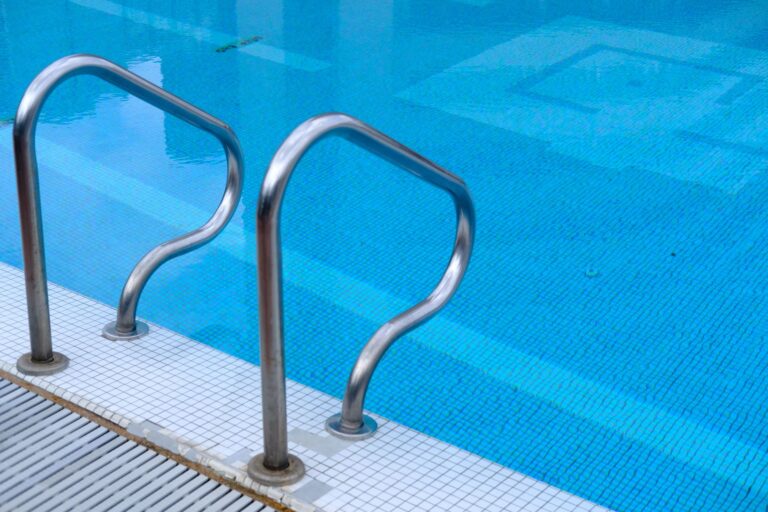
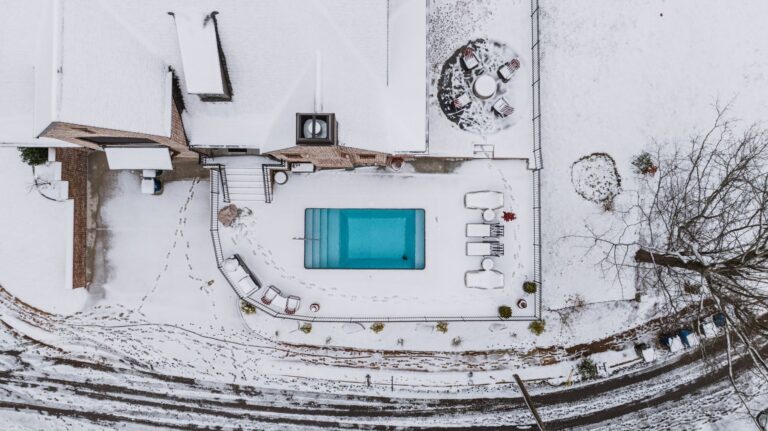
On a wet afternoon, grip, barefoot heat, drainage, and stable footing determine how safely a poolside surface performs. Your material, finish, and installation shape slip-and-fall exposure: a smooth deck can turn slick after splash water, while a dark surface can force hurried steps in direct sun.
You can use the material comparisons, drainage details, repair options, and care checks below to choose a safer walking area for your household, guests, and pool routine.
Safety Depends on More Than Surface Grip
Wet footprints reveal the main hazard near a pool. Splashing swimmers, dripping towels, rinsed feet, and pool water leave the deck damp far longer than a front walk or dry patio. Your surface needs traction under wet bare feet, not merely a pleasant dry feel.
Four hazards work together: slipping, hot surfaces, standing water, and uneven edges. A deck with strong grip can still lead to hurried movement when it burns bare feet. A cooler material can still create slick puddles near steps or furniture legs.
Material Works Within a Larger System
Concrete pool decking, pavers, natural stone, composite decking, tile, rubber, and PVC boards each have distinct strengths. Surface finish, slope, joints, drainage routes, and cleaning habits shape the result just as much as the base material.
Installation flaws can undo a sound material choice. A textured concrete slab becomes hazardous beside a clogged drain. Stable pavers become trip points after settlement raises one edge above the next unit.
Because drainage and level changes can defeat even a textured finish, traction must be judged under actual wet conditions.
Wet conditions expose problems that dry conditions hide. Check a proposed surface after swimmers have used the pool, rather than judging it only while it is clean and dry.
Texture and Wet-Surface Data Show Real Grip
Fine texture gives your foot resistance in several directions. Broom-finished concrete, textured pavers, naturally cleft stone, and purpose-made rubber surfaces tend to grip better than polished stone, glazed tile, glossy coatings, or slick sealers.
Your feet do not travel in a straight line around the water. You turn toward ladders, sidestep chairs, carry towels, and move around pool coping from different angles. Multi-directional texture matters, though deep grooves can trap grit and complicate cleaning.
Wet-Slip Claims Require Written Details
A non-slip label says little without a named wet-use standard. Ask for the exact finish, wet test method, and result for the color and surface you plan to install. Your sample should match the final product, not merely the material family.
ANSI A326.3 is a tile-focused method that reports a dynamic coefficient of friction, or DCOF. ASTM publishes slip-related methods for building products. Those figures do not replace site judgment, but they give your decision more substance than a marketing label.
| Surface condition | Wet grip tendency | Details to verify |
|---|---|---|
| Broom-finished concrete | Strong while clean | Texture depth, sealer type, and slope |
| Textured pavers | Strong to moderate | Face texture, joint stability, and lippage |
| Cleft or thermal-finished stone | Moderate to strong | Finish name, porosity, and algae exposure |
| Glazed tile or polished stone | Low unless wet-rated | Exterior wet-slip documents |
| Rubber specialty tile | Strong | UV rating, drainage below, and edge security |
Residue changes the surface beneath your feet. Sunscreen film, algae, leaves, calcium deposits, and pool chemicals can fill texture or leave a slick layer. Your weekly cleaning routine has a direct effect on traction long after installation.
Barefoot Heat Can Trigger Hurried Steps
Heat can turn a calm walk into a dash. Barefoot surface temperature affects burn exposure, yet it also raises fall risk as you rush toward shade, water, or footwear.
Light colors absorb less solar energy than dark colors under the same sun. Density also matters. Dense dark stone, dark composite boards, PVC decking, and dense tile can feel far hotter than a pale textured slab, although every product responds differently.
Site Exposure Matters More Than a Showroom Sample
Your yard has a distinct heat pattern. A west-facing deck beside reflective water can receive intense afternoon exposure, while a tree-shaded corner stays cooler but dries more slowly. Place a full-size sample where it would sit during the hottest period of a clear day.
| Surface type | Barefoot heat tendency | Heat-related concern |
|---|---|---|
| Light textured concrete | Lower | Still warms beside reflective water |
| Pale pavers | Lower to moderate | Joint areas can feel uneven underfoot |
| Dark stone | High | Burn exposure and hurried movement |
| Composite or PVC boards | Moderate to high | Heat buildup and board movement |
| Rubber tile | Moderate | Can retain heat in direct sun |
Shade structures and outdoor rugs can reduce exposure, yet neither corrects a poor surface choice. Your stronger long-term option is a light finish plus shade where feet pause, such as near steps, lounge chairs, and the pool exit.
That balance between cooler footing and reliable traction varies sharply by material, especially around heavily used paths.
Each Material Has Different Safety Trade-Offs
Texture and solar heat narrow your choices, but daily wear separates them further. Your pool deck needs to shed water, tolerate pool chemicals, and stay stable through seasonal movement.
| Material | Safety strengths | Long-term watch points |
|---|---|---|
| Textured concrete | Durable, broad texture choices, continuous walking plane | Cracks, slick sealers, dark colors, and spalling |
| Pavers | Textured faces, local repair, and drainage options | Settlement, wide joints, rocking edges, and lippage |
| Natural stone | Cool pale options and clear visual edge definition | Finish variation and sealers that reduce grip |
| Composite decking | Splinter-free boards and steady color options | Heat, residue slickness, board spacing, and movement |
| PVC decking | Water resistance and simple surface cleaning | Heat, expansion, less rigid feel, and residue slickness |
| Wet-rated tile | Strong grip with a textured exterior finish | Grout wear, cracked units, and slick glazed faces |
| Rubber surfacing | High traction and fall-impact attenuation | UV wear, heat, and drainage beneath tiles |
Concrete and Pavers Need Sound Installation
Textured concrete suits many yards because it forms a continuous route with few joints. Its safety rests on a slip-resistant finish, controlled cracking, correct slope, and a sealer that does not leave a shiny film.
Pavers can route water through their joints and allow small-area repairs. Yet wide joints, loose edge restraints, or a sinking base turn seams into trip hazards. Your installer should set units flush and keep main travel routes level.
Stone, Boards, Tile, and Rubber Fill Different Roles
Natural stone should be chosen by finish, not name alone. Honed or polished stone can turn slick beside water, while cleft and thermal-finished stone has more texture. You need a sample of the exact finish, not a photograph of the stone type.
Composite vs PVC decking around a pool comes down to documented wet traction, surface heat, and framing details. Composite decking can last about 25 to 30 years with suitable installation and care, though climate and product design affect that range. PVC can expand more, feel less rigid, and grow slick from residue.
Wet-rated textured tile suits controlled areas with sound drainage and grout work. Rubber and specialty systems, including products such as Aqua Tile, suit play zones or higher-risk paths because they add grip and soften some fall impact.
Drainage and Installation Control Standing Water
A puddle defeats even a grippy finish. Pool deck drainage and slope should direct water away from the pool shell, home, doors, and main walking paths rather than leave it near steps or furniture legs.
Your deck needs a clear route for rainfall and splash water. Surface slope, channel drains, perimeter drains, joint openings, and sub-base drainage work together. A drain several feet from a low spot does nothing for water beneath your feet.
Stable Details Protect Walking Routes
- Flush transitions: Keep the deck level with doors, coping, and adjoining walks so toes do not catch an abrupt lip.
- Stable edging: Secure paver borders and board ends so repeated foot traffic does not loosen the route near water.
- Covered drains: Select grates that sit flush and resist heel catches, with openings suited to bare feet and small toes.
- Consistent joints: Keep joint widths steady and fill them with material suited to the paver or tile system.
- Sound coping: Repair loose pool coping before it shifts at the pool edge, where a fall leaves less room for recovery.
Porous surfaces and drainage systems can move water downward, but only through a correctly built base and drainage layer. Fine sediment can clog joints, and a poorly drained base can settle under load. Your surface needs a water route below it as well as across it.
Low spots, raised paver corners, cracked tile, and loose coping are not cosmetic flaws around a pool. Each can redirect a step at the same moment water has reduced grip.
Existing Decks Can Be Made Safer in Some Cases
A worn deck does not always require full removal. Start with visible evidence: dark shaded patches, water rings after rain, widening cracks, chalky coating, and areas where your foot slides more than expected.
Mark slick areas with painter’s tape after the deck dries. Then watch those zones during a hose rinse or after pool use. Your map can separate surface residue from poor drainage or structural movement.
Sound Slabs Respond to Targeted Repairs
- Deep clean first: Remove sunscreen film, algae, leaves, and mineral residue before judging the concrete texture beneath them.
- Correct drainage: Fill isolated low spots or alter drainage routes before adding a surface layer.
- Add texture: Use a compatible textured resurfacing system where the slab remains stable and sound.
- Select wet-rated coatings: Choose non-slip sealers and coatings made for exterior pool areas rather than glossy decorative finishes.
- Use traction aggregate: Add the specified aggregate only where the coating maker permits it for wet exterior use.
How to make a concrete pool deck less slippery starts with cleaning, then texture, then a compatible coating. A glossy sealer can worsen grip after it gets wet. Coatings cannot correct heaving, broad settlement, failing concrete, or a broken drainage route.
Contact a qualified pool or concrete professional for recurring coping movement, extensive spalling, deep cracks, or repeated puddles. Those signs point below the finish. Your repair needs to address the slab, soil, or water route before a surface treatment can hold up.
Once the underlying defect is corrected, lasting safety depends on maintenance and routes that accommodate every user.
Care and Accessibility Preserve Safe Footing
Sun, salt, and damp shade slowly change the surface you selected. A deck that started with clear texture can turn slick as algae, chemical residue, worn coatings, and embedded grime alter its contact surface.
Your cleaning schedule should follow pool use and local weather rather than a calendar date. Humid climates need closer algae checks. Coastal settings expose metal fasteners and some finishes to salt, while freeze-thaw cycles can crack concrete, loosen tile, and cause spalling.
Routine Care Keeps Texture Exposed
- Brush shaded zones: Scrub areas behind planters, furniture, and fences before green growth forms a slick film.
- Rinse residue: Wash away sunscreen, soap-like chemicals, and leaves after busy swim days.
- Clear drains: Remove mulch and debris from grates so water does not return across walking routes.
- Inspect joints: Check paver joints, grout lines, expansion joints, and board fasteners for movement.
- Check water chemistry: Keep pool chemistry within the equipment maker’s stated range to limit surface and metal damage.
ADA accessibility considerations center on a firm, stable, slip-resistant route with manageable level changes. The Americans with Disabilities Act offers useful principles for public facilities, including clear paths, minimal abrupt edges, handholds near steps, and surfaces that do not shift underfoot.
Children, pets, older adults, and mobility-limited guests benefit from predictable footing more than decorative complexity. Your safer layout gives them clear edges, low heat, stable handholds, adequate lighting, and a direct route that does not send them around furniture or drains.
Site Conditions Should Direct the Final Choice
Material choice should match the clearest hazard in your yard. Strong afternoon sun points toward pale, cooler surfaces. Repeated rain and shade point toward texture, drainage, and a cleaning routine that fits your household. Frost exposure points toward stable assemblies that resist movement.
Your pool deck material safety decision should cover the full surface-and-drainage system, not a single sample board or paver. Smooth tile, polished stone, high-gloss coatings, and poorly supported boards need extra caution unless their exact exterior wet-use details suit the site.
A Practical Selection Checklist
- Wet-slip records: Request written wet-use traction details for the exact color and finish under review.
- Heat exposure: Place samples in full afternoon sun and stand on them barefoot for several seconds.
- Drainage route: Review slope, drains, joints, and the water destination before surface work begins.
- Edge condition: Check coping, door thresholds, stairs, board ends, and paver borders for flush connections.
- Care capacity: Match texture and porosity to the cleaning time your household can realistically give it.
- Household needs: Favor clear routes and forgiving surfaces where children, pets, or mobility limits shape daily use.
Visit the site while it is wet and sunny before committing. Feel the hottest zone, find puddles, and study where feet travel from gate to water. Then select the surface and drainage approach that addresses your largest local hazard.
Final Thoughts on Poolside Footing
The safest poolside surface is not a single named material. It is a textured, wet-rated walking plane that stays cool enough for bare feet, sheds water without puddles, and remains level as seasons pass. Your finish choice, drainage layout, repair work, and cleaning habits shape steadier steps around water.
FAQ
How does pool deck material affect slip-and-fall risk?
After a splash, wet traction, texture, drainage, heat, and surface stability shape the chance of a fall. Your risk rises where water stands, glossy finishes lose grip, pavers shift, or hot surfaces make people rush. A textured, wet-rated finish with sound drainage offers a steadier walking surface.
What is the best pool deck material for a non-slip surface?
No single material suits every yard. Textured concrete, textured pavers, cleft stone, and wet-rated rubber can work well where your selected finish has written wet-traction details, manageable heat, sound drainage, and stable installation.
Which pool deck materials stay coolest under bare feet?
Light textured concrete and pale pavers tend to stay cooler than dark stone, dark composite boards, PVC boards, and dense tile in the same sun. Your yard’s shade pattern and reflected light also affect pool deck heat retention.
How do drainage and surface texture affect pool deck safety?
Texture gives bare feet resistance, while drainage removes water that can sit on top of that texture. Your surface needs both features. A grippy deck with puddles remains hazardous, and a well-sloped deck can still become slick under sunscreen film or algae.
Are concrete, pavers, composite, and natural stone safe around a pool?
With the right finish and installation, each of these four surfaces can provide safe footing beside a pool. Textured concrete needs suitable sealer and slope. Pavers need stable edges. Boards need wet-traction data and sound framing. Stone needs a textured exterior finish.
Can a slippery existing pool deck be made safer with a coating or sealer?
A slippery existing deck can improve through deep cleaning, drainage correction, added texture, and wet-rated non-slip sealers and coatings. Your slab must be stable first. A coating cannot correct broad settlement, heaving, deep cracks, recurring puddles, or loose pool coping.