

Swapping out a tired pool pump is one of those jobs that pays you back every swim season, and the right plug-in model keeps installation simple for anyone with a standard outdoor outlet. Today’s pumps run quieter, sip less power, and move more water than the units of a decade ago, so picking well means matching horsepower, flow rate, and voltage to your pool’s size and your tolerance for noise. This roundup covers eight solid options ranging from compact above-ground workhorses to high-flow dual-speed performers, so you can land on the right fit without overbuying or undersizing your setup.
The Lineup, Simplified

Aquastrong Riptide 3 HP Dual Speed Pool Pump

Aquastrong Riptide 1.5 HP Dual Speed Pool Pump
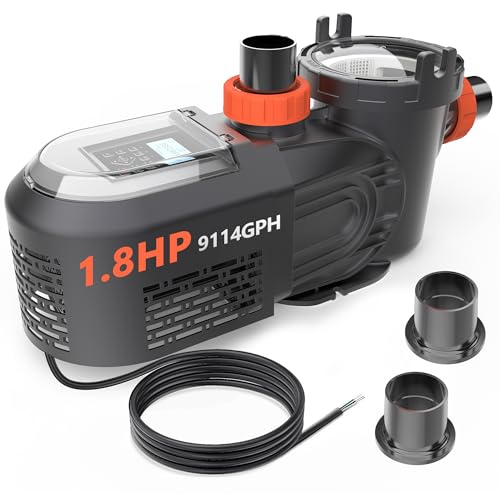
VARMINPOOL 1.8 HP Variable Speed Pool Pump

MAXEVER 2 in 1 Electric Air Pump
Aquastrong Riptide 2 HP Dual Speed Pool Pump
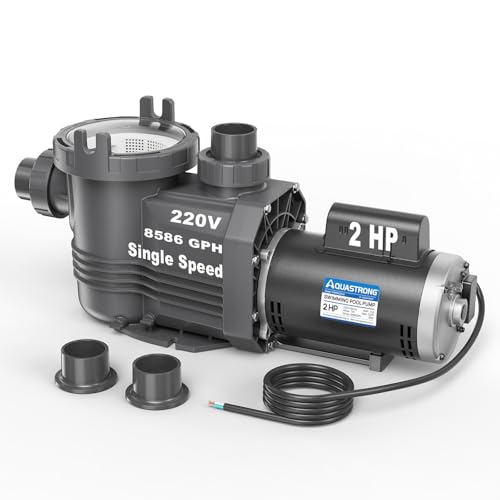
Aquastrong Riptide 2 HP Single Speed Pool Pump

Aquastrong Riptide 1.5 HP Single Speed Pool Pump
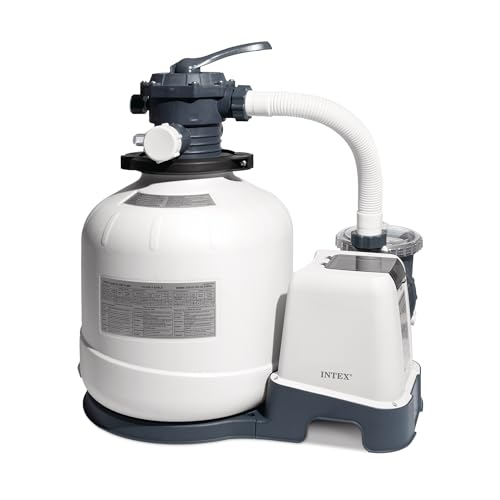
INTEX Krystal Clear 3,000 GPH Sand Filter Pump
Taking A Closer Look At The Options
Big pools demand serious flow, and the Aquastrong Riptide 3 HP Dual Speed brings exactly that without forcing you to babysit the motor. Running on 220V, it pushes up to 10,032 GPH on high and drops to a quieter 4,755 GPH on low for daily filtration. The pure copper motor is the kind of detail that matters in hot summer months when cheaper windings can run warm.
Owners with larger inground pools or those running attached spas tend to get the most from this kind of headroom, since reserve flow helps when vacuuming, running water features, or recovering from a heavy storm. Self-priming and the built-in filter basket keep startup simple. You will want a dedicated 220V circuit and proper gauge wiring, so plan the install before you order.
Well-Handled Touches
- Dual-speed operation gives you quiet, energy-saving daily runs plus high-flow bursts when vacuuming or backwashing
- Up to 10,032 GPH easily handles large inground pools, spillover spas, and water features without bogging down
- Pure copper motor winding supports long motor life under heavy seasonal use
- Self-priming design with integrated filter basket speeds up startup and routine cleaning
- Works with both inground and above-ground setups, giving you flexibility if you ever change pool type
Points To Note
- Requires 220V wiring, which may mean hiring an electrician if your equipment pad only has 110V
- Larger and heavier than smaller horsepower options, so plan for sturdy mounting and clearance
Key Specs
Made For
Owners of large inground pools who need high turnover and want a quieter low-speed setting for everyday filtration.
Consider Something Else When
Smaller above-ground pool owners will find the Aquastrong Riptide 1.5 HP Dual Speed Pool Pump more than enough for their setup.
The Aquastrong Riptide 1.5 HP Dual Speed slides neatly into the middle of the lineup, offering dual-speed versatility without the electrical appetite of the larger 3 HP unit. On high it moves up to 6,604 GPH, and on low it drops to 3,302 GPH, which handles a mid-size above-ground or small inground pool comfortably. The pure copper motor design echoes the heavier siblings, which suggests similar long-term durability.
For households that want everyday energy savings on long filter cycles, the low-speed setting is where this pump earns its keep. Compared to the 3 HP pick, this one trades raw flow for lower running costs, making it friendlier on monthly power bills. You still need a 220V circuit, so check your breaker panel before committing.
What Works In Its Favor
- Dual-speed switching gives you efficient daily circulation plus reserve power for vacuuming
- 6,604 GPH max flow suits most mid-size pools without straining the motor
- Pure copper motor helps extend service life under repeated start-stop cycles
- Self-priming and filter basket simplify setup for first-time installers
Trade Offs
- 220V requirement means a dedicated circuit, which not every backyard equipment pad has
- Not enough flow for very large inground pools or those with attached spas
Best Suited To
Mid-size above-ground pool owners who want the energy savings of a low-speed setting without the cost or size of a 3 HP unit.
A Better Fit Elsewhere
Large inground pool owners should look at the Aquastrong Riptide 3 HP Dual Speed Pool Pump for the extra flow they need.
Variable-speed pumps change the conversation on running costs, and the VARMINPOOL 1.8 HP brings that efficiency into a backyard-friendly package. The 220V inverter design lets the motor adjust between 1,200 and 4,000 RPM, so it slows down for routine filtration and ramps up only when you need cleaning power. Permanent magnet motor construction (where magnets rather than just copper coils drive the rotor) tends to be more efficient than traditional induction motors in this class.
Saltwater compatibility expands where this pump fits, and up to 9,114 GPH of peak flow covers most medium-to-large residential pools. The trade-off shows up in the price tier and the learning curve of programming speed schedules, but for owners who want to dial in efficiency, it pays back over time. Compared to the dual-speed Aquastrong models, you get more speed options and finer control over your daily run profile.
What Earns Its Place
- Variable speed range (1,200 to 4,000 RPM) lets you tune energy use to the actual task
- Up to 9,114 GPH peak flow handles medium and large pools plus water features
- Saltwater compatibility opens it up to a wider range of pool systems
- Permanent magnet motor supports lower long-term power draw versus traditional designs
Worth Bearing In Mind
- Higher upfront cost than single or dual-speed equivalents
- Programming and scheduling add a small learning curve for first-time variable-speed owners
Feature Snapshot
Whose Pool It Belongs On
Energy-conscious owners of medium and large pools, including saltwater systems, who want to dial in run costs over the long haul.
Where Another Pick Suits Better
Owners who prefer a no-fuss setup without programming schedules may prefer the Aquastrong Riptide 2 HP Dual Speed Pool Pump instead.
The MAXEVER 2 in 1 Electric Air Pump plays a different role in your pool toolkit, handling inflatables rather than circulating water. It moves up to 500 liters per minute at 0.77 psi, which gets pool floats, rafts, and air mattresses filled quickly without the workout of a hand pump. Three nozzle sizes cover most valve types you will run into, from small swimming rings to larger boat toys.
Plug it into any standard 110 to 120V outlet and you are ready to go, with a flip between inflate and deflate modes. It is the kind of tool that earns its place on pool day when you have a stack of inflatables waiting. For households that primarily deal with rigid or hard-sided pools, the dedicated water pumps above will matter more.
Benefits That Matter
- 500 L/min flow fills large inflatables in a fraction of the time of hand pumping
- Three included nozzles fit most pool, boat, and toy valves
- Standard 110 to 120V plug means no special wiring or adapters needed
Possible Compromises
- Not designed for water circulation, so it complements rather than replaces a pool pump
- Air-only tool, so it does not handle the job of filtering or moving pool water
Who Will Love This
Families with inflatable pools, floats, and water toys who want a fast plug-in solution for setup and takedown.
Skip It When
Anyone focused on actual pool water filtration should choose the Aquastrong Riptide 2 HP Dual Speed Pool Pump instead.
Stepping into a balanced middle ground, the Aquastrong Riptide 2 HP Dual Speed delivers 8,586 GPH on high and 4,427 GPH on low. That range covers the bulk of residential pools without the overkill of the 3 HP unit. The dual-speed design keeps daily filtration cheap, while the high setting handles algae cleanup, vacuuming, and backwashing without bogging.
It shares the pure copper motor build found in the other Riptide models, which is reassuring for long-term reliability. The self-priming feature and filter basket make initial startup and routine maintenance easier, especially for owners new to pool equipment. Where it sits between the smaller 1.5 HP and the larger 3 HP is exactly where most families find their sweet spot.
Reasons It Performs
- 8,586 GPH max flow handles medium and many large pools without strain
- Low-speed mode at 4,427 GPH keeps daily circulation energy-efficient
- Pure copper motor design supports long service life
- Self-priming operation and built-in filter basket simplify ownership
- Works on both inground and above-ground setups
Details To Watch
- 220V wiring required, so verify your equipment pad electrical before ordering
- Larger and heavier than 1.5 HP options, so plan for mounting space
Quick Facts
Perfect Match For
Owners of mid-size to large pools who want a balance of flow, efficiency, and a fair price without going to the 3 HP tier.
Look Elsewhere When
Smaller above-ground pool owners can save with the Aquastrong Riptide 1.5 HP Single Speed Pool Pump for simpler, lighter-duty use.
The Aquastrong Riptide 2 HP Single Speed shares the same 8,586 GPH flow as the dual-speed sibling but trims the controls down to a single on-off operation. That simplicity appeals to owners who want a set-and-forget pump that turns on with the timer and does its job without programming speed schedules. Pure copper motor construction remains, and self-priming with a filter basket keeps startup and cleanup straightforward.
Without a low-speed mode, this model runs at full output whenever it is on, so operating cost per hour is higher than the dual-speed version. The flip side is fewer parts that can fail and a lower entry price. Compared to the dual-speed 2 HP, the trade-off is efficiency versus simplicity, and for some households that math works out clearly.
The Upside
- Up to 8,586 GPH covers most medium and large residential pools
- Simpler controls mean less to configure or break over time
- Pure copper motor build supports durability across hot seasons
- Self-priming and filter basket reduce routine maintenance time
Honest Caveats
- Single speed means no energy-saving low setting for daily filtration
- 220V dedicated circuit still required
Right Fit For
Owners who prefer a no-fuss pump with a single operating mode and want to avoid programming schedules or speed switches.
Another Choice May Suit
Households focused on energy savings should consider the Aquastrong Riptide 2 HP Dual Speed Pool Pump for its low-speed setting.
The Aquastrong Riptide 1.5 HP Single Speed is the most approachable pick in the lineup for first-time pool owners. It produces up to 6,604 GPH on a single 220V circuit, which is plenty for small and mid-size above-ground pools. Pure copper motor winding and self-priming with a filter basket keep the ownership routine minimal.
There is no low-speed mode to set, no programming to learn, just a basic on-off operation that pairs well with a standard pool timer. For larger pools or households chasing efficiency, the higher-horsepower or dual-speed models will serve better. Where this one shines is straightforward, reliable circulation in the kind of backyard where simplicity matters most.
Practical Pluses
- 6,604 GPH flow suits most small and mid-size above-ground pools
- Single-speed simplicity means minimal setup and no speed programming
- Pure copper motor supports long-term reliability in outdoor equipment pads
- Self-priming with built-in filter basket simplifies maintenance
Some Limits To Know
- No low-speed mode, so energy use per hour runs higher than dual-speed equivalents
- May underperform for very large pools or those with high-demand water features
Who Should Grab It
First-time pool owners with a small or mid-size above-ground pool who want a simple plug-in pump without learning curves.
Reach For A Different Pick When
Owners wanting energy savings on long daily cycles should choose the Aquastrong Riptide 1.5 HP Dual Speed Pool Pump.
The INTEX Krystal Clear Sand Filter Pump takes a different approach by bundling pump and sand filtration into one unit. Rated at 3,000 GPH, it pairs with above-ground pools that use INTEX-style hose connections, and the 6-function valve lets you filter, backwash, rinse, recirculate, drain, or close the system without swapping parts. The built-in 24-hour timer with 2 to 12 hour pre-set cycles handles scheduling automatically once you set it.
For owners who already run an INTEX above-ground pool, this is the path of least resistance, with hoses that hook up without adapters. The sand media (sold separately in most cases) handles fine debris well and only needs backwashing every few weeks. Compared to the higher-horsepower Aquastrong models, flow is lower, so it suits smaller pools best.
Where It Helps
- All-in-one sand filtration and pumping simplifies setup for above-ground pools
- 6-function valve covers filter, backwash, rinse, recirculate, drain, and close modes
- 24-hour timer with 2 to 12 hour pre-set cycles automates daily operation
- Hose-hookup design is purpose-built for INTEX above-ground pool connections
Practical Considerations
- Sand media typically sold separately, adding to overall cost
- Lower GPH rating makes it less suited to large pools or heavy bather loads
- Hose and connection style may not match non-INTEX setups without adapters
Spec Overview
Built With In Mind
Above-ground pool owners who want a single bundled pump and sand filter system with automated scheduling.
Swap It Out When
Owners of inground pools or those needing higher flow should pick the Aquastrong Riptide 2 HP Dual Speed Pool Pump for more capacity.
Matching Pump Power to Your Pool
Choosing the right pool pump starts with matching flow capacity to your pool’s volume. A common rule is to turn over the entire water volume once every eight hours during peak season, so a 15,000-gallon pool needs about 31 GPH per hour of run time to keep things clean. Horsepower and GPH (gallons per hour) tell you how fast water moves, while dual-speed or variable-speed designs let you throttle back for everyday filtration and ramp up only when vacuuming or running water features.
Voltage matters as much as horsepower. Most dedicated pool pumps run on 220V, which requires a properly rated breaker and wiring, while smaller accessories like the MAXEVER air pump run on standard 110 to 120V outlets. Pool owners upgrading from a basic cartridge system to a sand or DE filter should check that the pump’s flow matches the filter’s design rate, or filtration efficiency drops. Permanent magnet and inverter-driven variable-speed pumps tend to cost more up front but can cut long-term energy use noticeably on pools that run eight or more hours a day.
Build materials influence how long a pump holds up outdoors. Pure copper motor windings, as found across the Aquastrong Riptide lineup, handle heat better than aluminum windings during long summer cycles. Self-priming capability and a built-in filter basket cut down on routine maintenance time, which matters more for households that don’t want to spend weekends servicing equipment. For saltwater pools, confirming saltwater compatibility before ordering avoids corrosion issues down the road.
Key Considerations Across These Picks
Pitfalls Shoppers Hit
The most common mistake is oversizing the pump for the pool, which pushes too much water through the filter and can actually reduce filtration quality while spiking energy bills. The opposite error, undersizing, leaves the water cloudy after busy weekends with lots of swimmers. Another trap is ignoring voltage: many of these pumps need a 220V circuit, and assuming a standard 110V outlet will work can delay installation. Skipping a check on hose and connection compatibility, especially with INTEX-style setups, can mean adapters or returns after the box arrives.
Where The Extra Money Goes
Paying more for a variable-speed or dual-speed pump generally buys you finer control over daily energy use, which adds up over a full swim season. Higher-tier models also tend to include better motor materials (pure copper windings, permanent magnet designs) that extend service life in harsh outdoor conditions. The upgrade makes the most sense for larger pools, longer daily run times, or saltwater systems where efficiency and corrosion resistance matter most. Smaller pools with short daily cycles often run fine on a simpler single-speed unit, so the premium is harder to justify in those cases.
Frequently Asked Questions
What size pool pump do I need? Match the pump’s GPH rating to your pool’s volume, aiming to turn over the full water volume roughly once every eight hours. Larger pools need higher GPH or longer run times to stay clean.
Can I plug a pool pump into a regular outlet? Most dedicated pool pumps need a 220V circuit with the proper breaker and wiring, so a standard 110V household outlet is usually not enough. Smaller accessories like inflatable air pumps often run fine on 110 to 120V outlets.
Single speed vs dual speed vs variable speed: which is best? Single-speed pumps are the simplest and lowest in upfront cost but use more energy per hour. Dual-speed adds a quieter, energy-saving low setting for daily use, and variable-speed lets you fine-tune RPM across a wide range for the best long-term efficiency.
How long should a pool pump run each day? Most residential pools run their pump six to eight hours a day during peak season, with variable-speed models often running longer at lower speeds for better filtration. Exact run time depends on pool size, bather load, and filtration type.
Are saltwater-compatible pumps different from regular pumps? Saltwater-compatible pumps use materials that resist corrosion from salt, allowing them to run on saltwater pool systems without premature wear. Always confirm saltwater compatibility before pairing a pump with a salt cell system.


