

Running a pool pump on a lightweight cord is a quiet way to burn through a motor. Pool equipment draws steady, heavy current for hours, and undersized wiring fights back with voltage drop, heat buildup, and tripped breakers. A proper 12 gauge cord keeps the pump fed with clean power across the run from house to pad.
This roundup focuses on cords and power strips rated for that workload, from short 6-foot shop-style solutions with surge protection and USB ports, to long outdoor runs reaching 100 feet. Each pick below is sized for real backyard distances, real amperage draws, and the kind of weather a pool area actually sees.
The Shortlist At A Glance

CCCEI 12 Gauge Multi-Outlet Extension Cord 50FT

CCCEI 12 Gauge Multi-Outlet Extension Cord 100FT

EP 8 Ft Outdoor Extension Cord 12/3 SJTW

CCCEI 12 Gauge Surge Protector with USB Ports 6FT
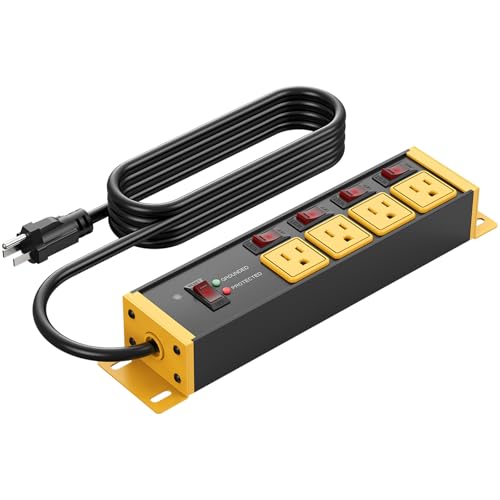
CCCEI 12 Gauge Heavy Duty Surge Protector 6FT

CCCEI Magnetic 12 Gauge Surge Protector Orange 6FT

CCCEI 12 Gauge GFCI Power Strip 8 Ports 6FT

CCCEI 20A GFCI Surge Protector 12 Gauge 6FT
Inside Each Recommended Option
Most suburban pool pads sit somewhere between 25 and 60 feet from the nearest exterior outlet, which is exactly the range this 50-foot cord covers without forcing you to coil up slack. The 12 gauge conductor keeps voltage drop low enough that a 1-horsepower pump still gets the full 120 volts it expects, and the bright yellow jacket stays visible in grass and landscaping so nobody trips over it during a late-night filter cycle.
Eight outlets at the far end turn a single run into a small power station, useful for plugging in a pump, a salt cell, and a small booster pump at the same time. A built-in circuit breaker lets you reset from the strip instead of hunting for the house panel after a brief overload.
A Few Strong Suits
- 12 gauge conductor handles steady pool pump loads without overheating across a 50-foot run.
- Eight outlets at the head replace a power strip and extension cord combo.
- Integrated circuit breaker resets locally after a quick trip.
- Yellow SJTW jacket stays flexible and visible in mixed weather.
Honest Caveats
- Eight outlets invite overloading, so the breaker is doing real work if you stack high-draw gear.
- Yellow cable shows dirt and algae staining faster than a darker jacket, depending on placement.
Whose Shelf It Belongs On
Homeowners with a pool pad in the 30 to 60 foot range who want one cable to handle the pump plus accessories.
Reach For A Different Pick When
The CCCEI 12 Gauge Multi-Outlet Extension Cord 100FT is the smarter grab if your outlet sits more than 60 feet from the equipment.
Long runs punish thin cords, and 100 feet is where voltage drop starts costing you real pump performance. This 12 gauge 100-footer is built specifically to keep that drop manageable, so the pump motor at the far end still sees close to 120 volts. If your breaker panel is on the opposite side of the house from the pool, this length is the honest answer.
The outlet head mirrors the 50-foot model, with the same multi-outlet layout and circuit breaker. You can leave the cord laid out across the yard and still get local reset if something trips. Storage is the trade-off, since 100 feet of heavy cable takes a serious reel.
Well-Handled Touches
- 12 gauge wire keeps voltage drop low across a full 100-foot run.
- Same eight-outlet head as the 50-foot sibling, so adding or swapping is easy.
- Onboard breaker for quick local resets after a momentary surge.
Points To Keep In Mind
- 100 feet of 12 gauge cable is genuinely heavy and harder to coil than lighter cords.
- Storing it without kinking takes a proper reel, which adds clutter in a small shed.
- Routing the run across a yard requires some planning to avoid mower and foot traffic.
Made For
Property owners with detached equipment pads or large lots where the only viable outlet is far from the pool.
Where Another Pick Suits Better
The CCCEI 12 Gauge Multi-Outlet Extension Cord 50FT is a cleaner fit if your run stays under 60 feet and you prefer easier storage.
Sometimes the problem isn’t distance but exposure. When the cord lives outside year-round, you want a true outdoor jacket, and SJTW is the right spec for that. The “W” suffix means the cable is rated for wet conditions, while the SJTW jacket stays flexible from well below freezing to summer heat, so it doesn’t crack in a cold snap or stiffen up in August sun.
At 8 feet, this is a short pigtail designed to bridge the gap between an exterior GFCI outlet and a pump or pool equipment controller. Three outlets at the end give you room for a pump plus a small chlorinator or lighting transformer, and the 12 gauge conductor means it isn’t the weak link in the chain.
The Case For It
- SJTW jacket handles wet conditions and a wide temperature range without cracking.
- 12 gauge conductor keeps full current flow even at this short length.
- Three outlets at the head let you run a pump and an accessory from one outlet.
- LED indicator shows at a glance whether power is reaching the far end.
Small Caveats
- At 8 feet, it only works when the outlet sits very close to the equipment pad.
- No integrated breaker, so protection depends on the upstream GFCI outlet.
Best Suited To
Backyard pools where the exterior outlet is already a few feet from the equipment pad and you need a true outdoor-rated short run.
A Better Fit Elsewhere
The EP 8 Ft is great as a final hop, but the CCCEI 12 Gauge Multi-Outlet Extension Cord 50FT handles cases where the outlet is farther from the pad.
Modern pool setups are starting to look like outdoor entertainment centers, with pumps, automation controllers, Bluetooth speakers, and phone chargers all sharing one outlet. This CCCEI strip leans into that reality by mixing four AC outlets with two USB-C ports and a USB-A port, all fed by a 12 gauge 6-foot cord. The individual switches let you cut power to a pump without killing the controller.
The black housing blends into equipment pads and shed interiors better than yellow cable, which is a small but real plus when the strip is in a visible spot. Overload and grounding protection are both built in, which matters for any gear that sits near splashing water.
Positive Points
- USB-C and USB-A ports handle phones and automation hubs without separate wall warts.
- Individual switches cut power to one device without shutting down the rest.
- 12 gauge input cord keeps the strip from being a bottleneck.
- Black finish looks cleaner in visible locations than safety yellow.
Trade-Offs To Consider
- Six feet of cord is short for reaching distant outlets, so this works best near the pad.
- USB ports add cost that you only recoup if you actually use them outdoors.
Right Fit For
Pool owners running automation hubs and smart controllers who want a tidy hub with USB charging at the equipment pad.
Skip It When
The CCCEI 12 Gauge Heavy Duty Surge Protector 6FT is a better match if you don’t need USB ports and want a simpler yellow build.
Pool pumps aren’t all 15-amp appliances. Larger pumps and many booster pumps pull closer to 20 amps, and a standard 15-amp power strip becomes the weak point in the circuit. This 6-foot strip is built around that reality, with 5-20R and 6-20R outlets paired with 20-amp breakers on each outlet, so you can run a heavier pump without tripping the strip.
The 12 gauge input cord still tops out at the 15A/125V/1875W rating of its plug, so it pairs with a standard 15-amp receptacle, but the outlet side gives you flexibility. The wall-mount design is useful for keeping the strip off a wet pad, and the yellow jacket stays visible in a busy equipment area.
What Stands Out
- Individual 20-amp breakers handle heavier pump loads that would trip a 15-amp strip.
- 5-20R and 6-20R outlets accept both standard and higher-amperage plugs.
- Wall-mount design keeps the strip off the ground near splashing water.
Room For Improvement
- Input plug is still 5-15P, so the strip is limited by the wall outlet’s 15-amp rating.
- Only 6 feet of cord, so placement near the wall outlet is required.
Who It Suits Best
Pool owners with larger pumps or two-speed equipment who need outlets that can take a 20-amp plug without drama.
Swap It Out When
The CCCEI Magnetic 12 Gauge Surge Protector Orange 6FT is a smarter pick if you want to mount the strip to a metal cabinet at the pad.
Equipment pads are often a jumble of pumps, filters, and metal cabinets, and a power strip that just sits on the ground is one kicked foot away from disaster. The magnetic back on this 6-foot strip clings to any iron surface, so it can ride vertically on a pump housing or the side of a controller cabinet, well above splash zone and out of the way of foot traffic.
Functionally, it covers the same ground as the standard CCCEI yellow strip, with four outlets, 20-amp individual switches, a master switch, and a 12 gauge cord rated for 15A/125V/1875W. The orange housing is highly visible in a busy pad, which actually helps when you’re tracing cables during a service call.
Bright Spots
- Magnetic back mounts the strip to pump housings and metal cabinets.
- Orange housing is easy to spot in a cluttered pad.
- Individual 20-amp switches control one outlet at a time.
Honest Caveats
- Magnetic mount only works on ferrous metal, so plastic or aluminum gear won’t hold it.
- Six feet of cord still requires a reasonably close outlet.
Perfect Match For
Shop and pad setups with metal cabinets or pump housings where you want the strip mounted and off the ground.
Where Another Pick Suits Better
The CCCEI 12 Gauge Surge Protector with USB Ports 6FT is a smarter choice if your gear lives away from metal and you want USB charging.
Pool areas live by GFCI rules for good reason. A ground-fault circuit interrupter cuts power in milliseconds when current leaks through water or a person, and outdoor outlets are supposed to have it. The catch is that not every outdoor outlet is actually GFCI protected, and not every pool pad has that protection upstream. This 8-port strip adds GFCI at the strip itself, so you get that protection even when the wall outlet is a plain receptacle.
Eight outlets is a lot of capacity for a pool pad, and the 20-amp switch on the front handles the whole bank. The 12 gauge input cord stays cool under load, which matters when this strip is running a pump plus several accessories for hours on end. The grey housing is understated enough to live near a patio without screaming “industrial.”
Everyday Perks
- Built-in GFCI protection adds a critical safety layer at the strip.
- Eight outlets cover pumps plus multiple accessories from one source.
- 12 gauge cord stays cool under sustained full load.
Things To Weigh
- GFCI strips cost more than non-GFCI models with similar outlet counts.
- Six feet of cord limits placement unless the outlet is already close to the pad.
Quick Facts
Who Should Grab It
Pool owners who want GFCI protection at the equipment pad without rewiring the upstream outlet.
Not Your Match When
The CCCEI 12 Gauge Multi-Outlet Extension Cord 50FT is the better fit when the run to the outlet is longer than a few feet.
The honest read is that this strip is the most pool-ready of the bunch, combining GFCI protection with 20-amp individual switches on a 12 gauge cord. That blend matters when your pad runs a pump, a salt cell, a booster pump, and a small automation controller from one strip, all in a wet-adjacent location. Each outlet gets its own switch, so you can cycle a pump off for service without killing the controller or the chlorinator.
At 6 feet, the cord keeps the strip close to a wall outlet, but the heavy-duty build means the cable stays cool even when the strip is loaded. The yellow jacket stays visible in the pad, and the NEMA 5-15P plug fits any standard 15-amp outdoor receptacle.
Strong Points
- GFCI plus 20-amp switches in one strip for serious pad installs.
- Four individually switched outlets give fine control over each device.
- 12 gauge cord stays cool under continuous full load.
Small Limitations
- Input plug is a standard 5-15P, so the strip is still limited by a 15-amp wall circuit.
- Six feet of cord means you need a reasonably close outlet.
Built With In Mind
Pool owners running multiple devices on one pad who want GFCI safety and per-outlet switching in a single enclosure.
Look Elsewhere When
The CCCEI 12 Gauge GFCI Power Strip 8 Ports 6FT is the better choice if you want more outlets and don’t need 20-amp switching.
Choosing the Right Gauge and Length for Your Pool Pad
Wire Gauge and Voltage Drop
A 12 gauge cord uses conductors roughly 2 mm thick, which is the right starting point for any pump drawing close to a full 15 amps across a meaningful run. Voltage drop is the silent killer here: as current travels down a long wire, the voltage at the pump drops below what the motor expects, and the motor pulls more current to compensate, generating heat. For runs under 50 feet, 12 gauge holds the drop under 3 percent, which keeps the pump happy. Past 75 feet, you start feeling the drop, and 10 gauge becomes the more conservative choice. For most backyard runs, 12 gauge is the right balance of cost, weight, and performance.
Cord Length and Pump Distance
Measure the actual route, not the straight-line distance. A 50-foot cord that bends around a garden bed, up a fence post, and across a patio often covers a much shorter real-world run. Owners commonly overestimate the length they need, so lay out the proposed path with rope first and add 10 to 15 percent of slack for routing around obstacles and seasonal repositioning. Coiled extra cord in a tight loop is a real issue: bundled cable traps heat, and that heat shortens the life of the insulation.
Outdoor Rating and Jacket Type
Any cord that lives at a pool pad needs an outdoor-rated jacket, and SJTW is the spec to look for. The “W” means the jacket is rated for wet locations, and the “SJT” part means it’s a junior hard-service thermoplastic that stays flexible across a wide temperature range. A cord without that rating may be fine indoors but can crack or stiffen when left outside through a winter. If the cord crosses a lawn where a mower runs, consider routing it along a fence line or under a piece of conduit to keep it away from blades.
GFCI Protection at the Pad
Modern electrical codes require GFCI protection for outdoor outlets, but older homes often have a plain exterior receptacle that was never upgraded. A GFCI-equipped power strip adds that protection right where the pump plugs in, which is a meaningful safety upgrade for any pool area. Pair that with a cord that stays cool under load, and you have a setup that handles a long summer run without drama.
Smart Considerations Before You Buy
Pitfalls Shoppers Hit
A common trap is grabbing a 16 or 14 gauge “outdoor” cord because it costs less. Light-gauge cords are fine for a string of patio lights, but they get hot fast under a pump load, and the heat can shorten the cord’s life or trip a breaker mid-cycle. Another mistake is ignoring the rating of the wall outlet itself. A strip that handles 20 amps on the outlet side is still limited by a 15-amp wall receptacle, so the upstream circuit matters as much as the strip.
Where The Extra Money Goes
Higher-tier strips and longer cords cost more for specific reasons. Better internal bus bars, more robust breakers, and thicker insulation all add up, and those features matter when a strip runs 12 hours a day in summer heat. Spending up for GFCI protection, individual switches, and 20-amp breakers is worth it once the pad runs more than a single pump. For a basic pump-only setup in mild conditions, a simpler strip is the right call.
Frequently Asked Questions
Is 12 gauge wire thick enough for a pool pump?
For most residential pool pumps drawing up to 15 amps across runs under 75 feet, 12 gauge is the right call. Thicker 10 gauge is only necessary for very long runs or pumps that pull heavy current for extended periods. Confirm the pump’s nameplate amperage and the distance from the outlet before committing.
Can I leave a 12 gauge extension cord outside year-round?
Only if the cord carries an outdoor wet-location rating such as SJTW. Cords without that rating can crack in cold weather and stiffen in heat, which shortens their life and creates a safety risk. Even outdoor-rated cords last longer when stored out of direct sunlight during the off-season.
Do pool pumps need GFCI protection?
Modern electrical codes require GFCI protection for pool-related equipment, and adding it at the strip is a smart move if the wall outlet isn’t already protected. A GFCI-equipped strip cuts power quickly when current leaks, which is a real safety benefit in a wet environment.
What’s the difference between a power strip and an extension cord for a pool pump?
An extension cord simply carries power from one outlet to a distant device, while a power strip adds multiple outlets and often a circuit breaker. For a pool pad, a heavy-duty power strip with a 12 gauge cord often replaces both, giving you reach, multiple outlets, and overload protection in one piece.
How long should a 12 gauge pool pump cord be?
Measure the real route from the outlet to the equipment pad and add about 10 to 15 percent slack. Coiled extra cord traps heat, so buying a much longer cord than you need can work against you, depending on how you manage the slack. For most backyard pools, 25 to 50 feet is the practical sweet spot.


