

Keeping pool water balanced means more than a quick eyeball check. Algae blooms, cloudy water, and irritated eyes all trace back to chemistry that’s drifted out of range, which is exactly why a reliable liquid pool test kit earns its spot in any pool owner’s routine. A good liquid kit delivers real numbers, not just approximate color matches, and gives you the confidence to adjust chemicals before small issues snowball.
This lineup covers full liquid drop-test kits, single-parameter Taylor reagent refills, and one digital option that uses strips backed by a reader. Each one solves a slightly different problem, so the right pick depends on whether you want a complete starter kit, a refill for an existing setup, or just one specialized reagent.
A Snapshot Of The Selections
Wynvex 7-in-1 Digital Pool Water Test Kit with Reader

U.S. Pool Supply Standard 3-Way Pool & Spa Test Kit

U.S. Pool Supply Pool & Spa Test Kit Refill Solutions

Taylor R-0011L-C Calcium Indicator Liquid, 2 Ounce

Taylor R-0008-C Total Alkalinity Indicator, 2 Ounce
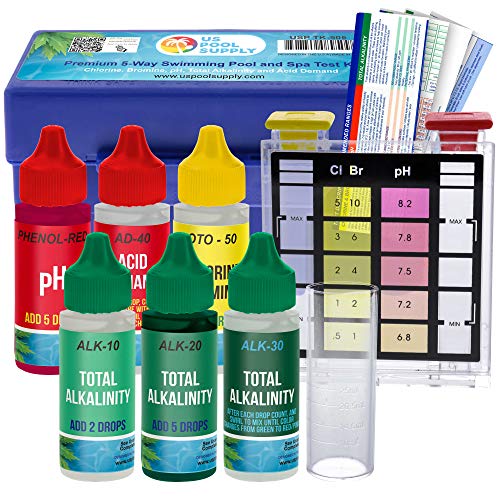
U.S. Pool Supply 5-in-1 Pool Test Kit
The Details Behind The Selections
Wynvex takes a different route from the drop-and-compare approach you’ll see in the U.S. Pool Supply kits covered later. You dip a test strip, slide it into the included reader, and the device shows a numeric value for each parameter in roughly 15 seconds. That removes the color-matching guesswork that trips up first-timers, especially in bright sun or under artificial deck lighting.
Where this pick shines is breadth. It tracks free chlorine, total chlorine, bromine, pH, total alkalinity, total hardness, and cyanuric acid, which is the stabilizer that protects chlorine from UV breakdown. For a new pool owner who wants one kit covering every number a pool store tests, that all-in-one approach saves you from buying separate drop tests for hardness and CYA.
Strong Points
- Numerical readout on a small screen removes squinting at color charts, useful on a sunny patio where lighting can skew a manual comparison.
- Seven parameters in one kit cover the basics plus the extras most casual testers skip, like cyanuric acid and total hardness.
- Strip-based workflow finishes in well under a minute once you get the rhythm, faster than measuring drops into a comparator block.
- Bundle of 150 strips keeps you stocked through a full season of weekly testing without reordering mid-summer.
- Single-hand dip-and-scan flow works well for one-person testing around the pool edge.
Things To Consider
- This is a strip-and-reader system rather than a true liquid drop kit, so anyone who specifically wants liquid reagents for perceived accuracy should look at the U.S. Pool Supply kits below.
- Strips have a shelf life and a storage sensitivity, so leaving the container on a hot equipment pad can shorten usability over a long season.
- The reader depends on batteries, and a dead battery mid-test means you lose the numeric advantage until you replace them.
Right Fit For
New pool owners who want a guided, no-guessing reading experience and the broadest single purchase of parameters in this list.
Consider Something Else When
You prefer traditional liquid drop testing, in which case the U.S. Pool Supply 5-in-1 Pool Test Kit gives you a fuller comparator-based workflow.
This U.S. Pool Supply kit is the textbook starter for someone who only needs the bare essentials. It uses two 1/2-ounce dropper bottles, one with OTO solution (orthotolidine, the yellow liquid that indicates chlorine and bromine levels) and one with Phenol Red (a pH indicator that turns red through yellow based on acidity). You fill the clear-view testing block with pool water, count drops, and compare the resulting color against the printed scale.
Three parameters keep things uncomplicated: chlorine, bromine, and pH. That covers the day-to-day checks most above-ground pool owners actually run, and it skips the extra reagents you might rarely use, like acid demand or calcium hardness.
Positive Points
- Compact enough to toss in a deck box or pool shed without dedicating storage space to a bulky case.
- Drop-counting workflow produces consistent, repeatable readings once you learn the technique, useful for the same pool tested the same way each week.
- Reagent bottles are standardized, so the refills reviewed later in this list slot in directly without compatibility worries.
Honest Caveats
- No alkalinity or hardness testing means you may still need a separate drop test for those parameters during seasonal openings.
- Color matching is subjective and lighting-sensitive, so daytime shade gives a more accurate read than harsh noon sun on the comparator block.
- The basic kit assumes you already know what your target numbers should be; it doesn’t come with adjustment guidance printed on the case.
Made For
Small above-ground pool owners and casual testers who only need chlorine, bromine, and pH on a routine basis.
Look Elsewhere When
You want alkalinity and acid demand in the same kit, in which case the U.S. Pool Supply 5-in-1 Pool Test Kit covers those without an extra purchase.
Refills are easy to overlook until your chlorine drops turn faintly lemon instead of the confident amber that signals a healthy 3 ppm reading. The U.S. Pool Supply refill set replenishes the two workhorse reagents, OTO and Phenol Red, in standard 1/2-ounce dropper bottles that fit the 3-way kit above and similar comparator-based setups.
Five drops of each solution mix with a water sample, so a single bottle goes a long way through weekly testing of a residential pool. Keeping fresh reagent on hand prevents the silent failure mode where old OTO gives a falsely low chlorine reading, leaving you under-dosing while algae quietly gets a foothold.
Noteworthy Benefits
- Restocks the exact same bottle format as the parent kit, so no transfer or compatibility friction.
- Standardized reagents work across most 3-way comparator blocks, not just U.S. Pool Supply’s own case.
- Dropper-style bottles help control dosing so you don’t accidentally flood the comparator cell with reagent.
- Buying refills in a small pack is more economical over a season than replacing the full kit when reagents run dry.
Points To Keep In Mind
- This is a refill, not a standalone test, so you need an existing comparator block and case to use it.
- OTO has a finite shelf life, and replacing it annually avoids the drift that leads to readings that look fine while the pool drifts out of balance.
Best Suited To
Anyone who already owns a 3-way drop test kit and needs to replenish OTO and Phenol Red without buying a whole new case.
Skip It When
You don’t have a comparator block to begin with, in which case the Wynvex 7-in-1 Digital Pool Water Test Kit with Reader is a more complete starting point.
Taylor’s R-0011L-C is a single-purpose reagent, the calcium hardness indicator you add to a water sample to find out how much dissolved calcium your pool water contains. Calcium hardness affects whether water is aggressive (too low, which can etch plaster) or scale-forming (too high, which leaves crusty deposits on heaters and tile). This 2-ounce dropper bottle tops up the calcium test in any compatible Taylor test kit.
Taylor has built a long reputation in the pool and spa testing world, and the company’s reagents are widely used by service technicians. For a residential owner running a Taylor K-2006 or similar complete kit, this refill keeps that calcium test functional when the original bottle runs dry mid-season.
What Works In Its Favor
- Targets one specific parameter that is easy to overlook but important for protecting plaster, heaters, and salt cell longevity.
- 2-ounce size is enough for many tests, supporting a season of routine hardness checks without reordering.
- Dropper bottle matches the dosing rhythm of the rest of a Taylor kit, so the workflow stays consistent.
Trade Offs
- Single-parameter refill means it does nothing on its own; you need a comparator block and the matching Taylor test to use it.
- Hardness doesn’t change quickly in a typical residential pool, so depending on your fill water and bather load, you may test less often than chlorine and pH.
Key Specs
Perfect Match For
Existing Taylor kit owners whose calcium hardness reagent has run out and who need a brand-compatible replacement.
Another Choice May Suit
You don’t already run a Taylor system, in which case the U.S. Pool Supply 5-in-1 Pool Test Kit is a more complete starting point with reagents included.
Total alkalinity is the parameter most often tested weekly along with chlorine and pH, because alkalinity acts as a buffer that keeps pH from swinging wildly when you add chemicals or when rain and bather load shift the water. The Taylor R-0008-C is the dedicated indicator reagent for that alkalinity test, delivered in a 2-ounce dropper bottle for Taylor-compatible kits.
Compared with the calcium hardness refill reviewed just above, this one tends to get used more often. Alkalinity drifts in most pools due to acid additions, fill water changes, and natural CO2 exchange, so the bottle empties faster over a typical season.
Good Reasons To Consider
- Alkalinity is one of the most frequently tested parameters, so a fresh bottle of indicator supports consistent weekly checks.
- Taylor-compatible dropper format keeps the test workflow familiar if you already use other Taylor reagents.
- Replacing a single reagent is more economical than rebuilding the full test kit when only one bottle runs dry.
Some Limits To Know
- Single-parameter bottle means it only handles the alkalinity side of a full water test; you still need reagents for chlorine, pH, and hardness.
- Storing indicator bottles in a hot equipment shed can shorten shelf life, so climate-controlled storage helps preserve accuracy over time.
Who Should Grab It
Pool owners running a Taylor system who notice their alkalinity reading drifting and want to refresh that one reagent before replacing the whole kit.
Reach For A Different Pick When
You want alkalinity testing bundled with the rest of your kit from the start, in which case the U.S. Pool Supply 5-in-1 Pool Test Kit includes alkalinity alongside chlorine, bromine, pH, and acid demand.
The 5-in-1 takes the U.S. Pool Supply platform from the earlier 3-way kit and adds alkalinity and acid demand testing, two parameters that matter more than most casual pool owners realize. Acid demand tells you how much acid (typically muriatic acid or dry acid) you need to lower pH and alkalinity to target ranges, which simplifies dosing decisions on adjustment days.
The kit is organized in a durable blue polyethylene case with a clear-view testing block that has integrated color markings, plus a round-view testing cup with measurement markings. The reinforced case and larger reagent assortment make this a more complete setup than the 3-way starter, suitable for in-ground pools and any situation where you need to troubleshoot a real imbalance rather than just confirm routine readings.
Well-Handled Touches
- Five parameters in one kit, covering chlorine, bromine, pH, alkalinity, and acid demand, which gives you a complete routine picture.
- Acid demand testing helps translate readings into a clear dose of acid, useful for owners who feel unsure about adjusting alkalinity on their own.
- Polyethylene case holds up well in a hot equipment shed, protecting reagents from accidental drops and UV exposure.
- Integrated color markings on the testing block reduce the chance of misreading the scale, helpful for newer pool owners.
- Round-view testing cup with measurement markings supports consistent sample collection across tests.
Worth Bearing In Mind
- No calcium hardness reagent in the kit, so you may want a Taylor calcium indicator add-on if hardness matters for your water source.
- More reagents means more bottles to track and replace over time, which adds a small maintenance load compared with the 3-way kit.
- Acid demand drops are easy to over-count under bright light, so a slow, deliberate count helps avoid mis-dosing.
Built With In Mind
Full-service residential pool owners who want alkalinity and acid demand testing included without buying separate reagents.
A Better Fit Elsewhere
You prefer a numeric reading and broader parameter coverage, in which case the Wynvex 7-in-1 Digital Pool Water Test Kit with Reader trades the drop-based approach for a digital scan plus cyanuric acid and total hardness.
Choosing The Right Drop Test For Your Pool
Pick a liquid pool test kit that matches the size of your pool and the depth of testing you actually plan to do. Small above-ground pools often only need the basics, chlorine, bromine, and pH, and a compact 3-way kit handles that without excess reagent going stale on the shelf.
In-ground pools benefit from kits that include alkalinity and acid demand, since pH tends to drift more in larger water volumes and bather loads are higher. Hardness matters more in regions with hard well water, so calcium indicator refills earn their place in those areas.
Match reagent format to your existing case if you already own a kit. U.S. Pool Supply and Taylor reagents both use dropper bottles, but dosing volumes and comparator blocks differ between systems. Confirming compatibility before buying a refill avoids wasting reagent in the wrong cell.
Storage and shelf life matter more than most people expect. Heat and direct sunlight shorten reagent life, so a climate-controlled equipment shed or garage extends the working life of every bottle in your kit.
Key Considerations Across These Picks
Pitfalls Shoppers Hit
A common misstep is buying a kit with more parameters than you’ll actually test. Reagents expire, and an unused bottle of calcium hardness indicator is wasted shelf space. Match the kit to your real testing routine.
Another trap is assuming any two drop-test kits use the same reagent volume. They don’t, so refills for one brand may not dose correctly in another brand’s comparator block. Sticking within a system avoids that compatibility gap.
What The Higher Tier Buys
Stepping up from a 3-way kit to a 5-in-1 typically buys alkalinity and acid demand testing, the two parameters that turn a kit from a confirmation tool into a troubleshooting tool. The extra reagents add a small cost, but the ability to read acid demand reduces the trial-and-error of adjusting pH and alkalinity on stubborn water.
Higher-tier digital kits like the Wynvex buy a numeric readout and broader parameter coverage in one workflow. The trade-off is dependence on batteries and strips rather than a comparator block, so the upgrade is worth it for owners who value guided readings and dislike color matching.
Frequently Asked Questions
How often should you test pool water with a liquid kit? Most pool owners benefit from testing two to three times per week during heavy use season, and weekly during cooler months when chemistry changes more slowly.
What’s the difference between OTO and DPD for chlorine testing? OTO gives a quick total chlorine reading through a single yellow color change, while DPD separates free and combined chlorine for more detailed troubleshooting.
Do liquid test kits expire? Yes, reagents have a shelf life of roughly one to two years when stored away from heat and direct sunlight, and old reagent can give readings that look fine while the pool is actually out of balance.
Can you use the same kit for a hot tub? Most liquid pool test kits work for both pools and spas, though smaller test samples are often enough for a hot tub, so reagent lasts longer per use.
Why does alkalinity matter if you already test pH? Alkalinity acts as a buffer that keeps pH stable, so low alkalinity causes pH to swing dramatically with any chemical addition, while proper alkalinity makes pH adjustments hold.


