

A worn, cracked return hose quietly robs an above ground pool of circulation, leaks water onto the deck, and can stall a filter pump mid-season. Most owners only notice the problem when the pump loses prime, the return jet sputters, or a soft spot shows up along the line. Choosing the right replacement means matching the diameter and length to the existing pump, then deciding whether a flexible spiral hose, a ridged connector hose, or a layflat backwash line fits the job. The six picks below cover the common diameters, lengths, and use cases you’ll run into across residential Intex-style and sand filter setups.
Your Options, Compared

ANTOBLE 1.25″ 59″ Pool Hose for Intex, 2 Pack
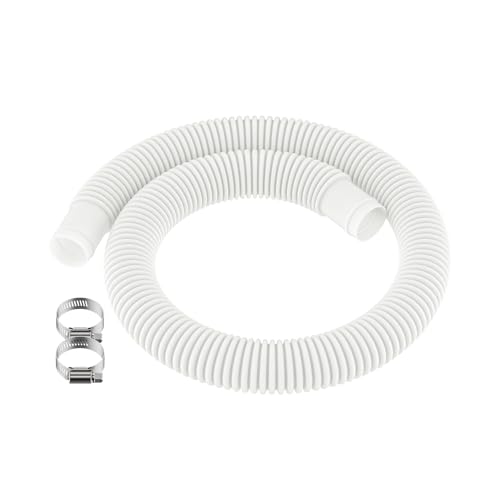
ANTOBLE 1.25″ x 3ft Pool Hose for Intex

ANTOBLE 1-1/4″ x 3ft Pool Hoses, 2 Pack with Clamps

KOBAZ Pool Backwash Hose 1.5″ x 50 ft Layflat
SJKHGU 1.25″ x 59″ Pool Hose Replacement, 2 Pack

Conderyang 1.25″ x 59″ Pool Hoses, 2 Pack with Bracket
A Closer Look At Each Pick
The 1.25-inch diameter on this ANTOBLE pair matches the connector size used on most residential Intex filter pumps in the 330 to 1000 GPH range, so swapping in a fresh hose is mostly a matter of loosening the existing clamps and sliding the new line on. The polyethylene build keeps weight down, which helps when the hose has to bend from the pump outlet around the pool frame to the return fitting.
At 59 inches, each hose handles a typical pump-to-pool run without kinking at the elbow, and a two-pack means both the suction and return sides get replaced at the same time. For most owners running a standard Intex setup, that combination is the sweet spot.
Strong Points
- 1.25″ diameter fits common Intex 330, 530, 1000 GPH and similar pumps
- Polyethylene body resists corrosion and wear from pool chemicals
- Two-pack lets both intake and return lines be swapped together
- 59″ length clears most pump-to-frame distances without stretching
Things To Consider
- Hose clamps are often not included, so reusing or buying new ones is typically needed
- Long-term UV exposure in full-sun yards can shorten the plastic’s working life
- Best paired with pumps that specifically list 1-1/4″ hose compatibility
Key Specs
Who It Suits Best
Owners of a standard Intex above ground pool with a 330 to 1000 GPH filter pump who want a matched pair of replacement lines without overthinking the spec sheet.
Where Another Pick Suits Better
Anyone running a longer pump-to-frame run or a higher-output pump should look at the SJKHGU spiral-reinforced option, which handles added pressure more confidently.
Shorter 3-foot hoses solve a very specific problem: the pump and filter sit close together, and a long 59-inch line would just coil up behind the unit. The ANTOBLE 1.25″ x 3ft option trims that slack without forcing a tight bend, which can weaken a hose over time.
It’s also a sensible single-unit replacement when only one section has cracked and the rest of the plumbing still has years left. The 1.25″ outer diameter stays consistent with the rest of the ANTOBLE line, so the same pump compatibility applies.
What Stands Out
- 3-foot length suits tight pump-to-filter layouts
- Maintains smooth flow at the 1.25″ standard
- Pairs naturally with F400 and F600 Intex systems
Trade Offs
- Single-hose pack means buying two for a full pump swap
- Not ideal for setups that need slack or extra reach
- Same UV sensitivity as the longer ANTOBLE model
Best Match For
Pool owners with a compact pump and filter sitting right next to each other who need one short replacement line, not a full pair.
Skip It When
Anyone wanting a matched intake-and-return bundle should pick up the ANTOBLE 2 Pack with clamps instead, which arrives ready to install on both ports.
The 2-pack format of this ANTOBLE set pairs both hoses with four 304 stainless steel clamps, which removes a common shopping step. Stainless hardware near a pool resists the chlorine and salt exposure that quickly chews through plain steel banding.
The 3-foot length, like the single-pack above, suits close-coupled pump and filter layouts. Where this one earns its place is the all-in-one delivery: the clamps are sized for the hose, so the install typically only needs a flathead screwdriver.
Notable Gains
- Includes four 304 stainless steel clamps sized to the hose
- Two-pack covers both intake and return ports
- 1-1/4″ standard works with most Intex 1.25″ pump ports
- Stainless hardware stands up to chlorinated and slightly salty water
Points To Note
- Short length limits use to compact pump locations
- Clamp count is enough for one install, so spares require another purchase
- Replacing older hoses in pairs can surface issues at the pump union, which is worth checking during the swap
Feature Snapshot
Made For
Owners with close-coupled Intex pump setups who want everything needed for a clean two-line swap in one box.
Not Your Match When
Anyone running a sand filter with a 1.5-inch waste port should step up to the KOBAZ layflat backwash hose, which is purpose-built for that kind of flow.
Layflat hose, a type of hose that flattens out when not pressurized and expands to round when water flows, behaves very differently from the rigid 1.25-inch connector hoses above. The KOBAZ 50-foot run is designed for the waste side of a sand or cartridge filter, where dirty water needs to travel well away from the pool deck.
The 1.5-inch inner diameter keeps flow strong during backwash cycles, and the white color makes the line easy to spot on grass. Two included hose clamps cover the connection at the filter waste port.
The Value In It
- 50-foot reach covers most yard drainage routes
- Stays flexible across a wide temperature range for seasonal use
- White color is easy to see on a lawn or gravel
- Rolls up compactly for winter storage
Honest Caveats
- Not a return hose: it routes wastewater, not filtered water to the pool
- 1.5-inch fittings won’t connect to a 1.25-inch pump port without an adapter
- Long layflat runs can puddle if not laid out with a slight downhill slope
Quick Facts
Right Fit For
Owners with a sand or DE filter who need a long, flexible line to carry backwash water away from the pool deck toward a drainage area.
Look Elsewhere When
Anyone needing a return hose that feeds filtered water back into the pool should stay with the ANTOBLE 1.25″ line, since layflat isn’t designed for pressurized circulation.
The SJKHGU pair swaps the smooth polyethylene body of the standard hoses for a spiral-wound structure, which is a construction where a rigid helix is wrapped inside the hose wall to add hoop strength. That reinforcement shows up in how the line holds shape under higher pump pressure and resists the deformation that often causes leaks at the cuff.
For owners running the upper end of compatible pumps, that bit of extra structural margin is genuinely useful. The 1.25″ inner diameter and 59″ length keep it interchangeable with the ANTOBLE pair covered earlier.
Reasons It Performs
- Spiral-wound wall resists kinking and deformation
- Holds shape under higher pump output
- Two-pack covers both intake and return sides
- Standard 1.25″ diameter works across many 1-1/4″ pump ports
Where It May Fall Short
- Slightly stiffer feel than smooth polyethylene, which can complicate tight bends
- Clamps are typically not included, unlike the ANTOBLE bundle with clamps
- Heavier in the hand, though not enough to matter during install
Who Should Grab It
Pool owners running a higher-output pump or anyone who has had a smooth hose deform at the cuff and start dripping after a season or two.
Reach For A Different Pick When
A first-time replacement on a smaller 330 to 530 GPH pump is usually well-served by the standard ANTOBLE 1.25″ 59-inch pair, which costs less and is easier to bend around a frame.
What separates this Conderyang set from the other 1.25″ 59-inch pairs is the included mounting bracket. That small piece of hardware lets the hoses anchor to a vertical surface, like a pool upright or a fence post, so the lines don’t sag or rub against the frame.
Two metal clamps per hose and the bracket are all in one box, which keeps the install moving without a second trip to the hardware store. For most backyards, that bracket is a quiet quality-of-life upgrade over a hose that just hangs.
Real Benefits
- Mounting bracket keeps the line tidy and off the ground
- Includes metal clamps for both hoses
- Standard 1.25″ x 59″ sizing for broad pump compatibility
- Two-pack covers intake and return in one order
Less Ideal Details
- Bracket adds a small step to installation that the simpler pairs skip
- Same UV sensitivity as the other polyethylene hoses on this list
- Clamp count is matched to the two hoses, with no spares included
Feature Rundown
Best Suited To
Owners who want a cleaner deck-side look and prefer the hose anchored to a frame or post rather than coiled behind the pump.
Swap It Out When
Anyone on a tighter budget who doesn’t need the bracket can save with the standard ANTOBLE 1.25″ 59-inch pair, which delivers the same hose dimensions without the extra hardware.
What To Check Before Choosing a Return Hose
Measure the existing hose before ordering a replacement, since “1.25 inch” and “1-1/4 inch” describe the same nominal size but can refer to slightly different inner or outer diameters. Confirm the pump model’s port size in the manual, then match both the diameter and the length to the run from pump to pool wall.
Material changes the feel of the install. Smooth polyethylene hoses bend easily around pool frames and stay light, which suits most residential setups. Spiral-reinforced hoses resist deformation at the cuff under higher pump pressure, which matters once the pump output climbs past the 1000 GPH mark. Stainless clamps or brackets add corrosion resistance near chlorinated or mildly salty water.
A return hose is not the same product as a backwash hose. The 1.25-inch connector hoses covered above carry filtered water from the pump back to the pool. A 1.5-inch layflat hose is meant for waste water leaving the filter during a backwash cycle, and swapping one for the other will create flow or fit problems at the port.
Storage and seasonal care matter more than they look. Coiling a hose loosely and storing it out of direct sunlight extends its working life, since UV exposure is the main reason polyethylene hoses stiffen and eventually crack along the bend points.
What Separates These Picks
Where Shoppers Go Wrong
The most common mistake is matching on diameter alone and ignoring length. A 59-inch hose stretched across a 6-foot run will pull on the pump outlet, while a 3-foot hose on a 5-foot run will kink. Measure from port to port with a little slack, then pick the closest standard size.
What The Higher Tier Buys
The spiral-reinforced SJKHGU pair costs more than a smooth polyethylene set, and the upgrade buys resistance to deformation and longer cuff life under higher pump pressure. For a small 330 GPH system, that extra margin is overkill. For a 1500 GPH pump or a setup that’s already chewed through a smooth hose in a season, it’s a worthwhile step up.
Frequently Asked Questions
What size return hose do most Intex above ground pools use? Most residential Intex filter pumps use 1.25-inch (1-1/4″) hoses on both the intake and return ports, which is the standard size for the 330, 530, and 1000 GPH pump models.
Can a backwash hose be used as a return hose? No. A 1.5-inch layflat backwash hose routes waste water out of the filter, while a 1.25-inch return hose carries filtered water back to the pool jet. The diameters, pressure ratings, and fittings don’t match.
How often should a return hose be replaced? A polyethylene return hose typically lasts two to four seasons in a typical residential setup, though full-sun exposure and high pump output can shorten that window. Visible cracks, soft spots, or leaks at the cuff are the clearest signs it’s time.
Are hose clamps included with replacement hoses? Some 2-packs include clamps and brackets, like the ANTOBLE set with stainless clamps and the Conderyang pair with a mounting bracket. Other listings sell the hoses only, so reusing old clamps or buying new ones is part of the install.
Does hose length affect pump performance? Yes, but only at the extremes. A hose that’s too long and coiled creates unnecessary flow resistance, while a hose that’s too short pulls on the port and can crack the cuff. The closest standard length to the measured port-to-port distance is the right call.
Closing Remarks
Matching the right return hose comes down to diameter, length, and how hard the pump pushes. The ANTOBLE pair is the everyday pick for a standard Intex setup, the SJKHGU set earns its place on higher-output pumps, and the Conderyang bundle is the right call when a clean, anchored install matters. Take a minute to measure the existing run before ordering, and the rest of the swap is a straightforward clamp-and-slide job.


