

A backyard pool looks calm, but the water underneath is on a job. Every return jet pushes filtered water back in, stirring in chemicals, lifting debris toward the skimmer, and keeping temperature even from end to end. When an eyeball inlet cracks, sticks, or points the wrong way, circulation drops and chemistry starts to drift. The right replacement nozzle restores that arc in minutes. Brass lasts longest in chlorinated water, plastics save money up front, and directional eyeball designs let you fine-tune the flow without calling a tech. The list below covers both styles across common 1/2″ and 3/4″ thread standards.
How The Shortlist Stacks Up
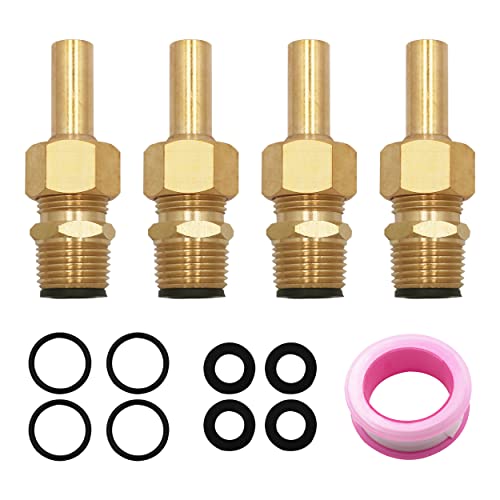
Bylot Brass Deck Jet Nozzle 590041 Replacement 4-Pack

MUSCCCM SP1419D Pool Jet Nozzles 3/4″ Directional Flow

mwellewm 3 Pieces Pool Jet Nozzles SP1419D 3/4″ Fittings

Kicofyee 3/4″ Pool Jet Nozzles for Hayward SP1419D

Thinp 2 Pieces Pool Jet Nozzles 3/4″ Directional Flow

IWIWE Pool Brass Aerator 3/4″ MIP (86201500)

MUSCCCM 3/4″ SP1419D Pool Jet Nozzles with Plug Tool
Taking A Closer Look At The Options
The Bylot set lands in a different lane than most of the plastic directional eyeballs reviewed here. These are true deck jet nozzles, the kind that sit in the patio and shoot decorative arcs of water into the pool. A 1/2″ NPT (National Pipe Thread, a tapered plumbing thread standard) connection means they thread into existing deck jet bodies without adapters.
Four nozzles arrive in a single box, which suits a fresh deck-jet array or a multi-feature install. The brass body shrugs off chlorine and salt exposure that tends to pit or bleach plastic alternatives over a few seasons.
Advantages To Know
- Brass construction outlasts plastic in chlorinated and salt pools
- Four-pack layout covers a typical multi-arc deck layout in one order
- Adjustable brass nut lets installers aim each arc with a firm hand
- Direct 1/2″ NPT fit replaces common Zodiac deck jet bodies
- Will not chalk or fade under UV exposure the way some plastics do
Things To Consider
- Heavier than plastic, so the receiving deck jet body needs a sound mount
- Not a directional eyeball inlet, so this only works for deck-side installations, not wall returns
Quick Facts
Who It Suits Best
Homeowners replacing worn Zodiac-style deck jet nozzles in a chlorinated or saltwater pool.
Look Elsewhere When
Pool owners with Hayward SP1419D wall returns should reach for the MUSCCCM SP1419D Pool Jet Nozzles 3/4″ Directional Flow instead, since that thread standard is a mismatch here.
This MUSCCCM pair is built for the Hayward SP1419D wall return fitting, one of the most common residential pool bodies. The 1-1/2″ MIP thread (Male Iron Pipe, a standard tapered male plumbing thread) drops straight into the existing socket, and the 360° rotating eyeball opens up the full range of aiming options a careful pool owner wants.
Unlike the Bylot brass deck jet, these are wall returns designed to push filtered water across the pool surface and stir the chemistry. Two nozzles per set is a sensible count for a single- or two-return pool. Compared to the plastic Thinp option reviewed later, this one reads as a tighter tolerance fit.
What Works In Its Favor
- 360° rotating eyeball aims flow toward any corner or surface
- Direct fit for Hayward SP1419D, so no thread adapters needed
- 3/4″ opening balances flow volume and pressure for most residential pumps
Trade Offs
- Plastic body ages faster in saltwater pools than brass alternatives
- Owners with non-SP1419D bodies should measure first to avoid a return trip
Feature Snapshot
Made For
Hayward SP1419D owners who want precise control over the direction of return flow.
A Better Fit Elsewhere
Pure-brass seekers will be happier with the IWIWE Pool Brass Aerator 3/4″ MIP (86201500), which trades adjustability for material longevity in aerated spa jets.
Three nozzles in a single set make the mwellewm kit a natural pick for a full-pool refresh. Same Hayward SP1419D body, same 1-1/2″ MIP thread, same 3/4″ eyeball opening as the MUSCCCM pair, just with an extra unit in the box. For a three-return pool, this means a single purchase covers the whole system.
The trade-off shows up in material weight, since these are plastic-bodied like the Thinp option. For most backyards running standard chlorine, that is a reasonable trade when the goal is full-system replacement rather than long-term single-unit durability.
Notable Gains
- Three replacements cover a typical three-return pool in one order
- Direct fit for SP1419D wall return bodies
- Directional flow control helps balance surface circulation
- Useful as spares for future replacements down the line
Worth Noting
- Plastic body may chalk over time under direct UV exposure
- Bulk count is wasted on a single-return spa or small plunge pool
Right Fit For
Pool owners replacing every return fitting at once in a mid-sized residential pool.
Reach For A Different Pick When
Single-return spa owners should consider the MUSCCCM SP1419D Pool Jet Nozzles 3/4″ Directional Flow, since two nozzles would be a more practical count.
Kicofyee targets the same Hayward SP1419D wall return as the MUSCCCM and mwellewm sets, which means the comparison comes down to fit, finish, and the small details of a directional eyeball. The 3/4″ opening, 1-1/2″ thread, and ball-in-socket adjustability line up neatly with the broader SP1419D aftermarket.
Where this option earns attention is the simple install path: unscrew the old eyeball, drop this one in, twist to aim, and you are done. The plastic body keeps the unit light, and for a routine replacement on a chlorinated backyard pool, that trade often makes sense.
Notable Upsides
- Clean drop-in replacement for worn SP1419D eyeball inlets
- Ball-in-socket design rotates to push flow toward dead spots
- 3/4″ opening is a familiar residential size for plumbing inventories
Soft Spots
- Plastic body is not ideal for heavily chlorinated or saltwater systems
- No plug removal tool included, unlike the MUSCCCM upgraded set
Feature Card
Best Suited To
Hayward SP1419D owners doing a routine eyeball replacement on a chlorinated residential pool.
Swap It Out When
First-time installers who need a plug tool bundled in should pick the MUSCCCM 3/4″ SP1419D Pool Jet Nozzles with Plug Tool, which ships a rubber-handle puller alongside the nozzles.
The Thinp pair is the leanest option in this lineup for residential SP1419D systems. Two plastic directional eyeballs, a 1-1/2″ MIP thread, and a 3/4″ opening cover the basics without padding the order. For a smaller pool or a spa that just needs one good return, this is a sensible second-unit pack.
For comparison, the mwellewm 3-pack costs more per nozzle but covers an extra return. The case for Thinp shows up in simpler plumbing layouts where spare capacity is unnecessary.
Bright Spots
- Lower upfront outlay than three- and four-pack options
- Same 3/4″ SP1419D spec as the larger packs in this category
- Lightweight plastic body is easy to handle during installation
Points To Note
- Plastic construction may need replacing sooner in harsh chemical conditions
- Two-unit count may be short for a three- or four-return pool
Who Will Love This
Single- or two-return pool and spa owners focused on straightforward replacement without extras.
Where A Sibling Pick Shines
Pool owners refreshing three returns at once will find better value in the mwellewm 3 Pieces Pool Jet Nozzles SP1419D 3/4″ Fittings.
The IWIWE aerator steps away from the directional eyeball category and into a different niche: foam-jet and aerated spa fittings. The 3/4″ MIP thread targets 86201500, 25558-000-000, and 217-0060 bodies, which often show up in hot tub footwells and therapy jets where fine bubbles do the work.
Pure brass is the headline here, and at roughly 1.61″ tall and 1.123″ in diameter, the body is small enough to drop into most spa jet housings without clearance issues. Compared to the SP1419D plastic options, this is a different tool for a different job.
The Practical Payoff
- Solid brass body tolerates heat and chemical load in spas
- Direct compatibility with 86201500, 25558-000-000, and 217-0060 jet bodies
- Compact dimensions fit common spa jet housings
Areas To Watch
- Single-pack count, so a multi-jet spa requires multiple orders
- Not a directional eyeball, so it does not suit Hayward SP1419D wall returns
Core Details
Perfect Match For
Spa owners replacing a single worn brass aerator in a foam-jet or therapy fitting.
Not Your Match When
Pool owners needing a directional wall return should pick the MUSCCCM SP1419D Pool Jet Nozzles 3/4″ Directional Flow, which is built for that exact role.
This upgraded MUSCCCM kit bundles a pool plug removal tool with two SP1419D directional nozzles, which addresses the part of the job nobody warns new owners about. Pulling a stuck old eyeball out of the wall return without scoring the fitting takes the right tool, and the rubber-handle puller in this set is built for exactly that moment.
For first-time installers, the bundled tool removes a frustrating barrier. The 360° rotating eyeball, 3/4″ opening, and 1-1/2″ thread are the same trusted SP1419D spec the earlier MUSCCCM pair offered, just with installation support attached.
Everyday Advantages
- Rubber-handle plug tool simplifies removal of stuck old fittings
- Direct SP1419D fit avoids thread mismatch
- Two-nozzle count suits a single-return or two-return pool
Honest Caveats
- Plastic body, like most SP1419D replacements, ages faster than brass
- Two nozzles may leave a third-return pool short
Built With In Mind
First-time installers and DIY pool owners who want the right puller bundled with their replacement nozzles.
Skip It When
Experienced pool owners who already own a plug tool should pick the Kicofyee 3/4″ Pool Jet Nozzles for Hayward SP1419D, which covers the same spec at a leaner pack size.
What Matters When Choosing Pool Deck Jet Nozzles
A pool deck jet nozzle only does its job when the thread standard matches the existing return body and the material stands up to the water chemistry. Eyeball inlet fittings thread into a wall socket and aim filtered water across the surface. Deck jet nozzles thread into a deck-side body and shoot decorative arcs of water into the pool. The first step is identifying which type of fitting the pool uses, because the two are not interchangeable.
Thread and Fit
Residential pool returns and deck jet bodies are not standardized across the industry. Hayward SP1419D fittings are among the most common in the United States, and they take a 3/4″ eyeball with a 1-1/2″ MIP thread. Zodiac-style deck jets use a 1/2″ NPT instead. Pool owners should always confirm the body model number before ordering. The replacement looks identical in photos but can be a thread size off.
Material and Water Chemistry
Brass costs more up front, but in a chlorinated or salt pool it pays for itself by outlasting the plastic alternatives. Plastic nozzles resist corrosion just fine, yet they tend to chalk, crack, or stiffen under years of UV and chemical exposure. In a lightly used chlorine pool, plastic still has a long service life. In a salt system or heated spa, brass is the safer pick.
Directional Range and Flow Control
A 360° rotating eyeball lets installers aim flow at any corner of the pool, which is useful for pushing debris toward the skimmer or breaking up dead spots. Fixed eyeballs send a straight stream, which works in smaller pools where the geometry is already favorable. For most mid-sized residential pools, directional control is worth the small price difference.
Pack Count and Pool Size
Count the return fittings before ordering. A two-nozzle pack suits a spa or single-return pool. A three- or four-pack makes sense for a standard residential pool with multiple return lines. Buying one extra as a spare is reasonable, since the same nozzles tend to fail in clusters after a few seasons.
Key Considerations Across These Picks
Traps First Timers Fall Into
The most common mistake is ordering by photo without confirming the body model. A 3/4″ eyeball for an SP1419D does not fit a 1/2″ NPT deck jet body, and the reverse is just as true. Pool owners should also avoid mixing materials across a single system, since brass and plastic age at different rates and create uneven maintenance windows. Always confirm thread spec and target body model before checking out.
Where The Extra Money Goes
Higher-tier brass models cost more because the raw material is pricier and the machining tolerances are tighter. The upgrade pays off in longevity, especially in salt or heavily chlorinated water. For most residential chlorinated pools, plastic still does the job, but for spa aerators, heated pools, or anyone who hates replacing the same fitting every few seasons, the brass premium is worth it.
Frequently Asked Questions
What is the difference between a deck jet nozzle and a pool return jet?
A deck jet nozzle threads into a body set in the patio or deck and shoots a decorative arc of water into the pool. A pool return jet threads into a wall fitting and pushes filtered water back across the pool surface to circulate chemistry. The two use different thread standards and serve different purposes.
How do I know which thread size I need?
Check the existing body model number stamped on the wall return or deck jet housing. Hayward SP1419D fittings take a 3/4″ opening with a 1-1/2″ MIP thread. Zodiac-style deck jets typically use a 1/2″ NPT. If the body is unmarked, measure the socket opening and check the male thread diameter with a caliper before ordering.
Can I replace a pool jet nozzle without draining the pool?
Yes, in most cases. Shut off the pump, unscrew the old eyeball or nozzle, drop the new one in, and aim it before turning the system back on. A plug tool helps if the old fitting is stuck. The water level stays where it is throughout the swap.
How long do plastic pool jet nozzles last?
In a standard chlorinated residential pool, plastic nozzles typically last three to five seasons before they stiffen, crack, or lose the seal at the thread. Saltwater pools and heated spas shorten that window. Brass nozzles in the same conditions often run twice as long.
Do I need to replace all nozzles at once?
Not necessarily. Eyeballs tend to wear in clusters, so swapping them all in one pass prevents repeat service trips. On a small pool with one or two returns, replacing only the failed unit is fine, since the matching units are likely to keep working for another season.
Bottom Line
Pool deck jet nozzles and pool return fittings look similar, but the right choice depends on the existing body, the pool’s chemistry, and how much aiming control is needed. Brass wins on longevity, plastic wins on price, and bundled tools save first-time installers a frustrating afternoon. Confirm the thread, match the material to the water, and the rest of the decision is mostly count and budget.


